
 Tiếng Việt
Civil engineering outsourcing has become more common than ever, but choosing the right civil engineering design partner has become harder than ever. The market is crowded with providers promising lower costs and faster delivery, yet far fewer can offer the continuity, accountability, and integration required for long-term growth.
Today, finding a provider is easy. Finding a long-term partner you can trust is not.
That is the real shift happening in the industry. The question is no longer whether outsourcing can reduce cost or add capacity. The more important question is this: what kind of relationship will help your firm scale without sacrificing quality, continuity, accountability, and peace of mind?
For years, the traditional outsourcing model was built on a simple promise: lower cost, faster drafting, more hands. That model still exists, and in some situations it still serves a purpose. But for design firms handling tighter timelines, stricter standards, more complex approvals, and more integrated digital workflows, “more hands” is no longer enough.
What firms increasingly need is not a vendor. They need a design partner.
At AXANH, this shift is not a slogan. It is the operating logic behind how we work: aligned capabilities, insource solutions, and sustainable growth. Built on the technical heritage of AXA Engineers (Anthony, Xuan & Associates), AXANH exists to help global firms expand design capacity in a way that is more stable, more integrated, and more future-ready.
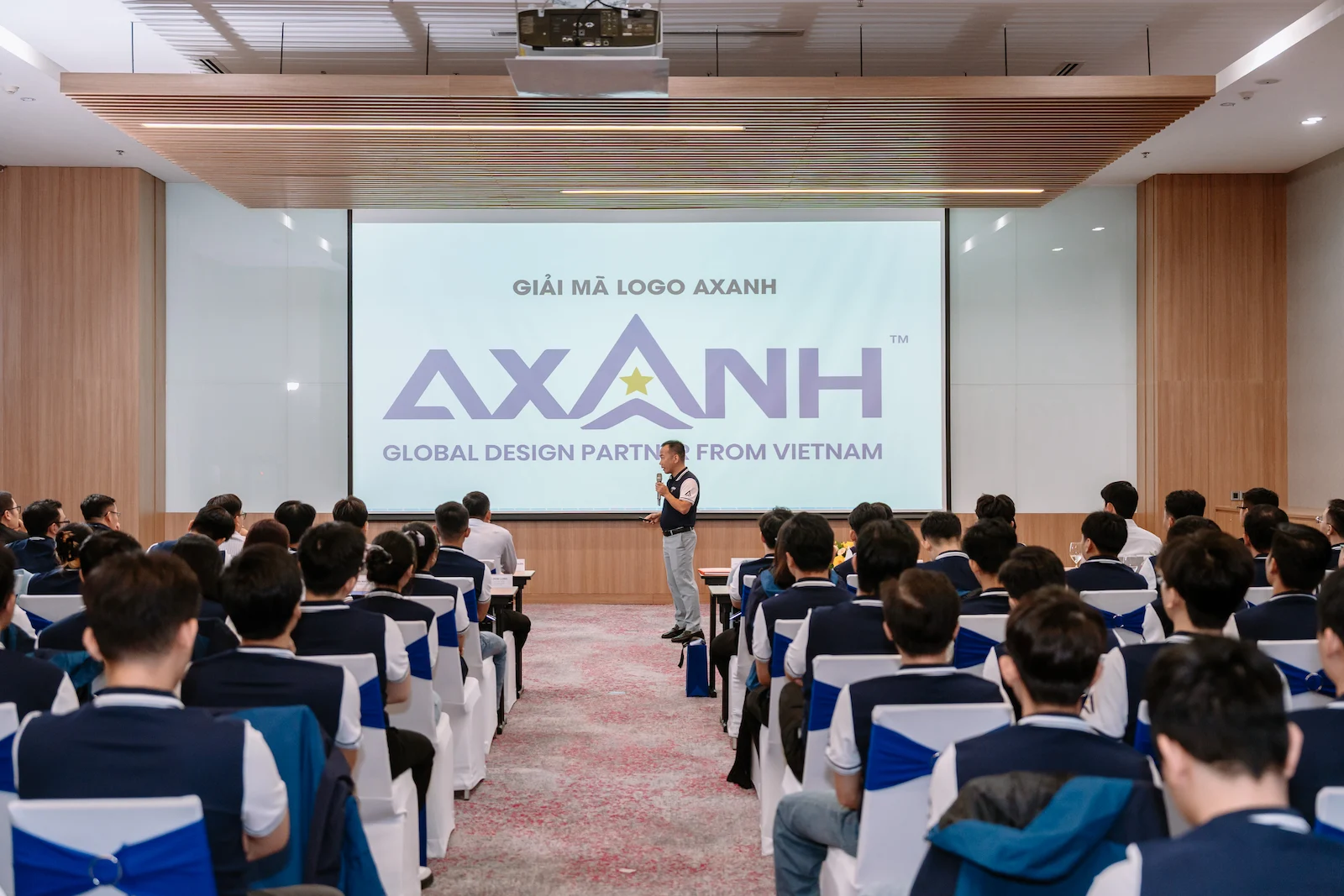
What is a civil engineering design partner?
A civil engineering design partner is a long-term extension of your team that combines technical delivery, QA/QC discipline, market-specific expertise, secure collaboration, and proactive problem-solving. Unlike a traditional outsourcing vendor, a design partner shares responsibility for outcomes, continuity, and sustainable growth.
Why traditional civil engineering outsourcing is losing relevance
Cost-first delivery creates hidden risks
Traditional outsourcing often begins with a narrow conversation about labor arbitrage. On paper, that sounds efficient. In reality, the cheapest delivery model can create the most expensive downstream consequences.
A low-cost vendor may complete tasks, but still leave you exposed to inconsistent drawing quality, repeated revisions, weak documentation discipline, communication friction, poor software governance, and high turnover on the delivery side. The visible savings come first. The invisible cost arrives later through rework, delays, coordination issues, and lost trust.
In civil engineering, those hidden costs are rarely small. A minor mistake in grading, utility coordination, stormwater assumptions, or construction documents can ripple outward into approval delays, field conflicts, and reputational damage.
Clients now expect continuity, accountability, and integration
Modern clients want more than a handoff. They want continuity. They want the same people learning their standards over time. They want a team that understands how they think, how they communicate, how they review, and how they make decisions.
They also want accountability. Not the kind that starts after a problem appears, but the kind that reduces the likelihood of that problem appearing in the first place.
This is why many firms are moving away from fragmented task outsourcing toward more integrated delivery relationships. The goal is not only to expand capacity. The goal is to expand capacity without losing control.
The problem is not outsourcing itself — it is the outdated vendor model
Outsourcing is not the issue. A transactional mindset is.
When an external team is treated purely as a low-cost production center, the relationship naturally becomes reactive. Scope is narrowed. Communication becomes thinner. Initiative disappears. The client carries the strategic burden, while the provider waits for instructions.
That model is increasingly misaligned with how civil engineering firms actually need to operate today. Projects move faster. Standards are tighter. Digital coordination is deeper. Teams are more distributed. Clients need a provider who does not simply receive work, but can think with them, anticipate risks, and contribute to delivery resilience.
What separates a design partner from a conventional outsourcing vendor
The difference is not one promise. It is an entire operating philosophy. A clear side-by-side comparison makes that difference easier to see.
| Conventional outsourcing vendor | Design partner model |
|---|---|
| Focuses on task completion | Focuses on business outcomes and delivery confidence |
| Optimizes for hourly output | Optimizes for long-term continuity and repeatable quality |
| Waits for instructions | Proactively flags issues and suggests improvements |
| Offers capacity | Offers capability aligned with your standards and workflows |
| Often changes people frequently | Invests in team stability and knowledge continuity |
| Works outside your system | Operates as an integrated extension of your team |
| Talks mainly about cost | Talks about trust, control, quality, speed, and sustainable growth |
Outcome ownership, not task completion
A design partner understands that deliverables are not the true end goal. The true goal is helping the client move projects forward with fewer surprises, stronger documentation, and greater confidence.
Instead of simply asking, “What file do you need next?”, a design partner asks, “What risk should we help you reduce? What bottleneck should we help you remove? What part of your workflow can become more stable, predictable, and scalable?”
Stable people, repeatable process, and clear accountability
Partnership is impossible without stability.
AXANH’s publicly shared operating signals on the AXA Engineers service hub reflect that priority: a team of 80+ experts, a 97% retention rate, 15+ years of leadership experience serving US firms, and 1000+ projects delivered annually. Those numbers matter not because they sound impressive, but because they answer the questions sophisticated clients actually ask:
- Will the team still be here six months from now?
- Will they understand our standards more deeply over time?
- Can they scale with us without becoming chaotic?
- Can they handle fluctuating workload without breaking consistency?
This is also why execution depth matters. A relationship cannot be strategic if the underlying delivery capability is weak. Firms evaluating a partner should look closely at how that team performs in real civil engineering services, not just how well it presents itself in sales language.
Secure collaboration, QA/QC discipline, and market-specific knowledge
A credible design partner needs more than technical software skills. It needs a system.
At AXANH, that system is built around a rigorous quality framework, layered QA/QC, SOP-based delivery, and a culture of continuous improvement. It is reinforced by practical familiarity with US expectations, experience-led training, and a commitment to 100% licensed software. Just as importantly, it is supported by multi-layer data and IP protection protocols, strict access control, and NDA-based collaboration.
 In other words, maturity is visible in how a partner protects quality, knowledge, workflow, and trust at the same time.
Why this shift is accelerating now
The broader market is moving in this direction as well. As KPMG explains in The new era of outsourcing, outsourcing is shifting away from purely transactional vendor logic toward trust-based, collaborative partnerships focused on flexibility, service quality, innovation, and business outcomes.
That framing resonates strongly in civil engineering for three reasons.
- Talent pressure remains intense: firms need reliable capability they can activate without rebuilding teams from scratch every time workload changes.
- Digital delivery has raised the bar: Civil 3D, BIM-based coordination, stormwater analysis, grading optimization, document control, and multi-discipline collaboration all demand tighter integration.
- Buyers have become more mature: they are comparing risk profiles, not just rate cards.
In this environment, the winning model is not “send work offshore and hope for the best.” It is “build an extended office that works as part of your system.”
How AXANH evolved from outsourcing excellence to global design partnership
AXANH did not appear overnight as a brand idea. It emerged from a decade of technical delivery, cross-border collaboration, and operating discipline.
The foundation was built through AXA Engineers (Anthony, Xuan & Associates), the technical heritage that helped establish credibility in civil engineering outsourcing from Vietnam. In heritage terms, A-X-A refers to Anthony, Xuan & Associates. That legacy remains part of the story even as the broader corporate identity has evolved.
Over time, the business outgrew the limitations of a traditional outsourcing label.
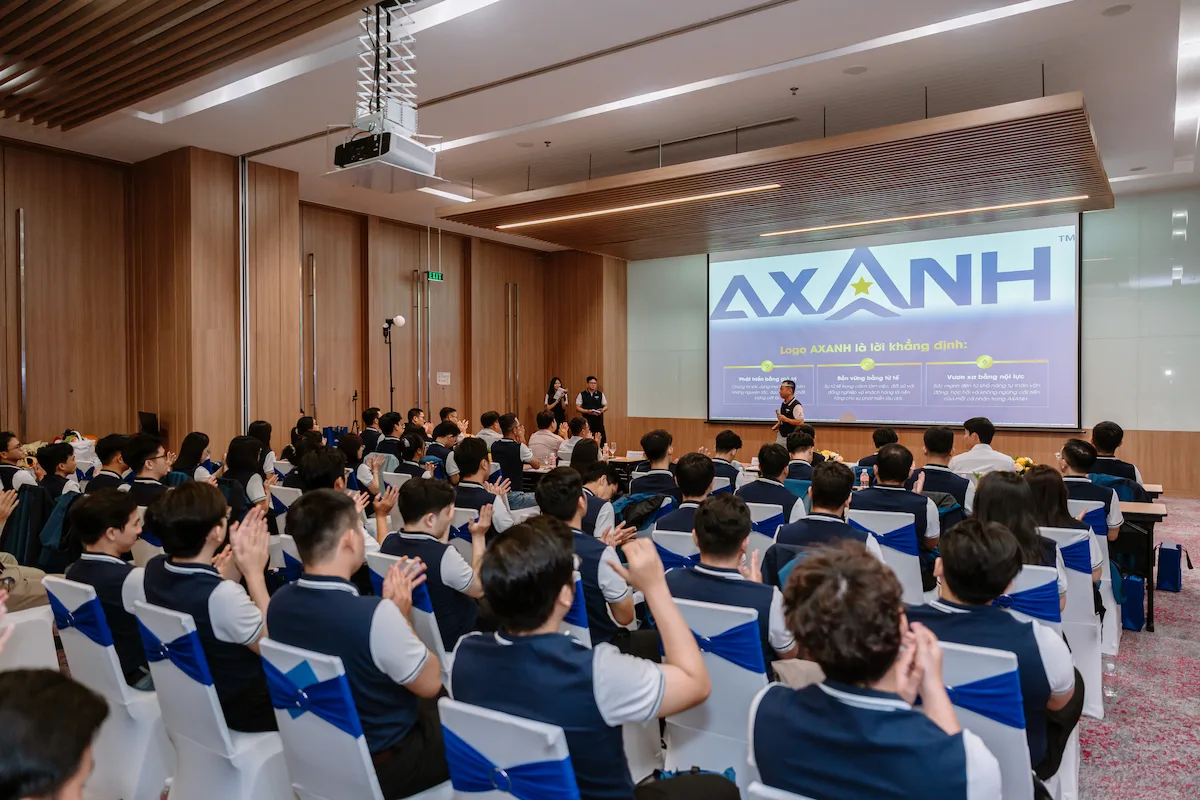
- 2019: AXANH began deepening global collaboration through intensive training in the United States, strengthening both technical understanding and market alignment.
- 2023: The team shared its success story at Autodesk Converge, reinforcing its commitment to digital transformation and practical innovation.
- 2024: AXANH was invited to an Autodesk APAC panel discussion, and Autodesk sales recognized the organization for leading individual Civil 3D license adoption in Vietnam.
- 2025: AXA Engineers ranked #1 in the Small Category on Great Place To Work’s 2025 Best Workplaces list, reflecting the people-first operating model behind delivery stability.
- 2026: AXA Engineers publicly evolved into AXANH, while the AXA Engineers service hub continued as the specialized technical delivery portal operated by AXANH Company Limited.
This matters because the evolution is not cosmetic. It clarifies structure and deepens positioning.
AXANH is the corporate brand and Global Design Partner from Vietnam. AXA Engineers remains the specialized service hub built on a decade of engineering execution. That distinction gives clients both clarity and confidence: a broader strategic vision on one side, and a specialized technical delivery hub on the other.
At the center of this model is a simple promise: not just outsourcing, but a seamless extended office in Vietnam.
Proof that partnership creates measurable value
Thought leadership without evidence is only branding. Partnership becomes credible when it creates measurable value.
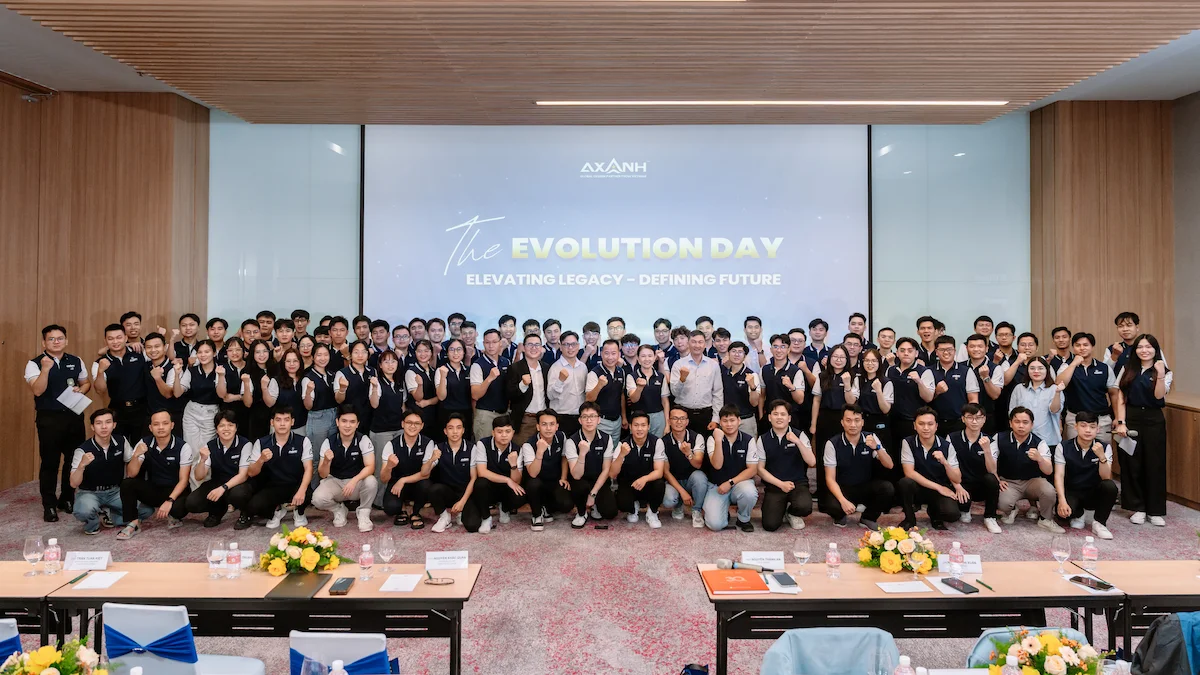
The Baptist Development — when a difficult project needed more than execution
The Baptist Development illustrates why complex projects often require more than production support. According to AXANH’s internal case data, this was a 600-acre development with 777 lots, and four previous design firms had participated without securing approval.
That is not a routine workload problem. It is a strategic delivery problem.
Projects like this demand persistence, design judgment, regulatory awareness, and the ability to stay aligned through ambiguity. AXANH entered not as a passive vendor, but as a deeply involved design collaborator helping move a previously stalled project toward approval, while optimizing land use and restoring project momentum.
The Marks Creek Development — how technology translated into cost advantage
The Marks Creek Development shows the other side of the value equation: not just rescuing complexity, but turning engineering intelligence into measurable business benefit.
This project involved a 376-lot residential community on 101 acres with difficult terrain, environmental considerations, and financial pressure around earthwork. Using digital workflows such as grading optimization, Civil 3D, InfraWorks, Vehicle Tracking, SSA, Dynamo, and Autodesk Construction Cloud, AXANH helped the client improve coordination and decision-making.
Most importantly, AXANH’s internal case data records more than 20% savings in projected grading cost. That is exactly the kind of result firms remember: not more drawings, but better economics.
And this is where end-to-end delivery maturity matters. A team that understands the full lifecycle of land development services can contribute more than production output. It can help improve approvals, constructability, coordination, and cost logic across the whole process.
Third-party trust signals matter too
Strong firms do not ask clients to trust them blindly. They look for credible external signals.
That is why AXANH’s story is notable beyond its own channels. Its growth trajectory also appeared as sponsor content on ASCE’s Civil Engineering Source, where the discussion centered on talent shortages, overhead pressure, scaling difficulty, and the search for a dependable outsourcing partner.
There is also a cultural dimension that matters more than many buyers realize. A stable, high-performing external team is rarely an accident. It is usually the result of intentional people systems. In addition to ranking #1 on Great Place To Work’s 2025 Best Workplaces list, the AXANH Company Limited profile on Great Place To Work describes the company as a strategic engineering partner and a trusted extension of design firms across the globe.
Public recognition does not replace delivery proof. But it does strengthen the case that quality, continuity, and culture are being built on real foundations.
A practical checklist for choosing a long-term civil engineering design partner
If you are evaluating providers, stop asking only, “Can they do the work?” Start asking better questions.
1. Ask about team stability, not just headcount
- What is your retention rate?
- How long do team members typically stay?
- How do you preserve project knowledge when workload changes?
- Can we keep continuity with the same core team?
2. Ask about QA/QC systems, not just promises
- What does your QA/QC workflow actually look like?
- Do you use peer review, checklist review, gate review, or discipline-based controls?
- How do you reduce repeat errors?
- How do you standardize naming, versioning, and traceability?
3. Ask about IP protection, licensed software, and governance
- How is project data protected?
- Who can access our files?
- Do you operate with licensed software only?
- Are NDA processes, audit logic, and access controls formally defined?
4. Ask whether they think like an extended team or a task vendor
- How do you learn and adapt to our standards?
- How do you handle change requests and ambiguity?
- Do you proactively flag risks?
- Can you operate as an extension of your team rather than an outside production line?
The right answer is rarely found in a rate sheet. It is found in the maturity of the operating model.
The future belongs to firms that build design ecosystems, not vendor lists
The old outsourcing mindset was built around procurement logic. The next era will be built around ecosystem logic.
The firms that scale best over the next decade will not be the ones with the longest vendor lists. They will be the ones that build the strongest delivery ecosystems: internal teams, external specialists, digital platforms, QA frameworks, and trusted extended offices that work together as one operating system.
That is why AXANH’s vision, We Design Beyond Borders, matters.
It is not only about geography. It is about working beyond the old boundaries between client and provider, between capacity and capability, between short-term output and long-term value.
From Vietnam, AXANH is building a model that brings together technical excellence, human-centered development, market alignment, and sustainable growth. That combination is what turns outsourcing from a cost tactic into a strategic advantage.
FAQ
Is a design partner more expensive than a traditional outsourcing vendor?
Sometimes the hourly rate may not be the lowest on the market. But the more relevant comparison is total delivery value. A design partner can reduce hidden costs tied to rework, low continuity, weak coordination, and scaling friction.
When should a firm move from ad hoc outsourcing to a design partner model?
Usually when project volume becomes less predictable, internal hiring becomes harder, approvals become more demanding, or leadership starts spending too much time managing fragmented outside resources. At that point, relationship quality becomes a growth issue, not just a staffing issue.
What should I look for first when evaluating a civil engineering design partner?
Start with four filters: team stability, QA/QC maturity, market-specific understanding, and security discipline. If those are weak, everything else becomes harder to trust.
Why does AXANH mention both AXANH and AXA Engineers?
Because the structure is intentionally clear. AXANH is the corporate brand and Global Design Partner from Vietnam. AXA Engineers is the specialized service hub operated by AXANH Company Limited and represents the technical heritage through which this capability was built. In heritage terms, A-X-A refers to Anthony, Xuan & Associates.
Talk with AXANH
AXANH Company Limited
Global Design Partner from Vietnam
- AXANH corporate site
- AXA Engineers
- contact@axanh.com
- +84 28 6680 0999
- 6-6A D52 Street, Bay Hien Ward, HCMC, Vietnam
Conclusion: Outsource Better, Not Just More
The biggest lesson for today’s civil engineering firms is not that they should outsource more aggressively. It is that they should collaborate more intelligently.
Traditional outsourcing solved an earlier problem: access to lower-cost production capacity. But the next challenge is different. Firms need resilient, integrated, trustworthy capability that can grow with them. They need teams that understand standards, protect continuity, operate securely, and contribute beyond the task list.
That is why the design partner model is rising.
For firms looking to expand design capacity without surrendering quality, control, or long-term confidence, this is the natural next step.
If your team is rethinking how to scale, start with a strategic conversation. Explore the broader AXANH corporate vision on the corporate side, then visit the AXA Engineers service hub to see how that thinking is translated into technical execution.
Build a more stable delivery model with AXANH
Talk with AXANH about your service needs, strategic collaboration goals, or long-term growth plans with a team built for continuity, quality, and scalable execution.
