








Detailed Grading Design for a Community Center Campus is one of the most critical coordination tasks in complex site development. When roadway controls, parking areas, stormwater systems, building pads, ramps, sidewalks, and public-use spaces are not tied together correctly, projects often face inconsistent elevations, wrong drainage direction, unexpected low points, and repeated grading revisions. For owners, developers, and civil teams, this is not just a drafting issue. It directly affects drainage performance, constructability, risk reduction, and overall site quality.
Built on the technical heritage of AXA Engineers, AXANH approached this Community Center Campus as a structured Civil 3D case study. The goal was to develop a precise, cohesive, and optimized grading model through a 3-phase workflow that could improve coordination, reduce rework, and support better long-term site performance.
For project teams dealing with recurring grading conflicts, Detailed Grading Design for a Community Center Campus is not just a design exercise. It is a way to align drainage intent, constructability, and site-wide coordination before those issues become costly revisions.
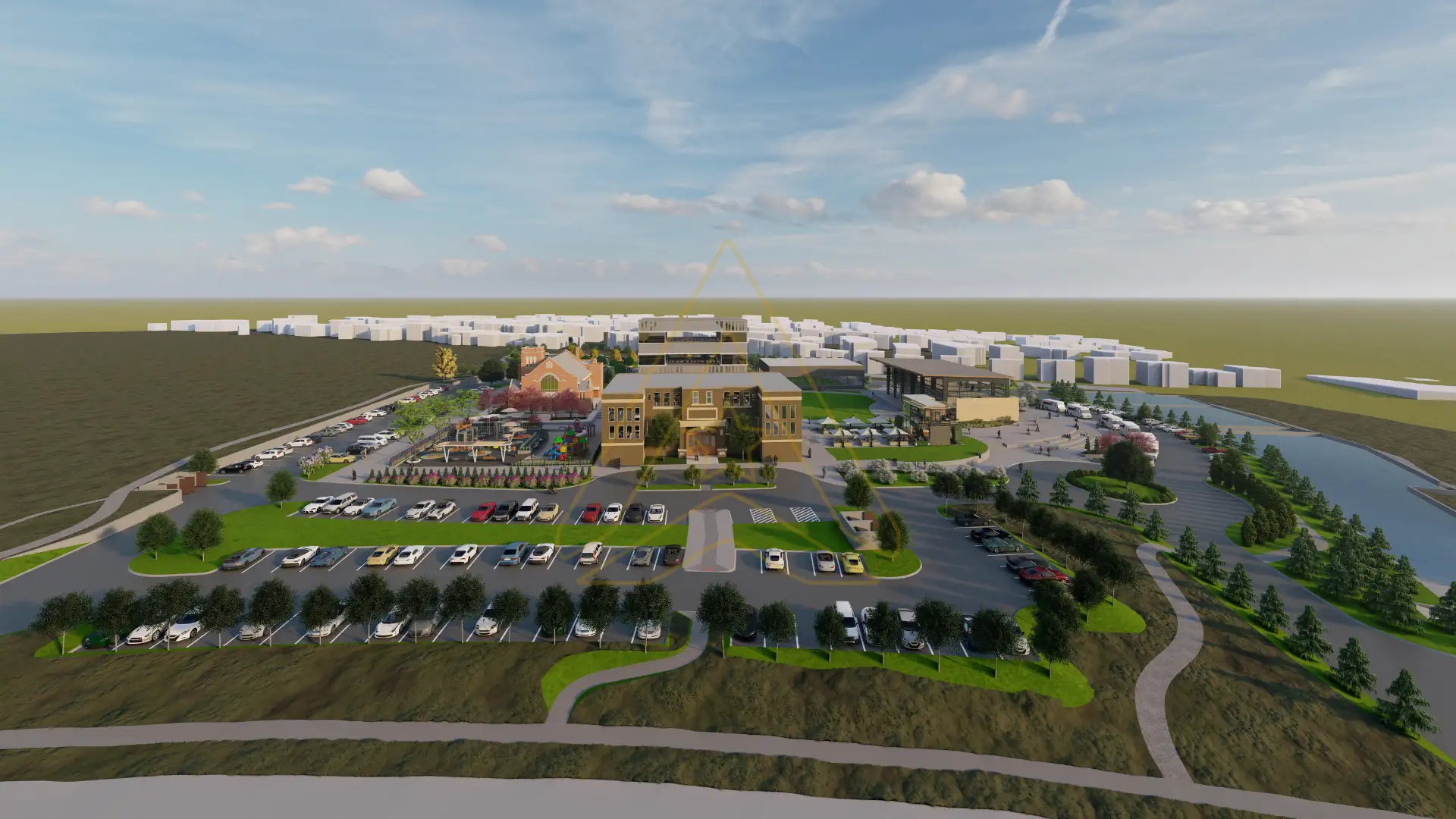
The overall grading framework established the primary elevation controls and drainage direction for the entire campus.
Detailed Grading Design for a Community Center Campus: Why It Matters
A community center campus is not a simple site. It combines internal roads, parking lots, building pads, stormwater infrastructure, public-use spaces, and accessibility-sensitive routes into one connected environment.
That complexity means grading decisions cannot be made in isolation. A small elevation mismatch in one area can trigger a chain reaction somewhere else, affecting drainage, tie-ins, usability, or field constructability.
In large-scale developments, the same problems tend to appear again and again. A roadway profile does not align cleanly with adjacent parking. A plaza looks resolved in plan view but introduces a hidden low point once surrounding grades are connected. A pond geometry works hydraulically on its own, yet becomes awkward when tied back to real site controls. Then the revisions begin.
- Inconsistent elevations between adjacent site elements
- Incorrect drainage directions in local transitions
- Unexpected low points appearing during design refinement
- Repeated grading revisions caused by incomplete tie-ins
- Constructability risks across roads, pads, ponds, and public spaces
That is why successful grading on a campus project depends on more than surface drafting. It depends on a clear hierarchy of controls, disciplined coordination, and a workflow that helps the entire site behave as one system.
How AXANH Executed Detailed Grading Design for a Community Center Campus
This case study on Detailed Grading Design for a Community Center Campus shows how AXANH organized major surface controls, stormwater grading, and detailed site tie-ins into one coordinated Civil 3D workflow. Rather than treating grading as a series of isolated fixes, the team divided the work into three implementation phases, each with a specific purpose and clear relationship to the larger grading framework.
| Phase | Main Focus | Why It Mattered |
|---|---|---|
| Phase 1 | Roadways and parking as the campus grading backbone | Established the primary elevation controls and drainage direction for the site |
| Phase 2 | Detention, sedimentation, and filtration pond grading | Improved drainage performance, storage behavior, and system-wide tie-ins |
| Phase 3 | Building pads, ramps, sidewalks, plazas, playgrounds, and transitions | Integrated all remaining functional elements into one constructible grading system |
Phase 1: Establishing the Overall Grading Framework
The first phase focused on internal roadways and parking areas, which were treated as the primary elevation control points for the entire campus. This decision was strategic. In many site development projects, teams move too early into local refinements before the main surface logic is stable. That often creates avoidable rework because every detailed area must later be re-tied to a revised backbone.
Using Civil 3D, AXANH defined the controlling elevations, slopes, and drainage flow directions for the main circulation surfaces. This created a foundational grading framework that all remaining site components could connect back to. Instead of fragmented local decisions, the project gained a stable reference structure.
Phase 1 did more than shape the site. It clarified drainage intent early, reduced the risk of reverse flow conditions, and gave the project a more efficient baseline for future grading coordination.
In this Detailed Grading Design for a Community Center Campus, Phase 1 created the grading backbone that allowed later stormwater features, building pads, and pedestrian routes to connect back into one stable site system.
Phase 2: Detailed Grading for the Stormwater Management System
The second phase addressed one of the most technically sensitive parts of the project: the stormwater management system. This included detailed grading for the detention pond, sedimentation pond, and filtration pond.
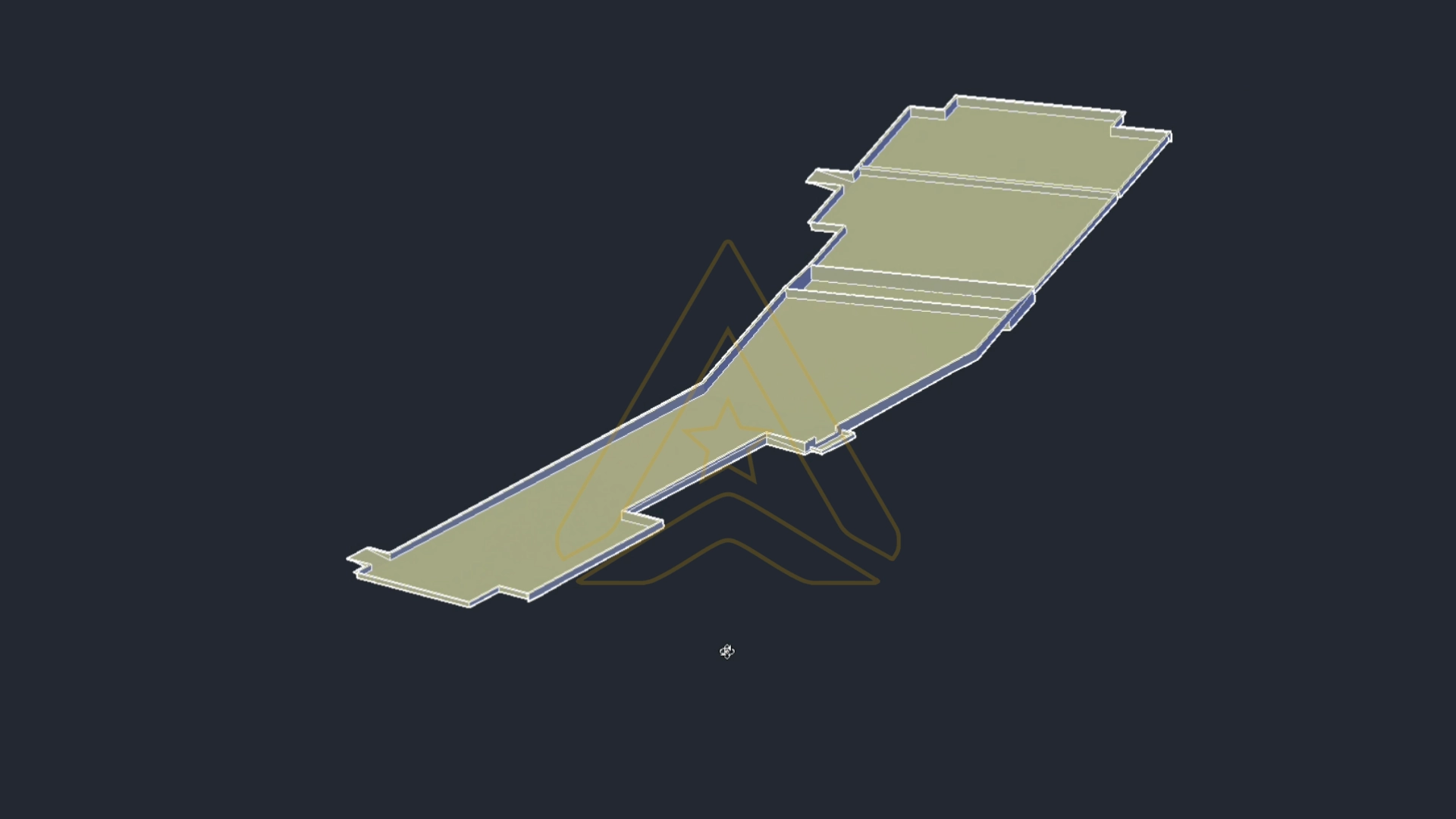
Detailed grading for detention, sedimentation, and filtration ponds improved stormwater performance and site-wide drainage coordination.
Stormwater features cannot be treated as leftover spaces within a grading plan. They require deliberate control of basin geometry, side slopes, maintenance benches, connection points, and spillway relationships.
On the Community Center Campus, AXANH refined these pond systems so they could perform hydraulically while remaining consistent with the grading logic already established across the broader site.
This step mattered because stormwater performance depends on precise tie-ins, not just isolated geometry. When pond grading is disconnected from the rest of the campus, the result may look acceptable in one area while creating contradictions elsewhere. By coordinating pond grading back into the campus-wide control system, the project gained a more reliable drainage model and a more buildable site condition.
Autodesk also emphasizes criteria-based workflows in its grading optimization guidance for Civil 3D, which reinforces the value of evaluating grading solutions against broader site intent rather than viewing them as disconnected drafting moves.
Phase 3: Integrating Building Pads, Access Routes, and Public Spaces
The final phase completed grading for all remaining functional areas of the campus, including building pads, exterior stairs, ADA-sensitive ramp transitions, sidewalks, plazas, playground areas, and locations requiring retaining wall coordination.
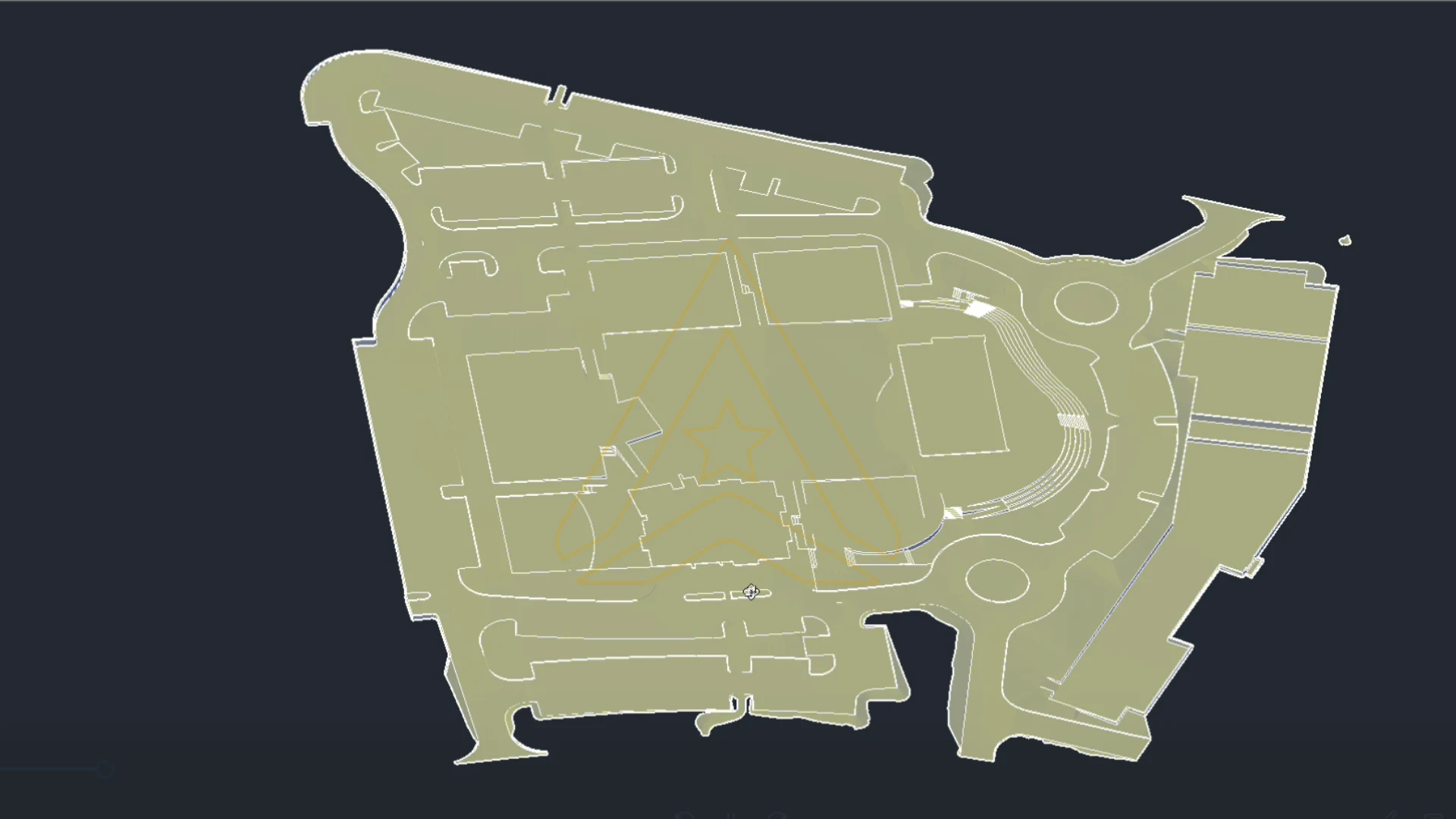
Building pads, ramps, sidewalks, and plazas were refined to create smoother transitions, positive drainage, and better constructability.
This phase required tighter coordination because small elevation differences could affect usability, drainage, accessibility, and constructability at the same time. AXANH approached this work with one essential rule: every detailed element had to tie back to the roadway and parking framework established in Phase 1.
That continuity allowed the campus grading model to function as a system. Building pads connected more cleanly to surrounding grades. Ramps and sidewalks responded more reliably to circulation needs. Public-use areas gained positive drainage without sacrificing usability. Locations with abrupt grade changes were refined into smoother and more practical transitions.
For site circulation and accessibility, this kind of coordination is especially important. The U.S. Access Board guidance on accessible routes also reflects why slope continuity and transition quality matter in real site conditions.
What This Workflow Solved
In this Detailed Grading Design for a Community Center Campus, the three-phase workflow helped reduce grading revisions, improve drainage direction, eliminate unintended low points, and strengthen constructability across the site. The value was not only technical. It was operational. Instead of allowing grading problems to surface late through repeated redesign, AXANH structured the process to reduce instability before it spread across the project.
- Improved drainage performance: flow directions and tie-ins were planned systematically rather than patched locally
- Better constructability: transitions between roads, parking, pads, public areas, and ponds became clearer and more buildable
- Reduced revision cycles: major controls were solved first, limiting the need to repeatedly rebuild detailed areas
- Lower risk of unintended low points: the site behaved more like a coordinated grading system than a collection of isolated surfaces
- Higher overall site quality: the final model supported cleaner surface relationships and stronger long-term performance
Detailed Grading Design for a Community Center Campus and Long-Term Site Performance
For developers, civil engineers, project managers, and design managers, Detailed Grading Design for a Community Center Campus is not only about finished elevations. It is about creating a site-wide logic that supports drainage reliability, coordination clarity, and better construction outcomes.
The biggest lesson from this project is simple: grade the system, not just the surface. Establish the right controls first. Align stormwater grading with the broader site framework. Then refine the detailed functional areas that must connect back to the whole.
When that hierarchy is missing, revision pressure grows. When it is clear, the grading model becomes more stable, more coherent, and more useful to the entire project team.
For broader site planning context, the U.S. EPA’s green infrastructure design strategies also reinforce the value of integrating drainage thinking early in site development rather than treating it as an afterthought.
Need a More Reliable Grading Strategy for a Complex Site?
If your team is facing grading revisions, drainage conflicts, low points, or coordination pressure on a campus or land development project, AXANH can help. Contact AXANH for expert consultation on detailed grading and drainage design for complex site development projects.
Final Thought
Ultimately, Detailed Grading Design for a Community Center Campus gives owners, developers, and civil teams a more reliable framework for reducing low points, improving drainage performance, and supporting smoother construction outcomes.
A grading plan can look complete and still remain fragile. What makes it reliable is the structure behind it: the sequence of decisions, the hierarchy of controls, and the discipline to connect every surface back into one coherent system.
In this case study, AXANH used a 3-phase Civil 3D workflow to unify roads, parking areas, stormwater ponds, building pads, access routes, and public-use spaces into one grading model. The result was better drainage performance, improved constructability, lower revision risk, and stronger overall site quality.
