

Partnership Models
Partnership Fit
Strategic Partnerships
Why AXANH
Discuss Your Needs



Engineering Center of Excellence
Turning engineering experience into capability that carries forward
The AXANH Engineering Center of Excellence (ECoE) connects people development, practical engineering knowledge, standards work and academic collaboration so useful lessons from delivery can strengthen teams, partnerships and future projects.
Explore the Center See Real-World ActivitiesThree parts of one capability system
Develop people and learning
AXANH Academy builds capability from within, extends learning into client partnerships and is opening selected learning to future engineers in Vietnam.
AXANH Academy builds capability from within, extends learning into client partnerships and is opening selected learning to future engineers in Vietnam.
Develop engineering knowledge
AXANH Engineering Intelligence helps practical knowledge be reviewed, organized and reused within clear boundaries.
AXANH Engineering Intelligence helps practical knowledge be reviewed, organized and reused within clear boundaries.
Connect academia and practice
AXANH Academic Partnerships connects defined academic programs and relationships with professional engineering practice.
AXANH Academic Partnerships connects defined academic programs and relationships with professional engineering practice.
Direct definition
A system for capability to outlast the individual
The AXANH Engineering Center of Excellence is how AXANH structures learning, develops engineering knowledge and brings useful lessons back into delivery. It began with the need to strengthen internal capability and now creates room for learning with clients, sharing selected knowledge with future engineers and connecting professional practice with academia.
The three systems have different jobs. AXANH Academy focuses on people and learning journeys. AXANH Engineering Intelligence develops Practice Knowledge, Applied AI, and Research & Standards. AXANH Academic Partnerships connects defined academic programs and relationships with professional engineering practice.
A simple principle
A useful lesson becomes more valuable when the next person can start from a better place.
Three connected systems
Three systems, three clear jobs
Academy develops people and learning journeys. Engineering Intelligence develops knowledge. Academic Partnerships creates the bridge to academia. The three systems reinforce one another without blurring their roles.
01
People & learning
AXANH Academy
Academy is developing along three paths: building capability for AXANH people; helping clients and partners learn how to work together more effectively; and gradually opening selected courses, checklists and practical guidance for engineering students and early-career engineers in Vietnam.
A learning system can strengthen the people doing the work while giving useful knowledge a longer life.
02
Knowledge, AI & standards
AXANH Engineering Intelligence
Engineering Intelligence is organized around Practice Knowledge, Applied AI, and Research & Standards. Recurring technical questions, review points and lessons from delivery can be selected, reviewed and developed into knowledge that is easier to understand and reuse.
Knowledge becomes more useful when its source, review process and sharing boundary are clear.
03
Academic connection
AXANH Academic Partnerships
Academic Partnerships connects institution-level collaboration, defined academic programs and relationships with students and faculty in Vietnam and internationally. Depending on the documented scope, activities can include internships, graduation projects, technical exchange or applied research.
Academy serves learners; Academic Partnerships governs how AXANH connects with institutions, programs and the academic community.
Learning shared with clients, partners and external audiences follows the appropriate access boundary. Full SOPs, client-specific material, confidential data and controlled intellectual property remain in the environment suited to their purpose.
AXANH Academy
One Academy, three learning directions
Academy was built from the need to develop AXANH people, but its role does not have to stop there. The longer-term direction is to keep three distinct learning journeys: developing capability inside AXANH, helping two organizations learn how to work together, and sharing selected knowledge with engineers preparing to enter the profession.
Build capability from within
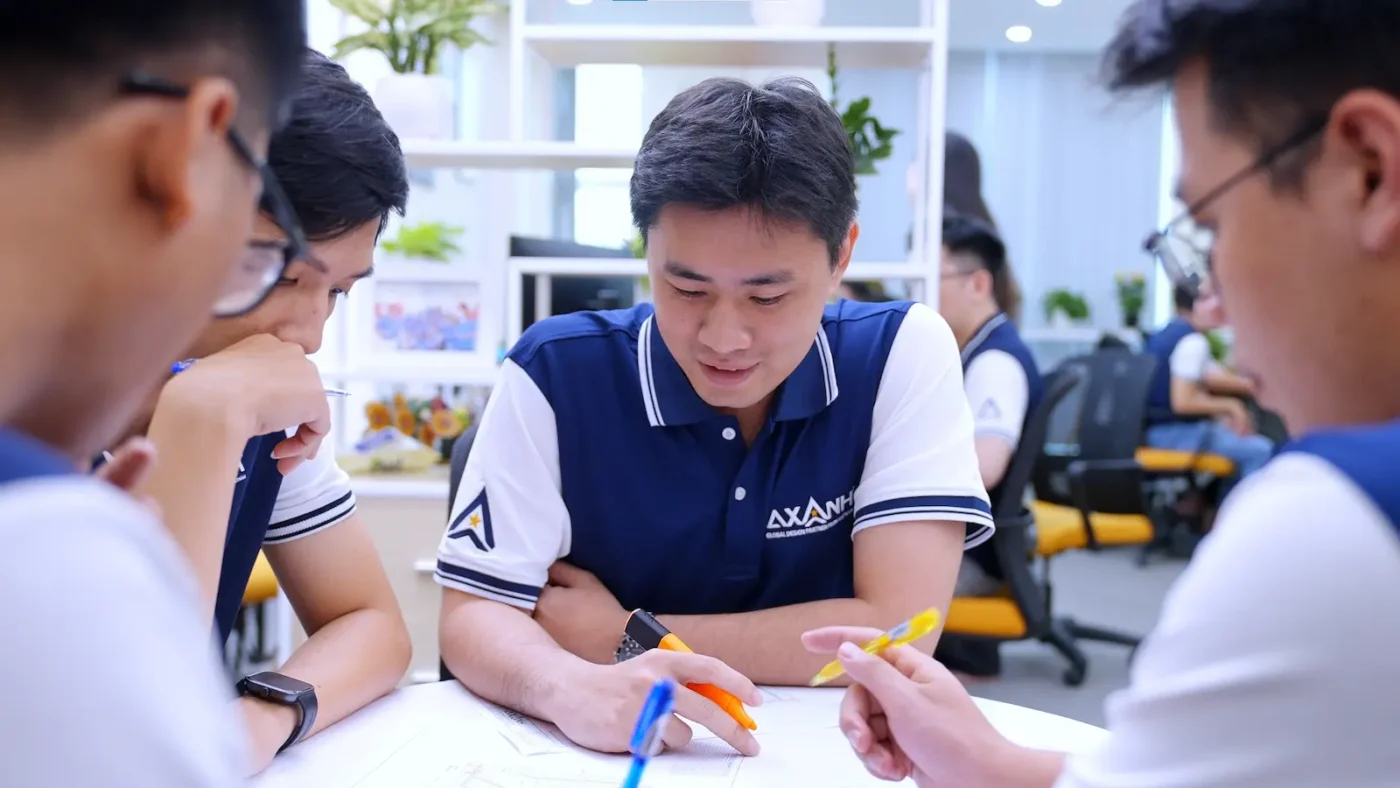
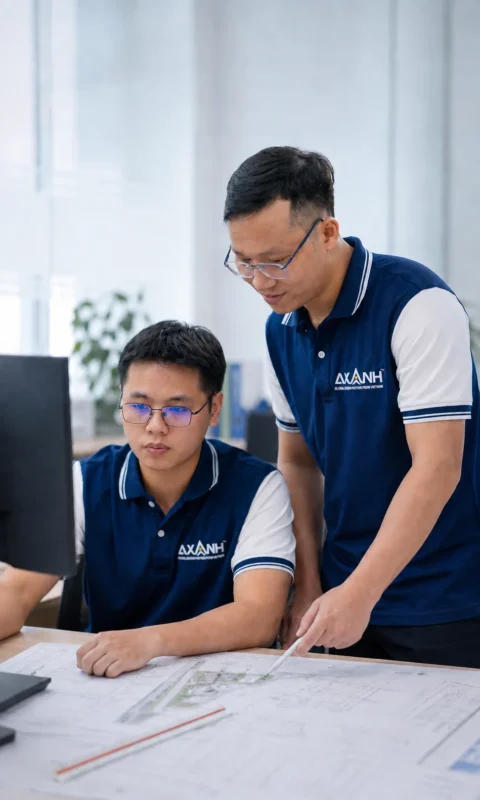
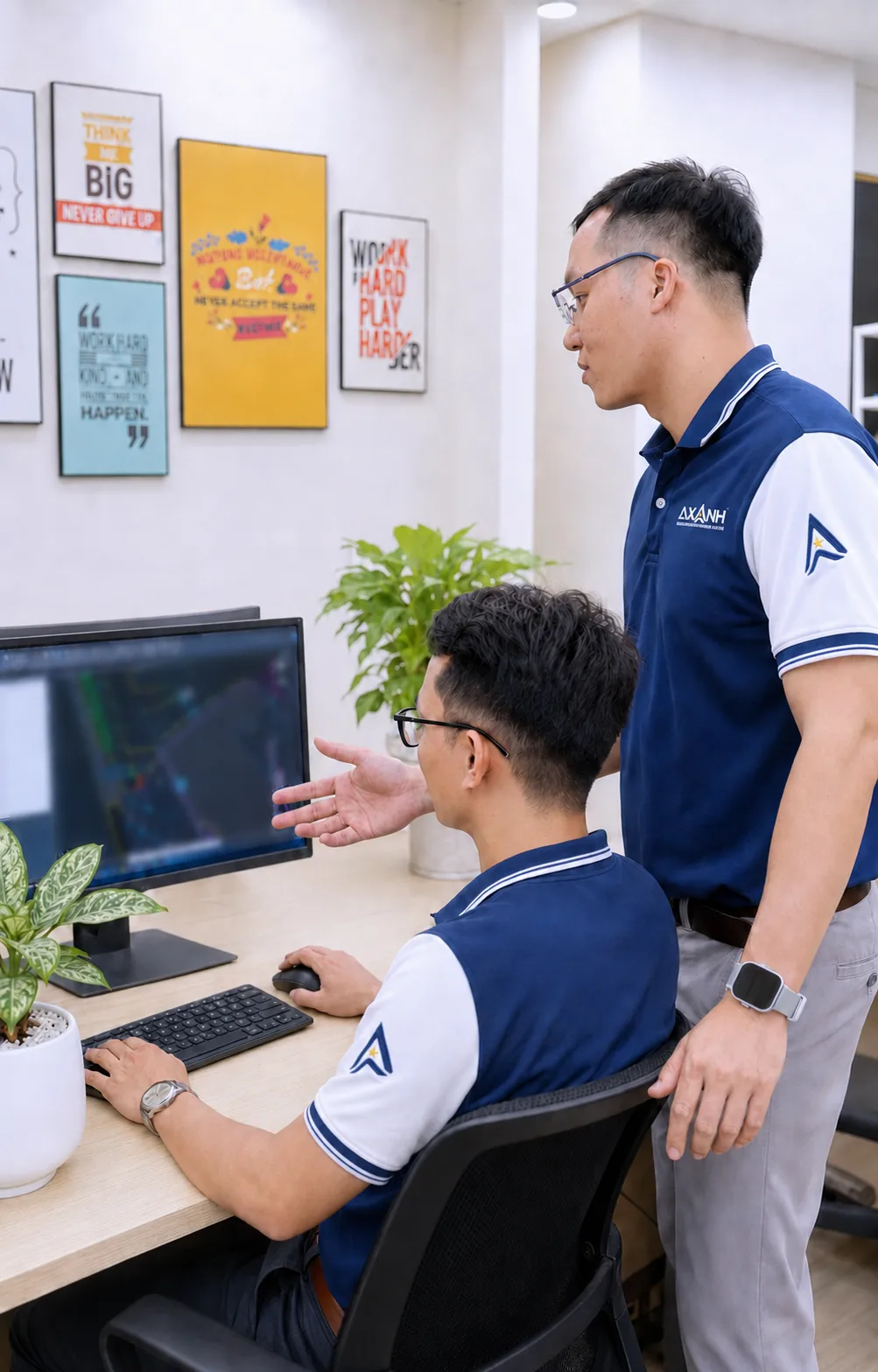
Onboarding, mentoring, Career Architecture, Civil 3D, QA/QC, project management, client communication, leadership development and recurring assessment help AXANH people see what they need to develop for their current role and the responsibilities ahead.
Learn with clients
For prospective clients and active partners, learning can move from understanding the partnership model and client onboarding to standards, review practices, design philosophy, cultural context and jointly developed professional-learning programs when the relationship supports them.
Share with future engineers
AXANH is developing free learning for engineering students and early-career engineers in Vietnam, including selected foundational knowledge, checklists, career guidance and practical lessons. The material should remain useful whether or not the learner ever applies to AXANH.
Real-world activities
Built on activities already underway
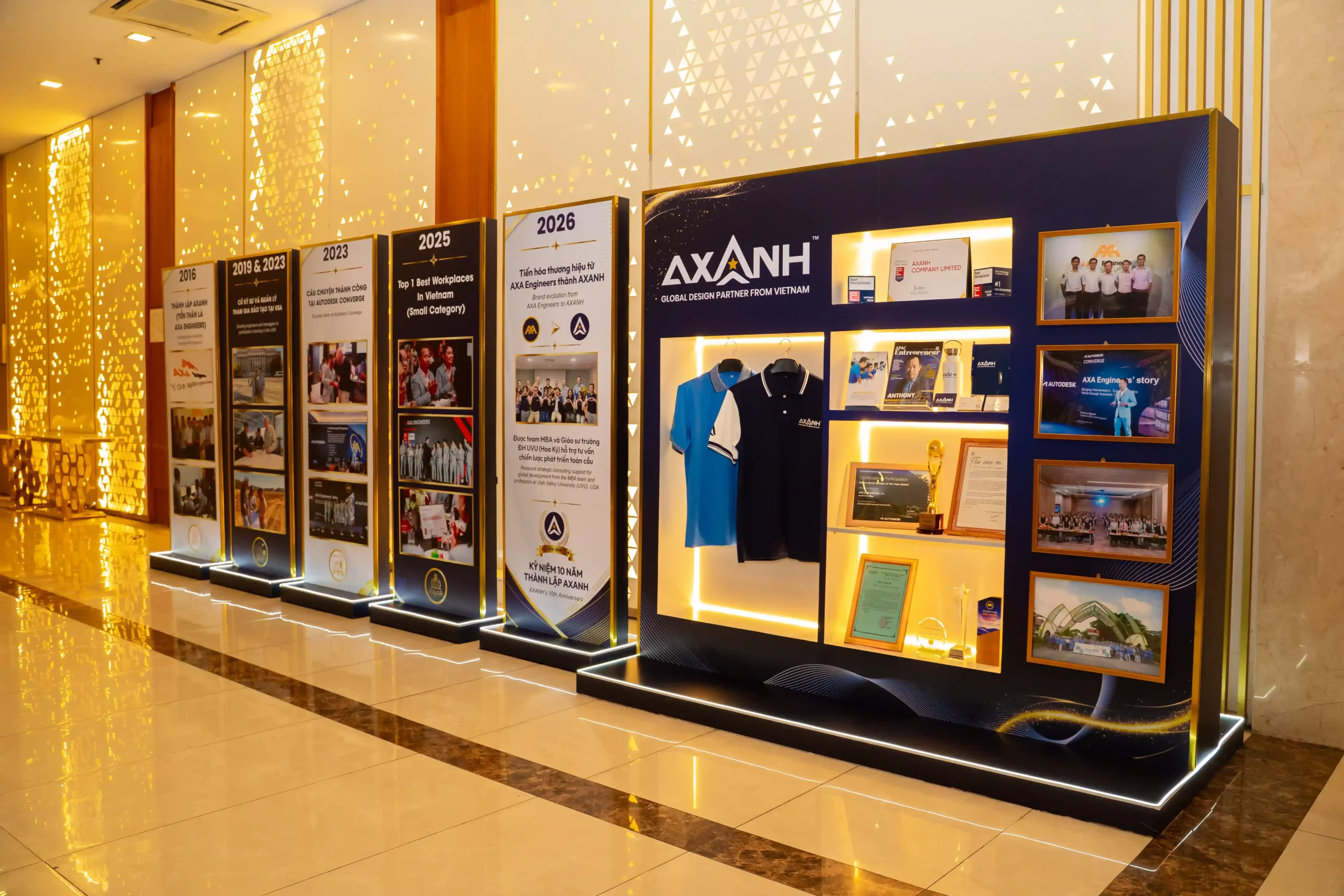
The Center draws on practices AXANH already maintains: recurring capability assessment, direct US-market learning, academic collaboration and structured external challenge. Together, they show how capability is developed beyond project staffing alone.
Annual Civil 3D assessment
Each year, every eligible AXANH engineer with at least 12 months of tenure enters the Civil 3D Completion assessment cycle organized on-site. AXANH’s standard is 100% completion by the annual eligible cohort, with additional preparation and reassessment where needed.
Direct US-market learning
In 2018, AXANH completed an on-site learning program in Napa, California covering project process, design topics, templates, drafting techniques and teamwork. Further US exposure followed in 2023.
HCMUT–VNU-HCM collaboration
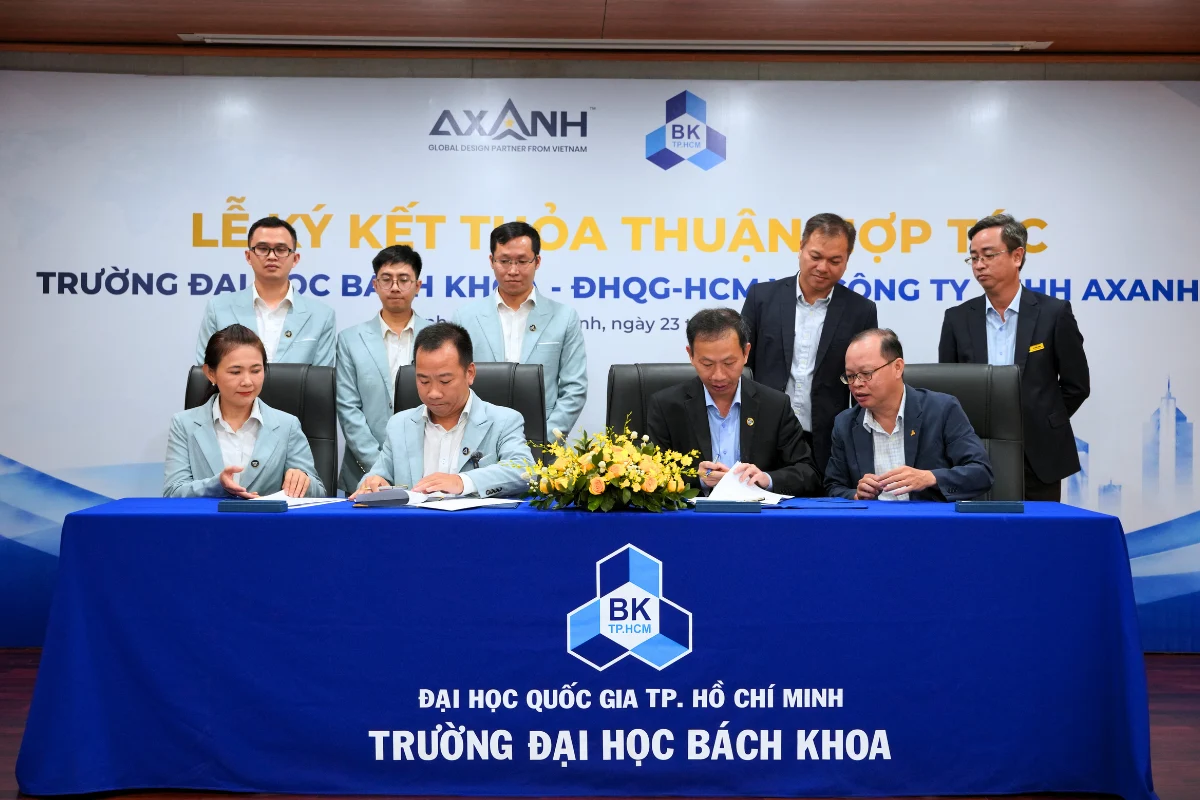
The three-year collaboration framework includes scholarships, internships, graduation projects, career orientation, technical exchange and talent development. In 2026, AXANH completed VND 50 million in scholarship sponsorship.
UVU MBA strategic engagement
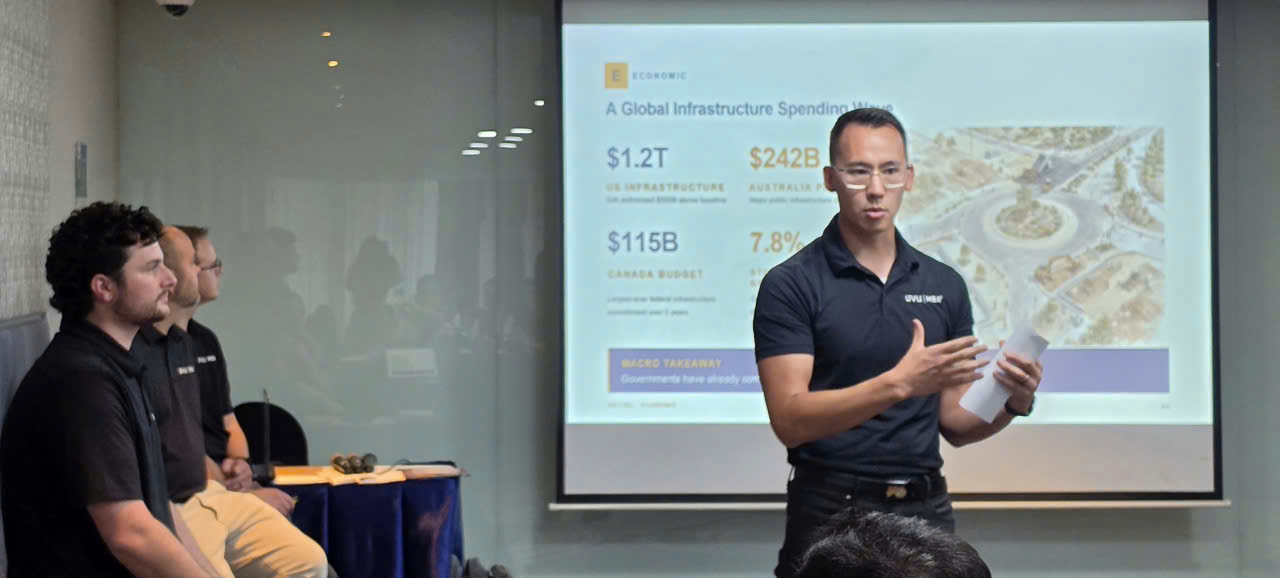
In 2026, AXANH worked with a Utah Valley University MBA strategic consulting team, with academic guidance from Professor Don Capener, Ph.D., to examine a three-to-five-year growth direction and organizational readiness.
International internship program
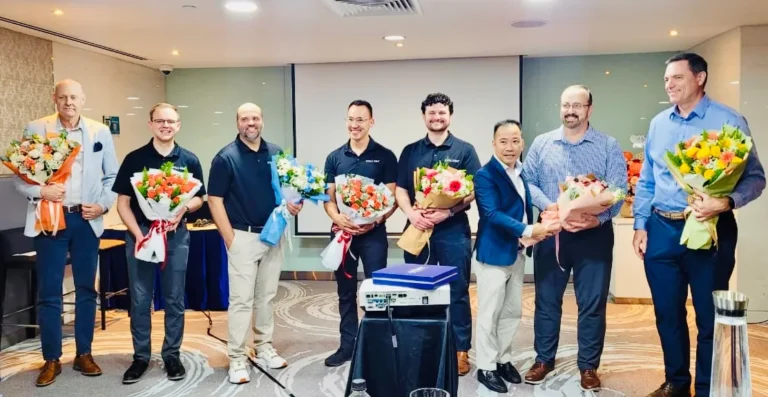
AXANH welcomes international interns from countries including the United States, the United Kingdom, Australia and New Zealand for office-based, practice-oriented placements. The experience combines project exposure with technical exchange and cross-cultural learning.
Engineering Intelligence
Three areas for knowledge that can travel further
AXANH Engineering Intelligence organizes engineering knowledge around Practice Knowledge, Applied AI, and Research & Standards. Each area handles a different kind of question, from day-to-day practice to emerging technology and longer-term standardization.
Knowledge Area 01 · Practice Knowledge
Practice Knowledge
Source material can include reviewed SOPs, QA/QC checklists, model review, recurring technical questions and appropriately anonymized project lessons. Public outputs may become Engineering Practice Notes, checklists, walkthroughs or sanitized practical examples.
Knowledge Area 02 · Applied AI
Applied AI
This area focuses on practical tasks where AI may support civil engineering design and delivery. Each item should make clear what AI is assisting, what a human must verify and what data is appropriate to use.
Knowledge Area 03 · Research & Standards
Research & Standards
This area covers applied research, delivery standards, capability frameworks, quality, engineering productivity and responsible AI governance. A framework, report or standard is presented as established only after its method, scope, review and release approval are complete.
Practical meaning
Different relationships need different starting points
The value of the system is not the number of courses or documents it produces. The value is having the right learning, knowledge and access level for the relationship in front of us.
For clients & partners
Build shared context earlier
A well-designed learning journey can help both sides align earlier on communication, review expectations, standards, design philosophy and decision-making. As the partnership develops, onboarding can grow into shared technical learning and capability building.
For delivery capability
Make useful lessons reusable
Assessment, mentoring, reviewed knowledge and standards work give recurring lessons somewhere to go. Over time, that creates a clearer path for capability to be shared across a team rather than remaining with a few individuals.
For academic partners
Connect education with practice
Well-defined programs can create more opportunities for students, faculty and industry to exchange practical knowledge, applied research questions and insight into the changing expectations of engineering work.
Frequently asked questions
A few things worth clarifying
The three systems reinforce one another, but they do not have the same role. These questions clarify how Academy, Engineering Intelligence and Academic Partnerships fit together, and where AXANH draws the line on public knowledge.
Is the AXANH Engineering Center of Excellence a separate educational institution?
No. The Center is a capability and knowledge system operated by AXANH Company Limited. It is not a separate degree-granting institution or certification authority. Academic or professional qualifications are referenced only when they belong to a specific program delivered with an appropriately authorized partner.
How can AXANH Academy support a client partnership?
Academy can support prospective-client education, client onboarding and deeper shared learning when the relationship and scope justify it. Topics may include working models, communication, review expectations, standards, design philosophy, cultural context and jointly developed professional-learning programs.
How is open Academy learning different from Academic Partnerships?
Academy serves learners directly. Selected free content can be opened to an individual engineering student or early-career engineer without implying that the person’s university is an AXANH partner. Academic Partnerships governs institution-level collaboration, defined programs and other documented academic relationships.
Are free AXANH Academy courses professional certifications?
Not by default. A course, badge or completion record on an AXANH learning platform should not be read as a professional licence, academic credit or government-recognized qualification unless a specific program states otherwise and is delivered with the appropriate authorized party.
What sits inside AXANH Engineering Intelligence?
Engineering Intelligence is organized around three areas: Practice Knowledge, Applied AI, and Research & Standards. Engineering Practice Notes, walkthroughs, checklists and project lessons are formats that can sit within Practice Knowledge rather than separate pillars of the Center.
Where will new technical content be published?
New long-term technical content is developed under AXANH and published on axanh.com. AXA Engineers is the engineering heritage that built AXANH and now serves as a heritage and transition domain while legacy technical URLs are reviewed, migrated, bridged or redirected as appropriate.
Will AXANH publish its full internal SOPs?
No. Public knowledge may use reviewed workflow logic, review points, checklists or sanitized examples when they are suitable for external use. Full SOPs, client-specific standards, controlled templates, confidential QA/QC detail and sensitive intellectual property remain within the appropriate access boundary.
The AXANH Engineering Center of Excellence is a capability and knowledge platform operated by AXANH Company Limited. External learning, academic collaboration and technical knowledge are shared according to the scope, access, confidentiality and permissions appropriate to each program or relationship.
Next step
Turn learning into a stronger working relationship
If you are evaluating AXANH as a long-term design partner, start with our Client & Partner Learning hub or talk with us about an onboarding, shared-learning or capability-building program that fits the relationship you want to develop.
Explore Client Learning Discuss Strategic Collaboration