

Partnership Models
Partnership Fit
Strategic Partnerships
Why AXANH
Discuss Your Needs



The AXANH Culture House
AXANH culture is built through everyday action
AXANH connects kindness, professionalism, unity, high standards and well-being so teams can communicate clearly, raise risks early, keep commitments and create lasting value for clients and partners.
Central idea
Do good work. Grow in judgment. Create lasting value.
Direct answer
What is AXANH culture?
AXANH culture is a system of values, behaviors and working conditions that shapes how teams communicate, protect quality, raise concerns, respond to mistakes and work with clients.
Culture does not sit outside delivery. It becomes visible in the questions people ask, the commitments they keep, the way they give feedback, how early they surface risk and whether useful lessons become shared capability instead of staying with one person.
The practical test: a healthy culture does not remove pressure, mistakes or difficult conversations. It gives people a clearer, fairer and more responsible way to deal with them.
Culture is visible when
Feedback improves the work
Candor is paired with respect, a clear purpose and responsibility to improve the next decision or deliverable.
Risks are raised early
The person who sees a concern speaks up while there is still time for the team and client to respond intelligently.
Knowledge is shared
A useful lesson, checklist or working method becomes shared capability rather than remaining dependent on one individual.
Success creates more opportunity
Progress is reinvested in people, systems, partnerships and the professional community that supports future work.
Culture structure
How does the Culture House work?
The AXANH Culture House connects five layers in a deliberate sequence, from organizational character to the wider meaning of success. Each layer answers a different question: who we are, how we work, how we choose, which behaviors protect the culture and whom our success should serve.
This structure makes culture easier to examine in real work. It gives teams a common language for discussing behavior, decisions, standards and the quality of the relationships built around delivery.
The Foundation
Kindness, Professionalism and Unity form the character beneath the culture.
The Floor
High Performance Through Well-Being defines the working philosophy.
The Five Pillars
Alignment, Excellence, Accountability, Next-Level and Happiness guide decisions.
The Roof
Ten shared ways of working turn values into observable behavior.
The Sky
The Five-Point Star asks whether success creates value for clients, people, partners, community and nature.
The complete model
One house, five cultural layers
The Culture House shows how character, working conditions, decisions and daily behavior reinforce one another. Three foundation values support the operating philosophy; five pillars guide choices; ten shared ways of working protect the culture; and the star above connects internal performance with the value created for others.
The diagram is useful as a map, not as decoration. The real test is whether each layer changes how people communicate, review work, raise concerns, learn and take responsibility when the work becomes difficult.
How to read the model: begin with the foundation, move through the working philosophy and five pillars, examine the behaviors in the roof, then ask: who becomes stronger because of this result?
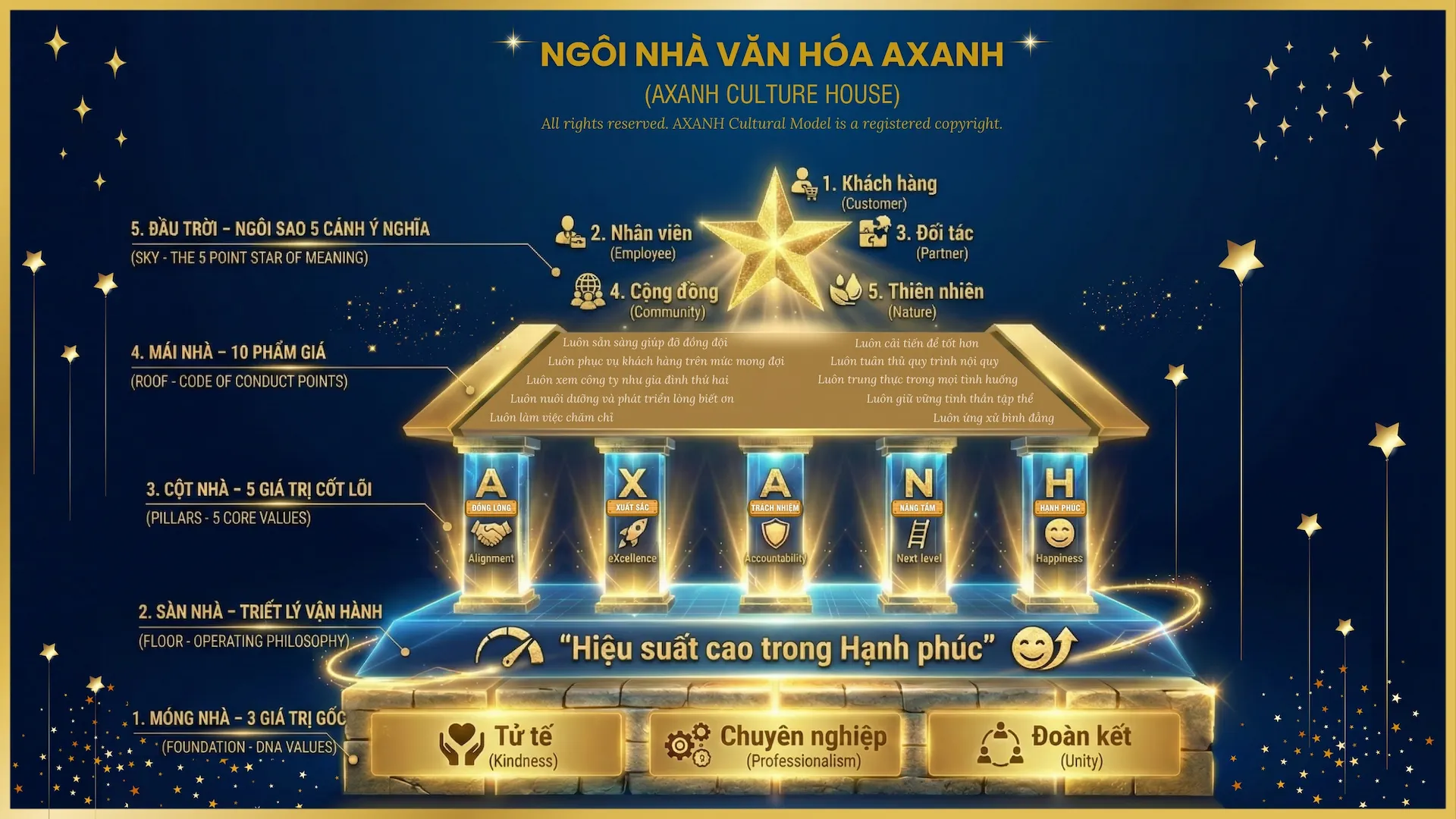
The AXANH Culture House connects three foundation values, the working philosophy, five core values, ten shared ways of working and five groups served by shared success.
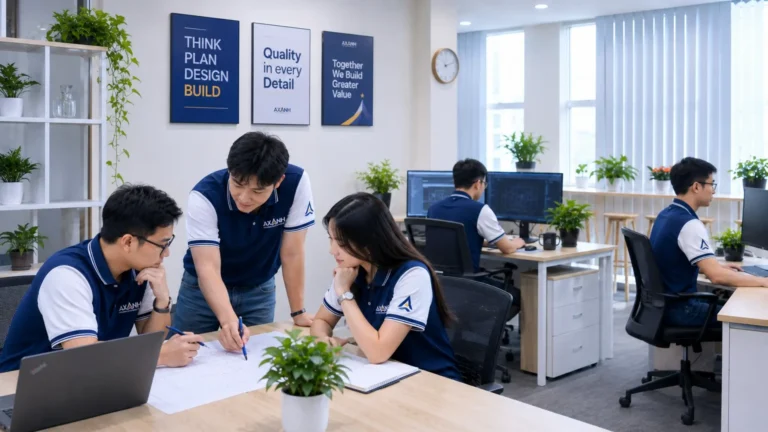
The foundation
Three values shape the character underneath
Kindness builds trust. Professionalism turns trust into dependable standards. Unity turns individual capability into team strength. None is sufficient alone: the culture becomes durable when respect, discipline and shared purpose reinforce one another.
01
Kindness builds trust
Kindness means listening before judging, sharing knowledge, helping when support is genuinely needed and telling the truth without diminishing another person. That creates more room for people to ask questions, admit an honest mistake and raise concerns before they become harder to solve.
Visible in practice
Respectful candor and constructive feedback
Speak directly, listen carefully and protect good-faith concern raising.
The boundary
Kindness does not require lower standards or tolerance for repeated carelessness or harmful behavior.
02
Professionalism creates dependable standards
Professionalism goes beyond technical knowledge. It includes discipline, respect for time, careful communication and ownership of commitments. Understanding the requirement, clarifying uncertainty, checking work before handoff and raising risk early make quality more systematic and less dependent on last-minute effort.
Visible in practice
Quality, discipline and responsibility
Keep commitments, or communicate early when the shared outcome may be affected.
The boundary
A process is useful when it makes work clearer, safer, more consistent or more reliable.
03
Unity creates team strength
Unity means sharing information, challenging ideas respectfully and moving forward around a clear common purpose. Strong teams do not require identical opinions. They need enough trust to surface disagreement before a decision, then enough alignment to execute that decision together.
Visible in practice
Open dialogue and shared knowledge
Help others become more capable rather than creating long-term dependence.
The boundary
Silence about quality, safety, ethics or trust is not unity.
The working philosophy
High Performance Through Well-Being
Performance and well-being are not competing choices. AXANH uses this philosophy to describe the conditions behind dependable work: clear expectations, responsible planning, useful feedback, accountability, early communication and room for people to develop.
| Dimension | Not the goal | How AXANH applies it |
|---|---|---|
| Performance | Looking busy or working the longest hours | Producing dependable results against agreed standards and commitments |
| Pressure | Treating exhaustion as normal | Planning responsibly, communicating early and asking for support before risk compounds |
| Feedback | Avoiding difficult conversations to preserve comfort | Making the issue clear, respectful and useful enough to improve the work |
| Mistakes | Hiding problems or defaulting to blame | Being honest, correcting the issue, learning from it and reducing recurrence |
| Well-being | Expecting every day to be easy or everyone to feel positive | Creating respectful conditions where people can grow, contribute and sustain good work |
The balance matters: well-being is not a reason to lower standards, and performance is not a reason to normalize harmful working habits.
Explore the Working Philosophy
The five pillars
Five values turn principles into decisions
The A-X-A-N-H values describe what the culture should produce in action. They connect the foundation and working philosophy with choices about priorities, quality, ownership, capability development and the sustainability of performance.
A
Alignment
Alignment
Clarify what matters, surface differences while they can still improve the decision, then move together once the direction is clear. Alignment helps a distributed team focus on the same outcome rather than simply completing more activity.
One direction. Clear decisions. Coordinated action.
X
Excellence
Excellence
Excellence begins before handoff: understand the requirement, prepare carefully, ask the right question, review the work and turn a good solution into a stronger standard for the next task where appropriate.
Do it well. Keep making it better.
A
Accountability
Accountability
Accountability is not the absence of mistakes. It is the willingness to speak up, own the work, act in time, correct what needs correcting and help prevent the same avoidable issue from recurring.
Own it. Fix it. Learn from it.
N
Next-Level
Next-Level
Growth is deeper than taking on a bigger task. It appears when skills, judgment, systems and the people around us become more capable over time, allowing useful knowledge to compound instead of being repeatedly rebuilt.
Grow yourself. Help others grow.
H
Happiness
Happiness
Happiness means doing meaningful work, using strengths, developing professionally and working with people we respect in a kind, professional and fair environment. The purpose is sustainable performance, not comfort without challenge.
Well-being fuels lasting performance.
The roof
Ten shared ways of working protect the culture
Values become culture only when they can be observed in behavior. These ten commitments translate broad principles into everyday choices that colleagues, clients and partners can actually experience.
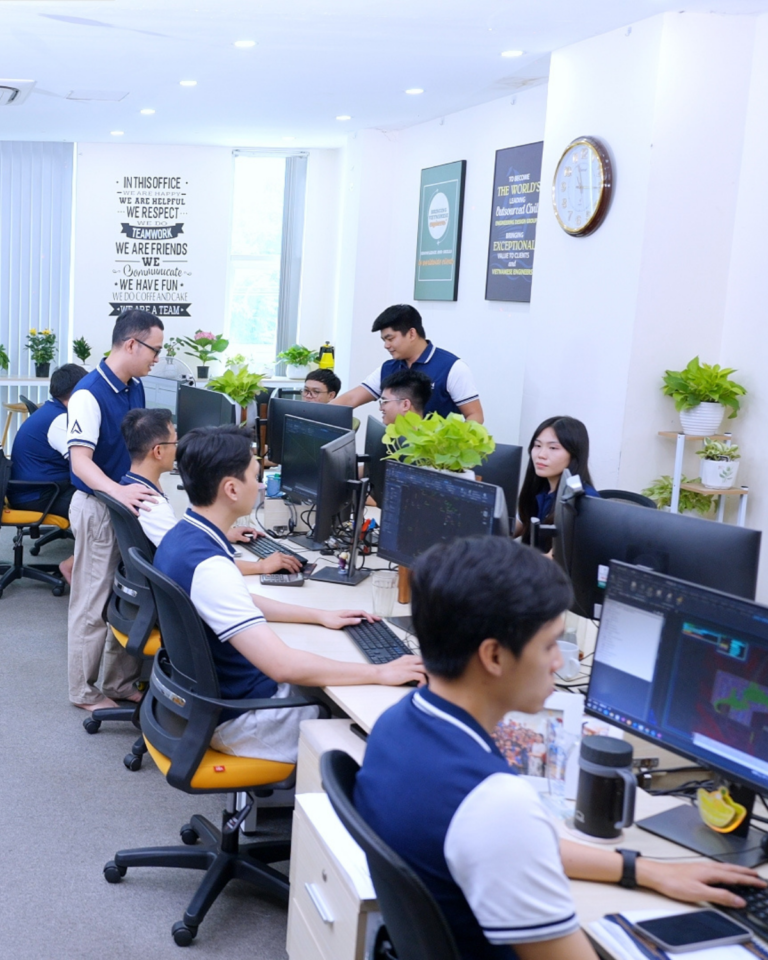
Support your teammates
Help when someone is facing a genuine challenge while also building their ability to handle similar work more independently in the future.
Help clients succeed
Understand what the client is trying to achieve, surface relevant risks and contribute useful judgment within the agreed scope, capability and responsibility.
Build a professional community
Contribute to a workplace people help shape together, with belonging and mutual care balanced by professional responsibility and personal boundaries.
Practice gratitude
Recognize effort, give credit fairly and remember that meaningful results usually depend on contributions from more than one person.
Work hard with purpose
Bring focus, discipline and effort to the work, use time deliberately and understand why the task matters before treating activity as progress.
Keep improving
Learn from feedback, mistakes and good outcomes, then turn useful lessons into better ways of working that others can apply.
Follow and improve processes
Use agreed processes to protect consistency and quality, and raise the issue when a process no longer creates the value it was designed to create.
Be honest in every situation
Tell the truth about progress, quality, risk and mistakes. Do not hide material information or make commitments that cannot be supported.
Put shared success above ego
Share information, support common goals and keep internal competition or personal pride from damaging the work or the relationship.
Treat everyone fairly
Treat people with dignity and respect, with opportunity and recognition grounded in capability, contribution, behavior and potential.

Capability development
Learning matters when it strengthens the work
Professional growth becomes useful to a client when people can handle more difficult problems, exercise better judgment, communicate responsibly and turn experience into reusable knowledge. Development is therefore connected to delivery capability, not treated only as an internal career activity.
Mentoring has the same test. Its value is not dependence on a senior person. Its value is helping someone learn, judge, take responsibility and eventually strengthen the capability of others.
Deliver your own work well
Understand the requirement, keep commitments and produce work you can stand behind.
Improve engineering judgment
Recognize risk, trade-offs and downstream implications before making the next decision.
Turn experience into knowledge
Convert useful lessons into checklists, guidance or methods that other people can use.
Develop capability in others
Use opportunity, feedback and support to make the wider team stronger over time.
Technical depth
Grow deeper technical judgment
An engineer can develop through stronger technical depth, review capability, standardization and knowledge transfer without leaving the technical path. For clients, that matters because expertise should become easier to share and sustain across a team.
Leadership depth
Grow capability through others
Leadership is more than allocating tasks. It includes clarifying priorities, giving useful feedback, managing workload responsibly and helping the team become more capable and less dependent on individual heroics.
Culture-to-quality
What should clients be able to notice?
A culture page matters to a client only if it changes the working relationship. The practical expectation is not a perfect workplace; it is a team environment that supports clearer communication, earlier visibility of risk, dependable standards, useful learning and shared responsibility.
These behaviors are operating expectations, not a substitute for project-specific scope, technical review, professional responsibility or agreed client controls.
Standards are made clear
Requirements, priorities and review expectations should be understood before the team relies on them.
Concerns can be raised
A team member should be able to surface a material concern early rather than waiting for a deadline to make the problem visible.
Feedback is useful
Direct feedback should help the recipient understand the issue, improve the work and strengthen the next decision.
Honest mistakes become lessons
Good-faith mistakes should lead to correction, learning and better controls rather than concealment.
Capability keeps developing
Learning, mentoring, review and knowledge sharing should reduce avoidable dependence on a few individuals over time.
Pressure is discussed early
Responsible planning includes speaking up about workload, uncertainty or risk before those conditions degrade the work.
Independent workplace evidence
An award from the world’s leading enterprise culture organization
For a design partner, workplace quality is relevant when it supports team continuity, retained project knowledge and the ability to keep developing capability. Great Place To Work® provides one independent signal about that people environment.
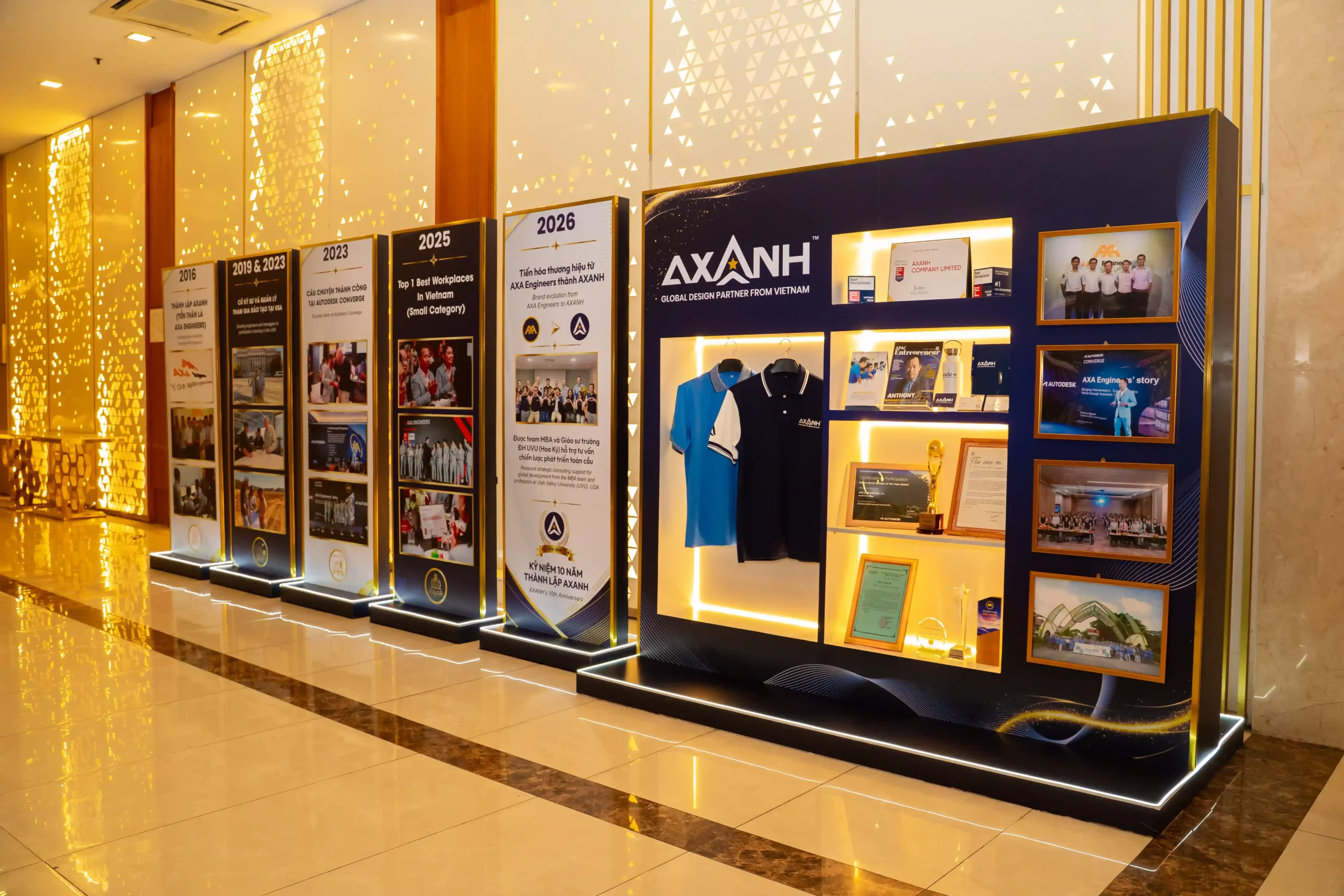
Best Workplaces in Vietnam™ 2025
#1 — Small Category
AXA Engineers — the brand name at the time of the assessment and the engineering heritage that built AXANH — ranked #1 in the Small Category on the Best Workplaces in Vietnam™ 2025 list by Great Place To Work®.
Great Place To Work® 2025 profile
93% of surveyed employees
In the Great Place To Work® profile published for the 2025 assessment period, 93% of surveyed employees said it was a great place to work.
These figures describe the defined 2025 workplace assessment. Their relevance here is as independent evidence about employee experience within that measured scope.
The five-point star
Success matters when it creates value beyond itself
The star above the Culture House broadens the question from internal performance to shared value: who becomes stronger because of the work? That connects culture with the AXANH Vision and Mission and keeps organizational growth connected to the people and relationships around it.
The five groups are not separate boxes. A well-judged decision can create several layers of value at once — stronger client outcomes, better work for the people delivering it, healthier partnerships and a more capable professional community.
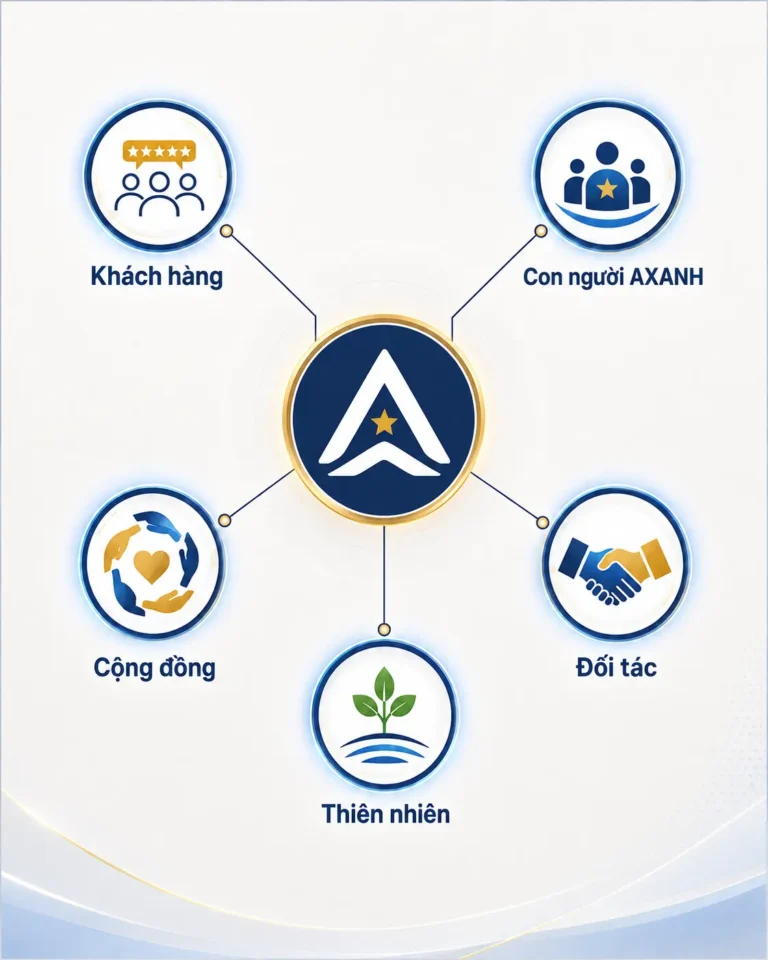
01
Clients
Dependable work, clear communication and useful contribution toward the client’s objectives.
02
Our People
A place to do good work, grow in judgment and help others become more capable.
03
Partners
Relationships built with clarity, fairness, integrity and value appropriate to each side.
04
Community
Knowledge sharing, stronger links between education and practice, and contribution to Vietnamese engineering capability.
05
Nature
Responsible use of resources and environmental language grounded in actions that can be supported.
Daily choices
Culture is not what we say about ourselves. It is the trust we earn through the way we work.
Five working questions
Keep culture close to delivery
What useful value did we create?
Look at the result and decision value, not only the amount of activity completed.
Did we raise the risk early enough?
Ask whether the right people had enough time and context to act.
Did the work meet the agreed standard?
Check the requirement, review point and commitment that actually matter for the handoff.
What should improve next time?
Turn experience into a specific adjustment rather than a vague intention to do better.
What lesson should become shared knowledge?
Capture useful learning so the next person or project does not have to rediscover it alone.
Frequently asked questions
Culture questions clients often need answered
These answers focus on what the Culture House means in a working relationship: communication, accountability, quality, learning, team continuity and the scope of workplace evidence.
What does the AXANH Culture House mean for clients and partners?
It is a practical framework for how AXANH expects people to work, not a separate HR story. The Culture House connects respect for people with professionalism, early risk communication, accountability, shared learning and long-term value, so culture can be examined through behaviors that affect collaboration.
How does culture connect with quality and delivery?
Culture influences the conditions around quality: whether requirements are clarified, concerns are raised early, work is reviewed, mistakes are discussed honestly and useful lessons are shared. Those behaviors support dependable delivery, while project-specific quality controls and professional responsibilities still remain defined by the actual scope and workflow.
What does High Performance Through Well-Being mean in a client relationship?
It means high standards are pursued through responsible working conditions rather than through normalized burnout. Clear goals, early communication, useful feedback, planning and accountability are intended to make performance more sustainable, especially when teams need to retain knowledge and improve over a longer relationship.
Does kindness lower standards or reduce accountability?
No. Kindness means being clear and honest while respecting the person involved. It does not require avoiding a difficult conversation, agreeing with every opinion or accepting repeated carelessness. In practice, respectful candor can make feedback easier to act on because the issue and the expected improvement are both explicit.
How does AXANH approach risk, mistakes and difficult feedback?
The expected response is early visibility, honest communication, correction and learning. A good-faith mistake should be surfaced and addressed, while repeated carelessness, dishonesty or deliberate concealment require a different level of accountability because they can damage trust and the shared result.
What does the 2025 Great Place To Work recognition show?
It provides independent workplace evidence within the defined 2025 assessment scope. AXA Engineers, the brand name at that time and the engineering heritage that built AXANH, ranked #1 in the Small Category on the Best Workplaces in Vietnam™ 2025 list, and the published profile reported that 93% of surveyed employees said it was a great place to work. The recognition is relevant to the people environment; it is not a project-quality guarantee.
Culture in partnership
See whether this is how you want to work
If you are evaluating a long-term design partner, culture becomes relevant when it shapes communication, accountability, learning and continuity. Explore the partnership model or start a focused conversation about how AXANH could work with your team.