

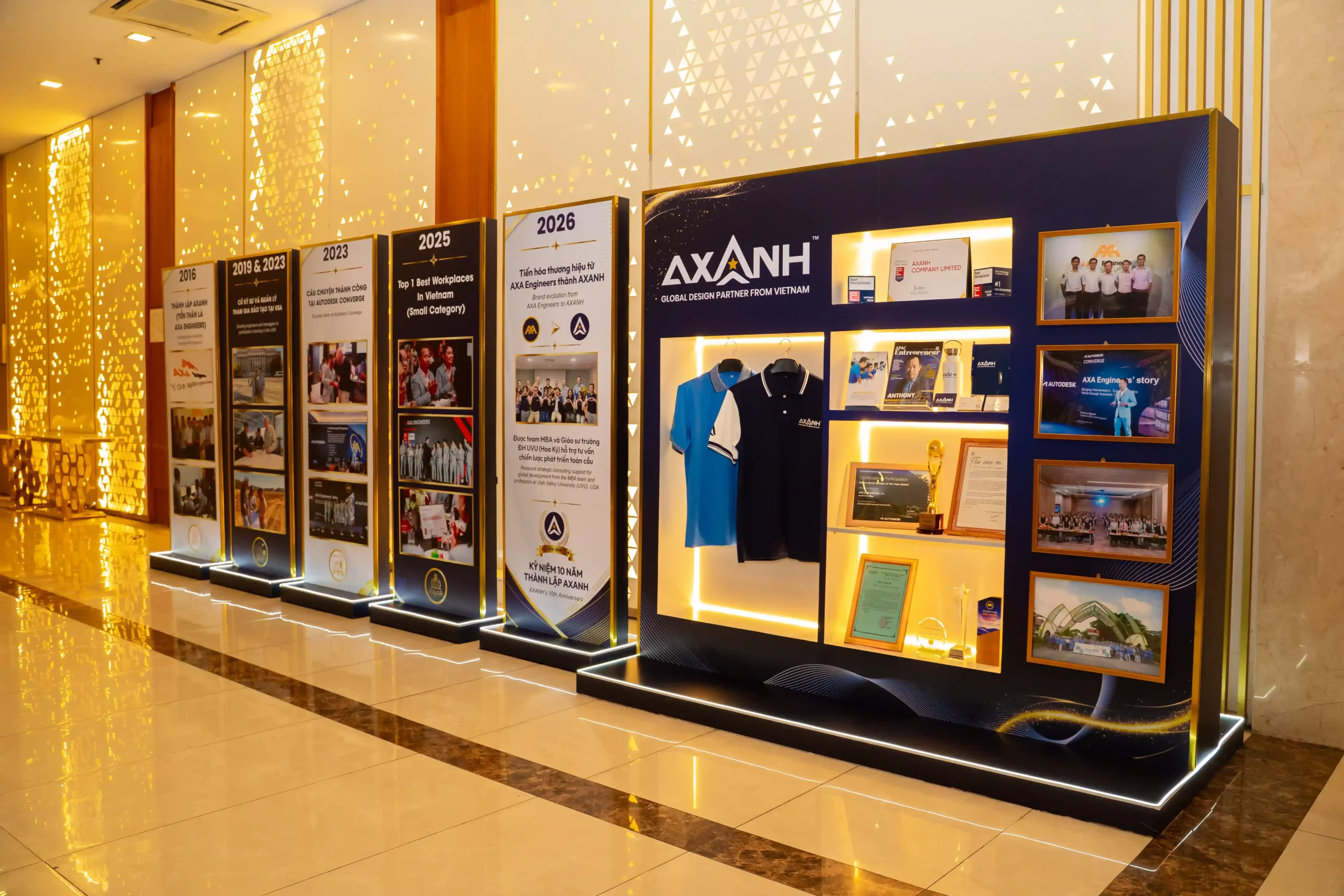



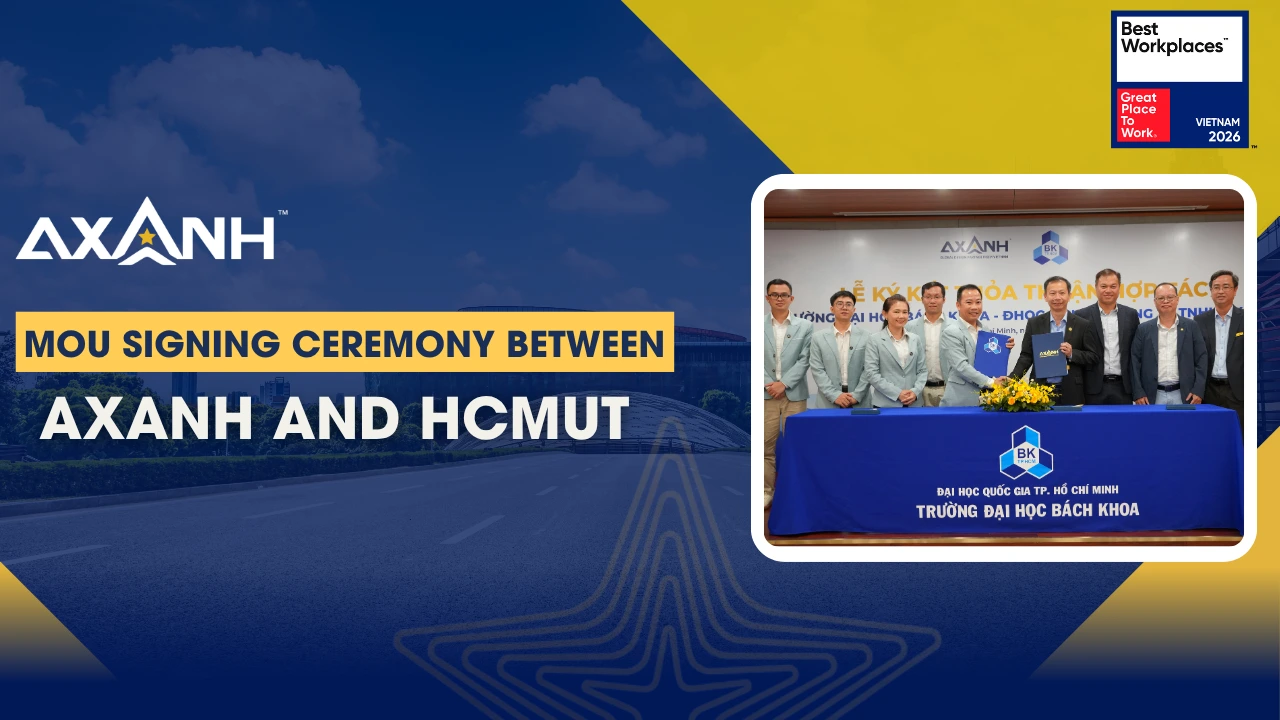
MOU signing ceremony between AXANH and HCMUT marks the beginning of a new phase of cooperation, in which commitments on paper are expected to become meaningful opportunities for engineering students to learn, gain practical experience, and grow.
Through the Memorandum of Understanding, AXANH Company Limited and Ho Chi Minh City University of Technology – VNU-HCM will progressively strengthen cooperation in education, career orientation, professional knowledge sharing, internships, graduation projects, recruitment, and engineering talent development.
This is more than a formal ceremony between the University and a company. More importantly, the MOU creates a foundation for both organizations to develop a more connected journey for students—from their years in the classroom to their first steps in a professional engineering environment.
A new milestone in university–industry collaboration
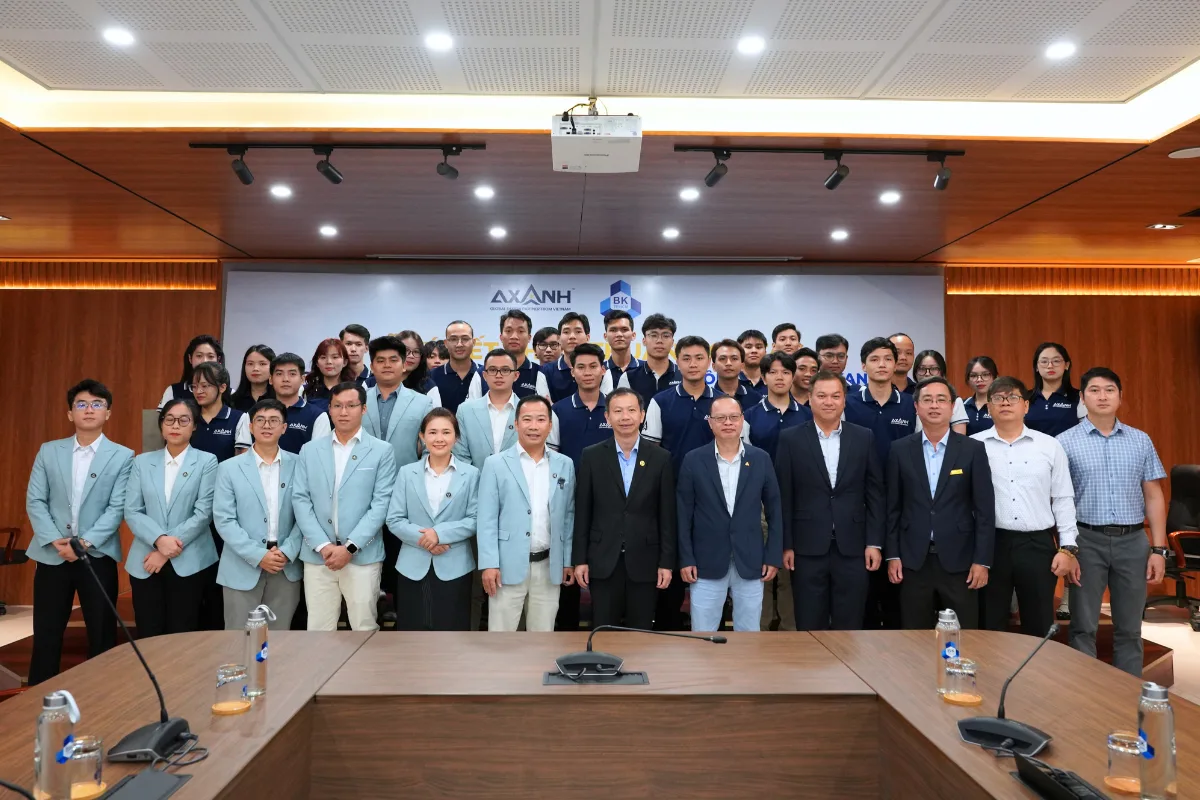
The signing ceremony brought together representatives of the University leadership, the Faculty of Civil Engineering, cooperation departments, lecturers, students, and members of AXANH’s leadership, management, and professional teams.
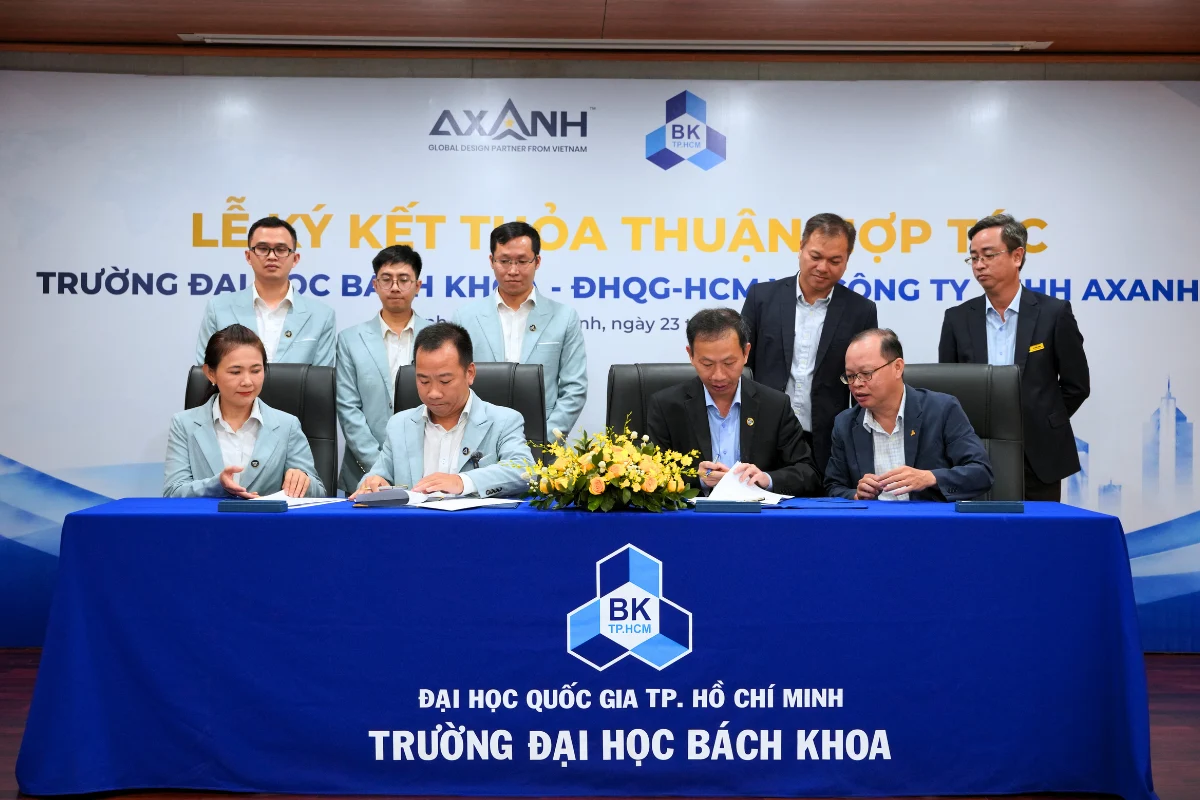
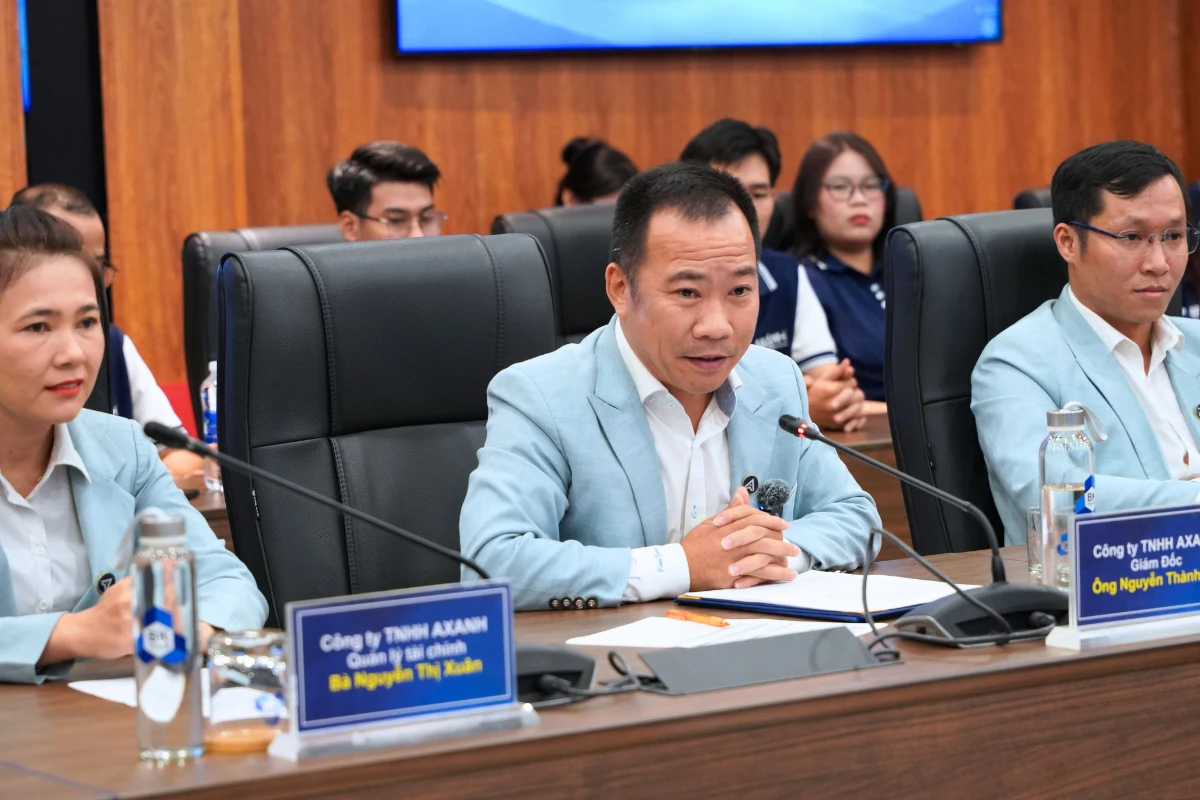
The agreement was signed by Assoc. Prof. Dr. Pham Tran Vu, Vice President of Ho Chi Minh City University of Technology – VNU-HCM, and Mr. Nguyen Thanh An, Director of AXANH Company Limited.
The event represents the next step in the collaboration journey between AXANH and Ho Chi Minh City University of Technology – VNU-HCM. Through previous meetings, professional exchanges, and career-oriented activities, both sides have gained a clearer understanding of student needs, the University’s strengths, and the value that industry can contribute.
Experiences from Bach Khoa Job Fair 2026 also demonstrated that engineering students are not only interested in finding an available job. They want to understand the profession earlier, connect with practicing engineers, and see a clearer development pathway that allows them to prepare with greater purpose.
The MOU is not the finish line
The value of the signing ceremony will not be measured by the number of commitments written in the document. It will be measured by whether those commitments become structured programs with clear ownership, transparent criteria, practical outcomes, and continuous improvement over time.
MOU signing ceremony between AXANH and HCMUT establishes five pillars of cooperation
The MOU signing ceremony between AXANH and HCMUT not only formalizes the relationship between the two organizations, but also establishes five areas of cooperation designed to create long-term value for students, the University, and the company.
- Scholarships and learning support.
- Career orientation and practical exposure.
- Professional knowledge sharing and educational cooperation.
- Internship and graduation project support.
- Recruitment and career development.
Together, these five areas form a connected journey from education to employment. Students are not simply offered an isolated opportunity. They may progressively understand the profession, strengthen their capabilities, experience a professional environment, and prepare more deliberately for life after graduation.
1. Scholarships and learning support
Depending on the conditions and resources available during each implementation period, AXANH will consider providing scholarships, learning materials, professional references, or study tools to students who meet the relevant program criteria.
The purpose of this support extends beyond financial assistance. AXANH aims to encourage students to maintain strong academic performance, improve their English proficiency, strengthen their technical capabilities, and prepare more effectively for future professional environments.
To support transparency and long-term sustainability, the two organizations may jointly develop selection criteria based on:
- Academic performance and demonstrated improvement.
- Attitude, responsibility, and independent learning ability.
- Personal circumstances and genuine need for support.
- English or other foreign-language proficiency.
- Participation in activities under the cooperation program.
- Potential for professional development.
This approach allows the program to look beyond grades at a single point in time. It can also recognize effort, ambition, progress, and each student’s individual development journey.
The scale, form, and level of support may be reviewed annually based on available budgets, actual needs, and program effectiveness. Meeting certain criteria does not automatically guarantee support; each program will have its own conditions and selection process.
2. Career orientation and practical exposure
One of the greatest challenges for engineering students is the gap between understanding a subject in class and visualizing how that knowledge is applied in a real project.
For this reason, the two organizations intend to cooperate on seminars, technical workshops, career orientation activities, office visits, and discussions with AXANH engineers and managers.
The objective is to help students understand earlier what employers genuinely expect from a young engineer.
Technical knowledge remains essential, but it is not the only requirement. A modern professional environment also demands:
- Problem-solving ability.
- Effective collaboration with colleagues.
- Clear professional communication.
- English or other foreign-language proficiency.
- Initiative in the workplace.
- A strong sense of responsibility.
- Discipline in quality and deadlines.
- Confidence with software and technology.
- The responsible use of artificial intelligence.
AI can support research, data processing, automation, and productivity. However, it cannot replace critical thinking, professional judgment, technical verification, or the engineer’s responsibility for the final result.
Early exposure to professional environments gives students more time to ask important questions:
- What does the work I am interested in actually involve?
- Which areas of knowledge should I strengthen before graduation?
- What skills or experiences am I still missing?
- Is my foreign-language ability currently a barrier or an advantage?
- Which working environment best suits my abilities and aspirations?
Career orientation should not push every student toward the same destination. Its purpose is to help each individual better understand themselves, the profession, and the different pathways they may choose to pursue.
For the University, feedback from professional environments can strengthen the connection between educational activities and the evolving needs of the labor market.
For AXANH, these activities provide an opportunity to develop future engineering talent and connect with candidates who have prepared more deliberately for professional work.
3. Professional knowledge sharing and educational cooperation
Where appropriate, AXANH may share professional knowledge, case studies, delivery experience, working processes, and emerging capability requirements for the University to consider in relevant educational activities.
Potential topics include:
- The design and delivery process of an engineering project.
- Technical standards and QA/QC thinking.
- Design documentation quality management.
- Coordination across engineering disciplines.
- Data and revision management.
- The use of specialist engineering software.
- Automation of repetitive tasks.
- AI applications in research and design.
- Communication in international project environments.
Real project situations can help students understand more clearly how academic knowledge is translated into professional practice.
A drawing does not only need to be geometrically correct. It must also align with related disciplines, comply with applicable standards, support revision tracking, and meet delivery requirements.
Similarly, an engineering solution must not only be technically feasible. It must also be reviewed and communicated clearly enough for other people to coordinate effectively.
In the other direction, the University and the Faculty of Civil Engineering – Ho Chi Minh City University of Technology – VNU-HCM may support AXANH through academic exchange, research discussions, or technical review when suitable needs and conditions arise.
This two-way mechanism helps ensure that the MOU does not become a one-directional sponsorship or recruitment arrangement. It has the potential to become a platform for knowledge exchange, where the company contributes practical insight and the University contributes academic depth.
4. Internship and graduation project support
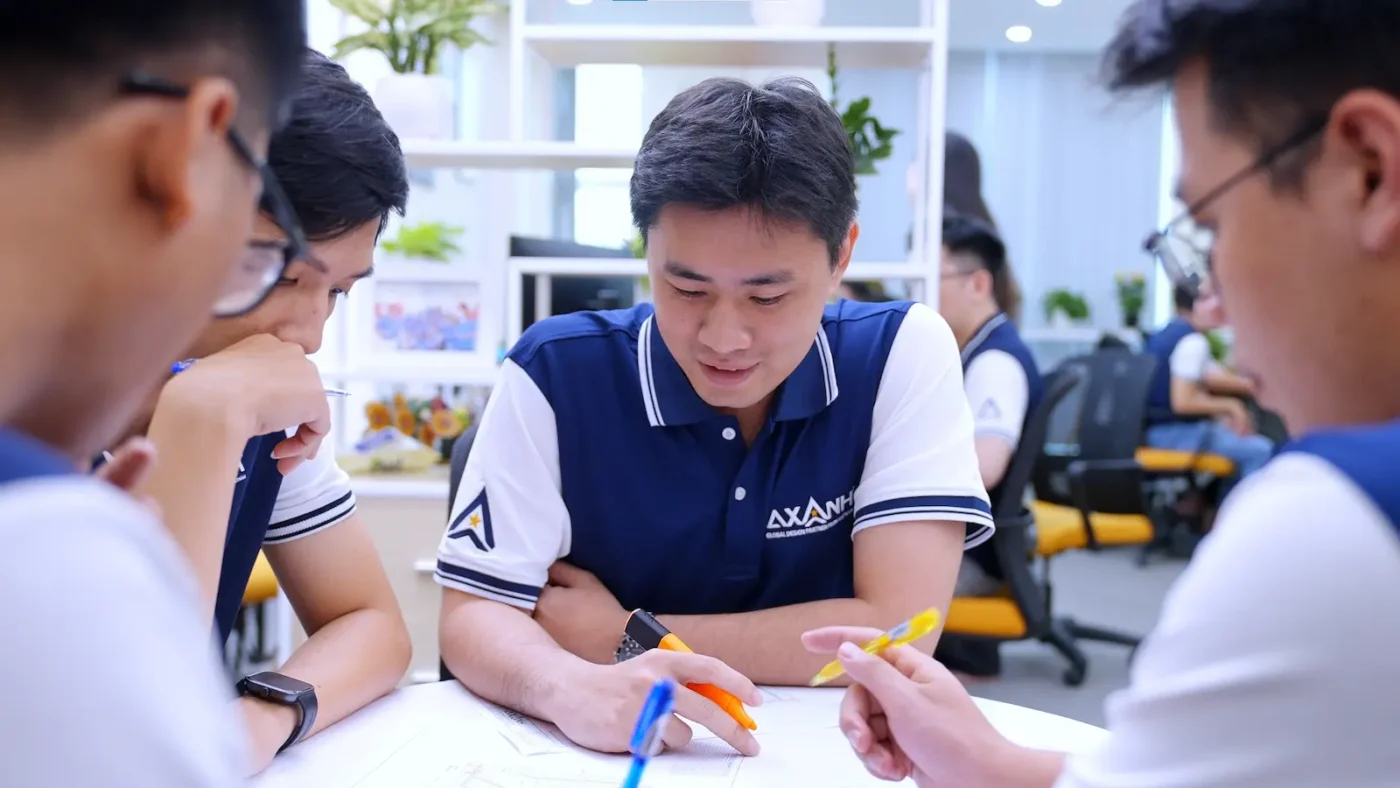
AXANH will give priority consideration to students whose abilities and professional interests are suitable for internships, graduation projects, or structured exposure to real engineering design processes within the company.
Internships may last approximately two to three months. Depending on the program, implementation conditions, and applicable policy at the time, participating students may also be considered for financial support.
However, the value of an internship should not be measured only by the number of days a student spends in an office.
To become a genuine learning experience, an internship program should include:
- Clear learning objectives.
- An assigned mentor or supervisor.
- Tasks appropriate to the student’s level.
- Relevant instructions and learning resources.
- Regular feedback milestones.
- A structured final assessment.
Students should not attend merely to observe. They should be given suitable responsibilities, understand the reasoning behind each task, receive constructive feedback, and gradually see how engineering documentation is developed, checked, revised, and delivered.
Practical assignments also help students understand that an error is not simply a lost mark on an academic exercise. In a professional environment, an unchecked detail can affect project schedules, documentation quality, and the work of other team members.
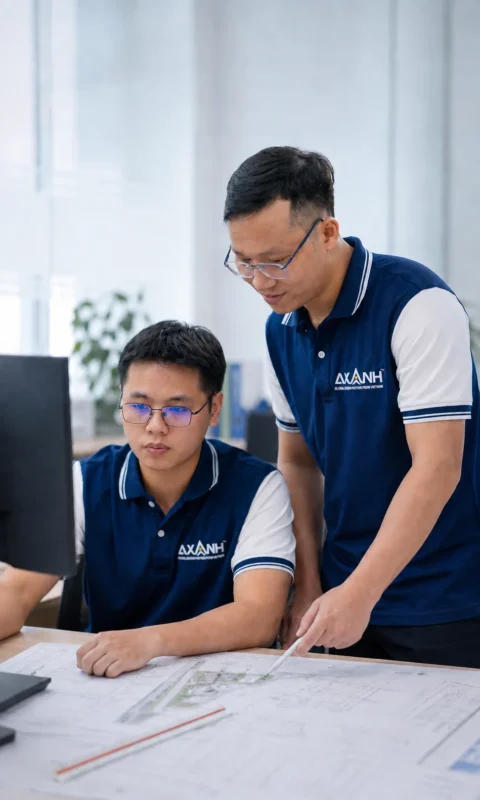
Through mentoring and regular feedback, students can build greater professional discipline, learn when to ask questions, understand how to verify their own output, and recognize their responsibility within a wider coordination system.
For graduation projects, both organizations may explore topics related to real engineering challenges, emerging technology, or suitable research needs. Any implementation must comply with University requirements, confidentiality obligations, and the intellectual property rights of all involved parties.
5. Recruitment and career development
Students participating in activities under the MOU may be connected with employment opportunities at AXANH, given earlier access to recruitment information, or prioritized for application review and interviews when suitable positions become available.
Priority consideration for an interview does not mean automatic employment.
AXANH will continue to apply clear and fair assessment standards based on:
- Technical foundations.
- Problem-solving ability.
- Learning agility.
- Openness to feedback.
- Initiative.
- Responsibility.
- Communication skills.
- Teamwork.
- English or other foreign-language ability.
- Confidence with technology.
- Long-term development potential.
AXANH’s objective is not simply to recruit a student for an available position. The longer-term goal is to create an environment in which a young person can progress from student to intern, from graduate engineer to experienced professional, and eventually into more specialized or responsible roles.
From Vietnam, a young engineer can learn to work according to international standards, collaborate with global clients, and participate in engineering design value chains that extend beyond geographical borders.
In this context, “going global” does not necessarily mean leaving Vietnam. It can also mean working from Vietnam with internationally relevant standards, discipline, communication, and professional accountability.
Creating value for students, the University, and AXANH
| Stakeholder | Expected value |
|---|---|
| Students | Greater access to learning support, earlier career awareness, practical professional knowledge, workplace experience, and stronger preparation for internships and recruitment. |
| The University | Stronger connections between education and employment needs, additional professional resources, and more opportunities for students to engage with real working environments. |
| AXANH | Earlier engagement with future engineering talent, meaningful contribution to the engineering ecosystem, and a stronger long-term relationship with the academic community. |
| The engineering profession | A narrower gap between education and practice, greater knowledge exchange, and improved career readiness among young engineers. |
Value for students
For students, the greatest value of the program is not limited to a scholarship, a workshop, or a single internship.
The greater value lies in seeing a structured professional journey. Through the partnership, students may gain earlier insight into the profession, identify capability gaps before graduation, and prepare more intentionally for the next stage of their careers.
Value for the University
For the University, cooperation with industry creates an additional channel of feedback from the labor market.
Through specific programs, the University can better understand the capabilities companies are seeking, the difficulties students face when moving from study to work, and the topics that may be suitable for seminars, research, or graduation projects.
Value for AXANH
For AXANH, university cooperation is not simply a recruitment activity.
It is part of a broader commitment to building an ecosystem for Vietnamese engineers—from students and interns to graduate engineers, team leaders, and technical specialists.
Each stage requires access to learning, appropriate guidance, clear development standards, and opportunities to grow through meaningful responsibilities.
Turning written commitments into measurable outcomes
The signing ceremony is an important milestone, but the real value of the MOU will be determined by what happens after the event.
To translate shared intentions into practical outcomes, the two organizations may establish:
- Clear program ownership and coordination responsibilities.
- Annual plans aligned with the academic calendar.
- Transparent participation and selection criteria.
- Defined outcomes that can be monitored and evaluated.
- Feedback mechanisms for students, lecturers, mentors, and coordinators.
- Regular reviews and improvements after each implementation period.
A sustainable MOU is not measured by the number of programs announced. It is measured by whether both sides continue to implement, evaluate, learn, and improve together.
The beginning of a long-term partnership
The Memorandum of Understanding between AXANH and Ho Chi Minh City University of Technology – VNU-HCM represents more than formal alignment between two organizations. It reflects a shared commitment to creating more meaningful opportunities for engineering students to learn, gain practical experience, and grow.
Through scholarships, career orientation, professional knowledge sharing, internships, graduation projects, and recruitment connections, students can gain more opportunities to understand the profession, test their abilities, and prepare for the future.
AXANH believes that Vietnamese engineers can participate in global engineering design value chains from Vietnam when they are given the right opportunities, developed through structured learning, and supported by an environment that respects quality, responsibility, and long-term growth.
When the University and industry work together, academic knowledge and practical experience no longer need to develop on separate paths. They can meet through real programs, meaningful learning experiences, and each step in the professional growth of a new generation of engineers.
Begin your engineering career journey
Explore AXANH’s working environment, internship programs, and career opportunities for students and early-career engineers.
