

Partnership Models
Partnership Fit
Strategic Partnerships
Why AXANH
Discuss Your Needs



U.S. Market Learning · 2023
North Carolina 2023: From Drawings to the Job Site
For a distributed engineering team, the hardest distance is not always geographic. It is the distance between the drawing, the conditions on the ground, the way a client runs a project, and the reasoning behind each technical decision.
In 2023, during the AXA Engineers chapter that built AXANH, Anthony Nguyen and a manager traveled to North Carolina, USA, to learn directly with a client across land development, urban planning, project delivery, client collaboration and business partnership.
Time in the United States also gave the team a broader view of the local environment, daily life and civic context surrounding the places where the work happens.
The objective was not simply to understand another drawing. It was to understand more of the world that drawing ultimately enters.
The Real Distance
A distributed team needs more than the markup
Drawings, templates and comments can move through a shared platform. Context is harder to transfer. Engineers also need to understand why a requirement exists, what a decision affects next, and what happens when the design leaves the screen.
That is what made North Carolina 2023 more valuable than a business trip alone. It connected areas that remote delivery can easily separate: technical decisions, field conditions, project-team coordination and the operating realities behind a client’s workload.
01
Understand the reason behind a request
A markup becomes more meaningful when an engineer understands what it is protecting: a standard, constructability, the next review step or a decision already made elsewhere in the project.
Context creates a better basis for asking the right question earlier.
02
See downstream consequences
Grading, drainage, roadway and utilities do not exist as isolated production tasks. A change in one area can affect other disciplines, later decisions and how the project is ultimately built.
Better design judgment starts by looking beyond the task currently on screen.
03
Understand the client’s operating environment
Standards, communication, review rhythm and decision-making all sit inside an operating system. A distributed team works with better context when it understands more of that system.
The goal is not simply to receive and return files, but to coordinate with greater clarity.
Learning in Context
Learning directly with U.S. engineers
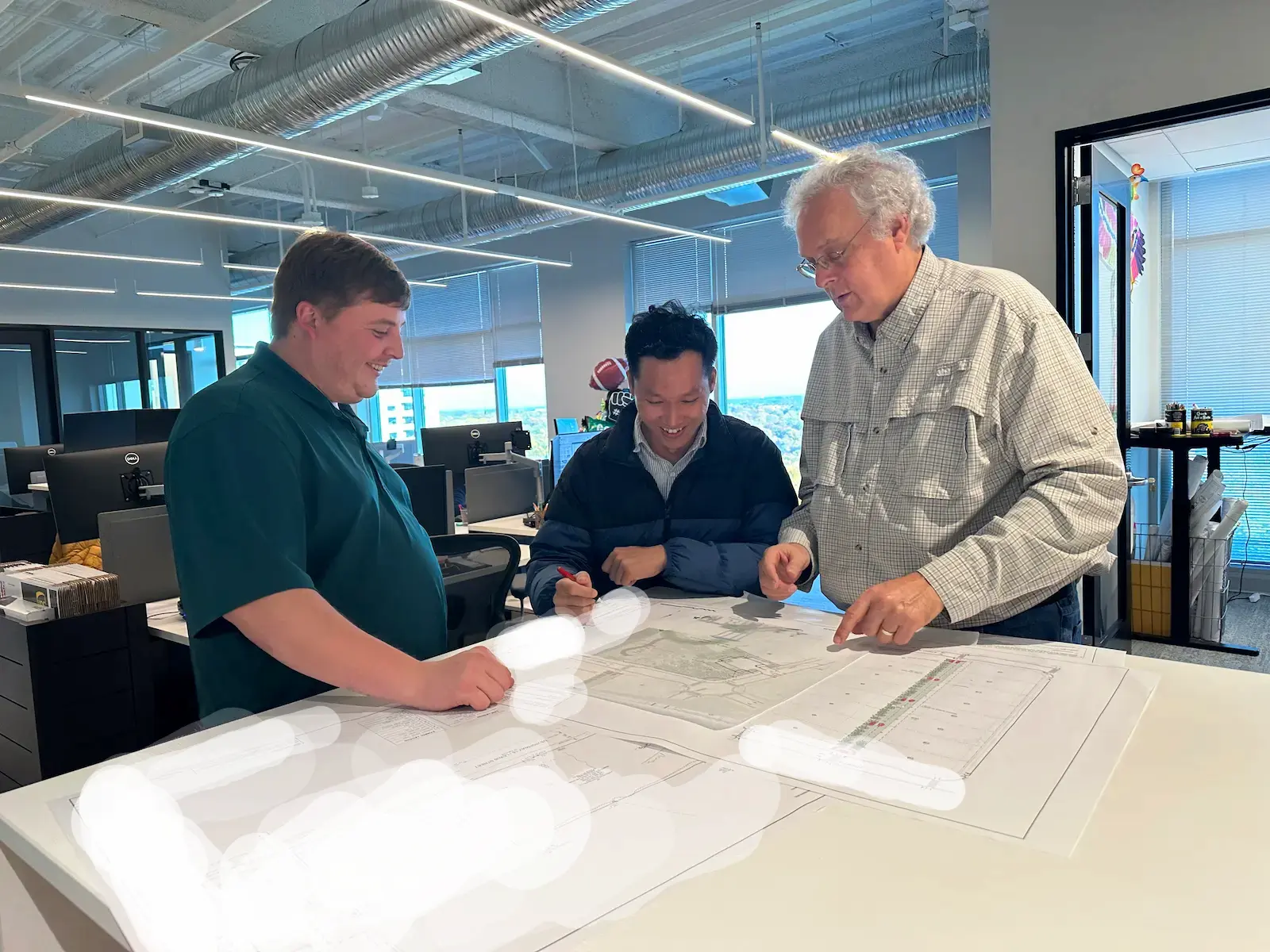
While in North Carolina, the team went deeper into how land-development and urban-planning projects move through delivery. Working directly with experienced U.S. engineers created space to discuss technical issues as they emerged, compare approaches, participate in project meetings and understand more of the reasoning behind design decisions.
The value of direct conversation is that it can move beyond the comment itself. Instead of stopping at “What does the client want changed?”, the team could ask a more useful question: “Why does this need to change, and what will that decision affect next?”
When an engineering team understands more of the reasoning behind a request, it has a stronger basis for recognizing uncertainty, asking for clarification at the right time and coordinating with more of the project in view.
A strong drawing does more than satisfy a drafting requirement. It needs to make sense within the wider chain of project decisions.
From Screen to Site
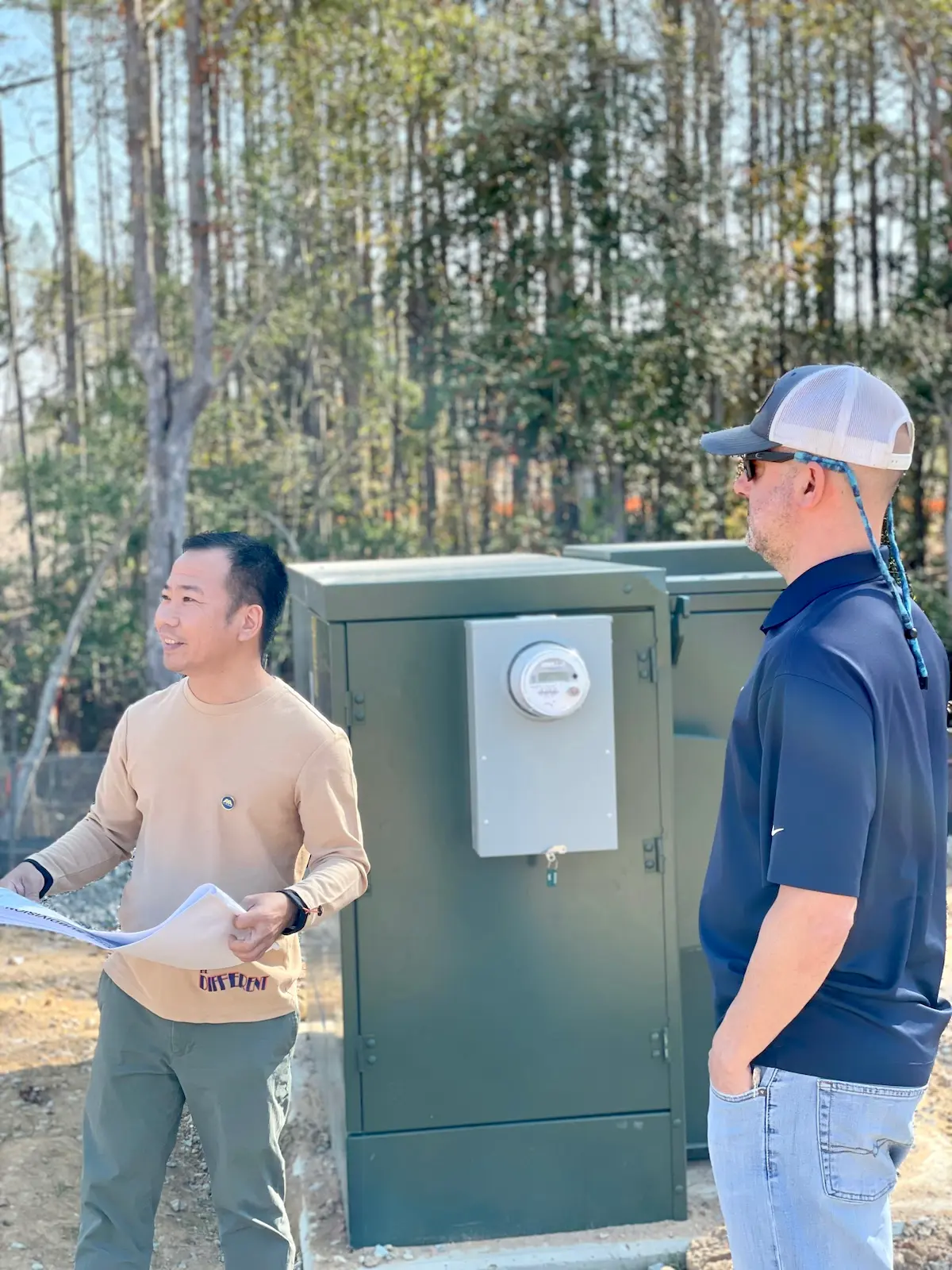
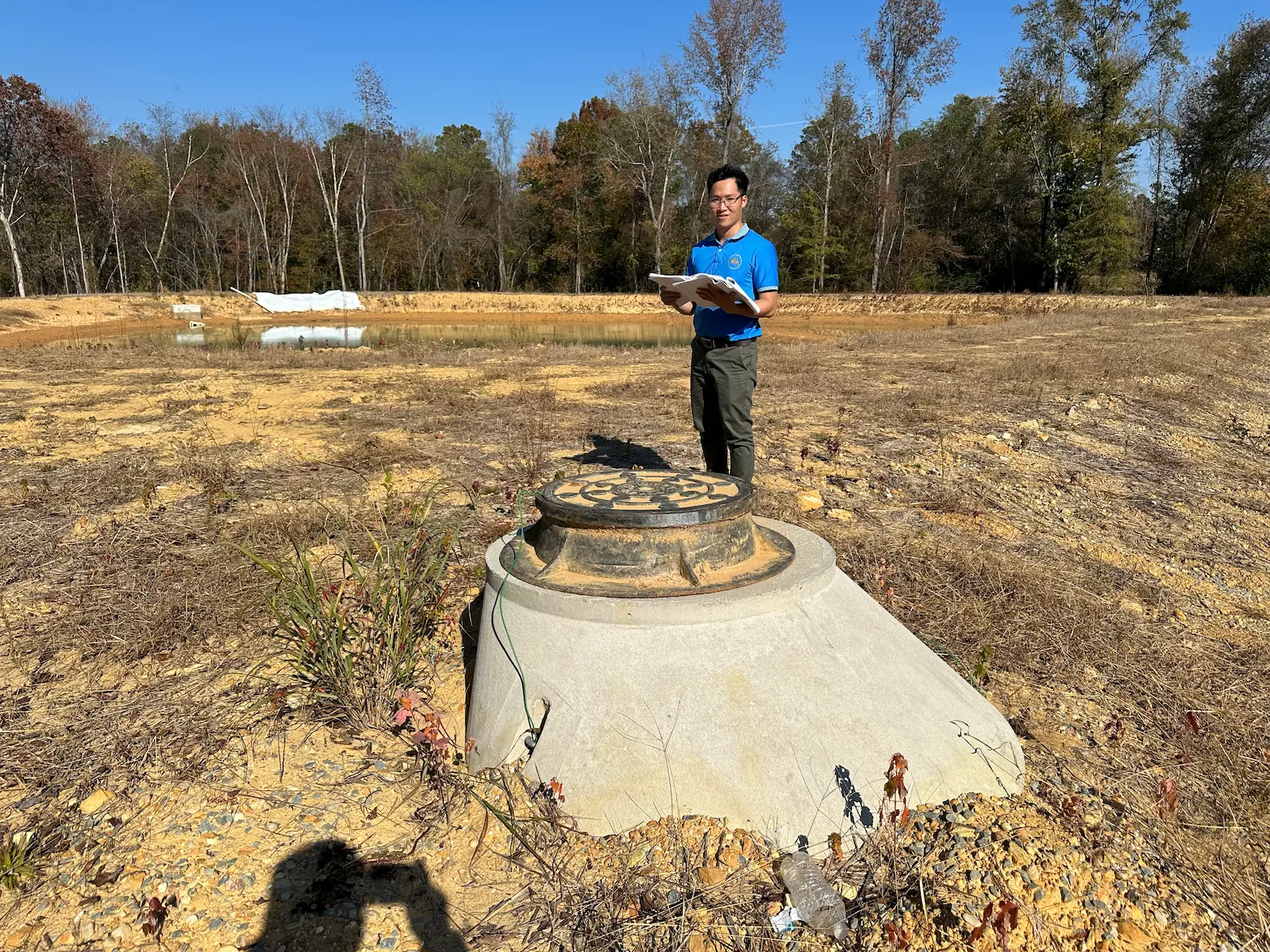
When contours, profiles and ponds became real places
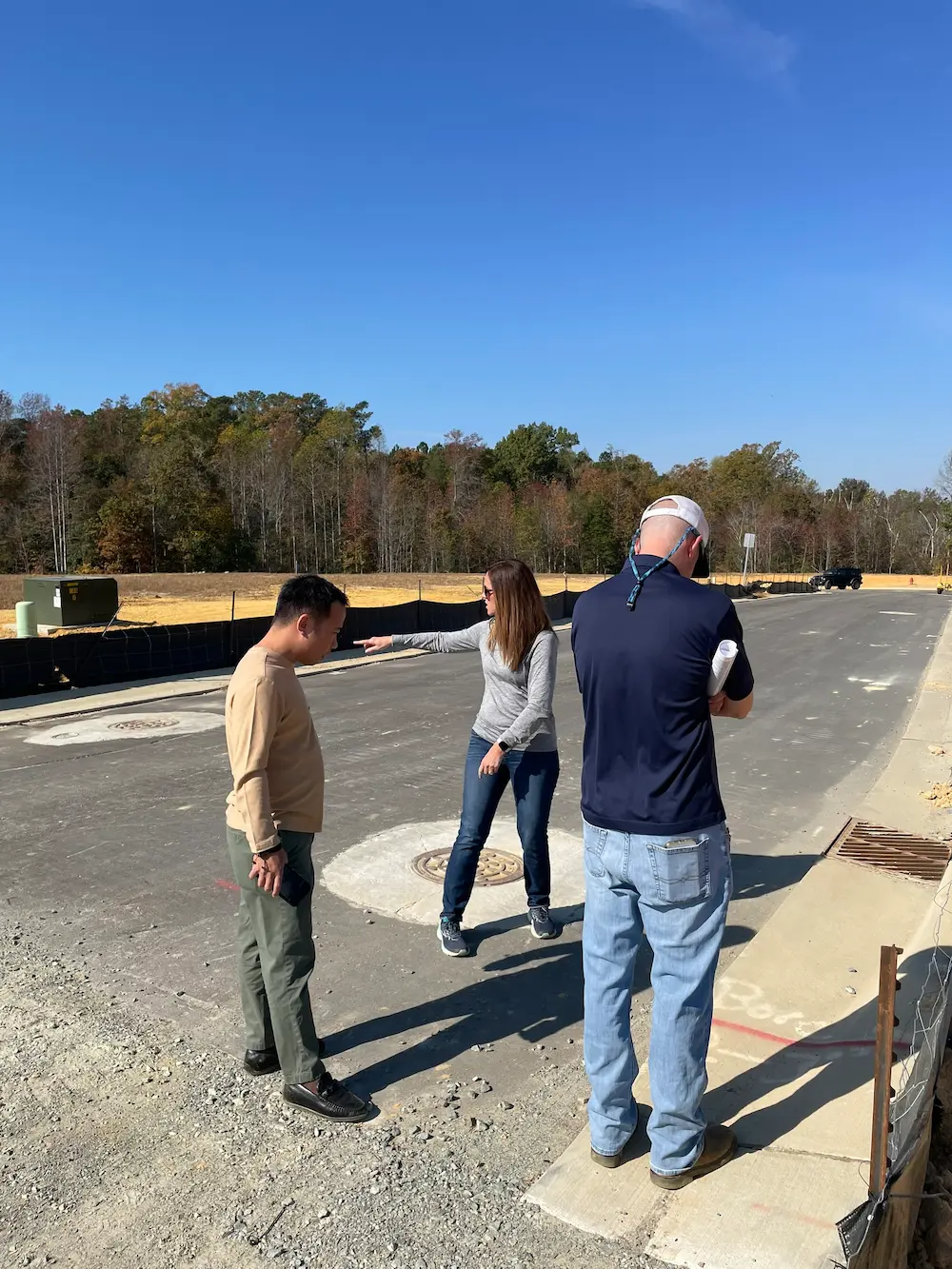
One of the most valuable parts of the program was visiting projects the team had helped design. On screen, a site is divided into surfaces, contours, alignments, profiles, grading, drainage and details. In the field, those elements exist together in one physical environment and influence one another.
A retaining wall offers a simple example. Knowing how to represent one in a drawing is part of the work. Standing beside the terrain around a retention pond raises a different set of questions: when does a retaining wall become the appropriate solution, what site conditions lead to that choice, what construction challenges may follow, and what should the designer consider earlier?
Experiences like this reinforce an important principle: constructability is not separate from design. It is part of the context a design decision should try to anticipate.
When engineers can picture more clearly how the work may be built, the lines on screen begin to carry more meaning.
Inside the Client’s Work
Project context is incomplete without understanding how the client team works
The job site added context around the project. Working inside the client’s office added another layer: how project managers and engineering teams communicate, how meetings are prepared, how issues are framed, and how responsibility shows up in the rhythm of day-to-day work.
Some of that can be explained through email or an online meeting. Some of it becomes clearer only through observation. An external engineering team can receive precise instructions and still miss how information moves through the organization, when an issue should be raised, or what context another person needs in order to make a decision.
The purpose is not to copy the client’s way of working. It is to understand enough of the operating environment for two teams to coordinate with fewer gaps in context.
See how the work is organized
Observe how priorities, meetings, reviews and project responsibilities connect within the client’s working rhythm.
Understand how issues are communicated
A technical issue needs to be concise enough to act on, while still carrying enough context for the decision to remain connected to its cause.
Recognize when clarification matters
Ownership does not mean deciding everything independently. It begins with recognizing uncertainty and bringing the right question to the right person at the right time.
Coordinate as part of the wider team
Distributed delivery becomes more useful when the external team understands the standards, review rhythm and information the client needs to keep work moving.
Beyond the Office
The work does not exist apart from the place around it
Time in the United States was not limited to the office and the job site. The team also spent time observing the places they moved through, learning more about local history, everyday life and the built environment surrounding the communities where the trip took place.
A single visit cannot create a complete understanding of a market as large and varied as the United States. But stepping outside the meeting room can provide reference points that remote work alone rarely offers.
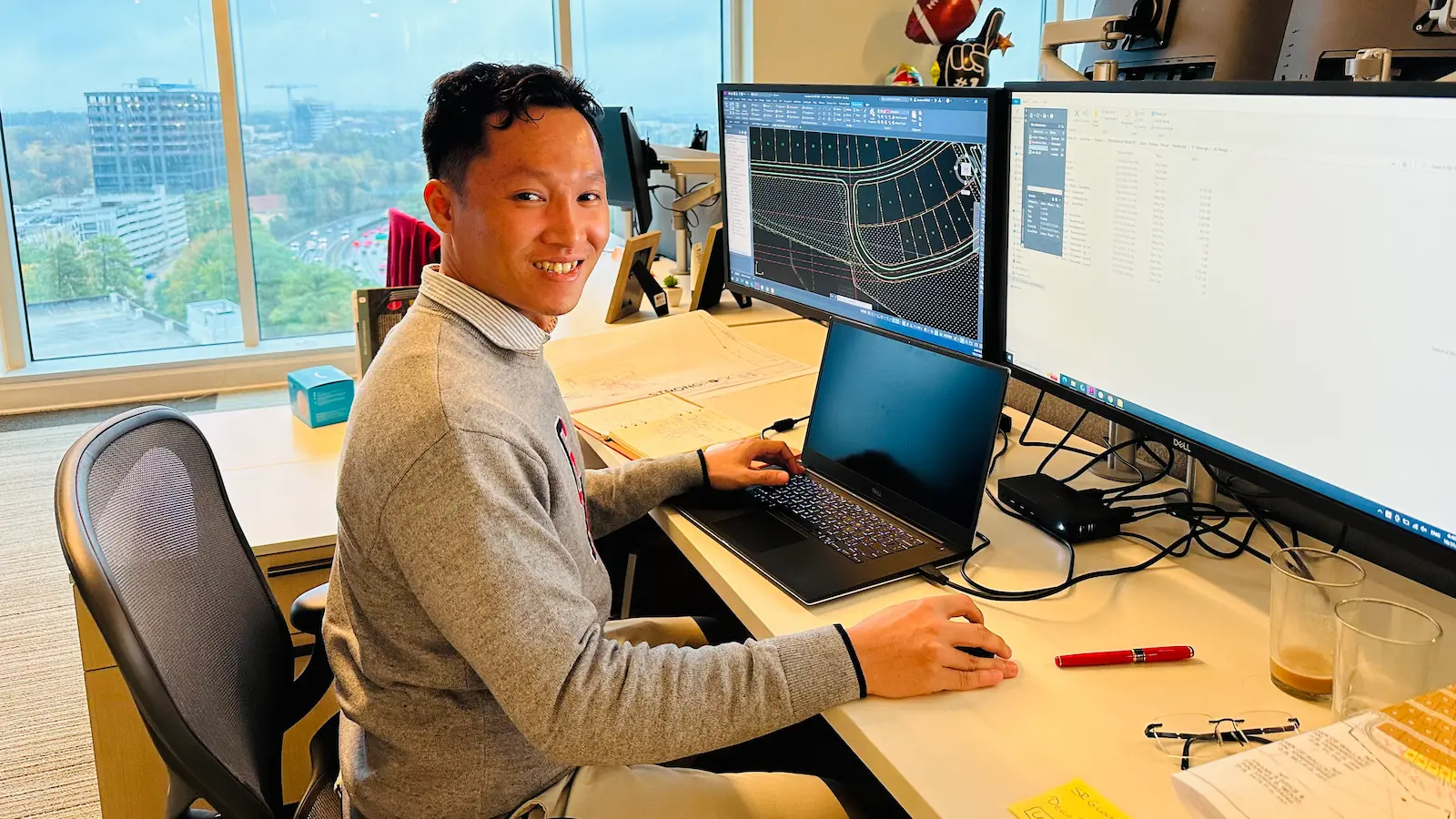
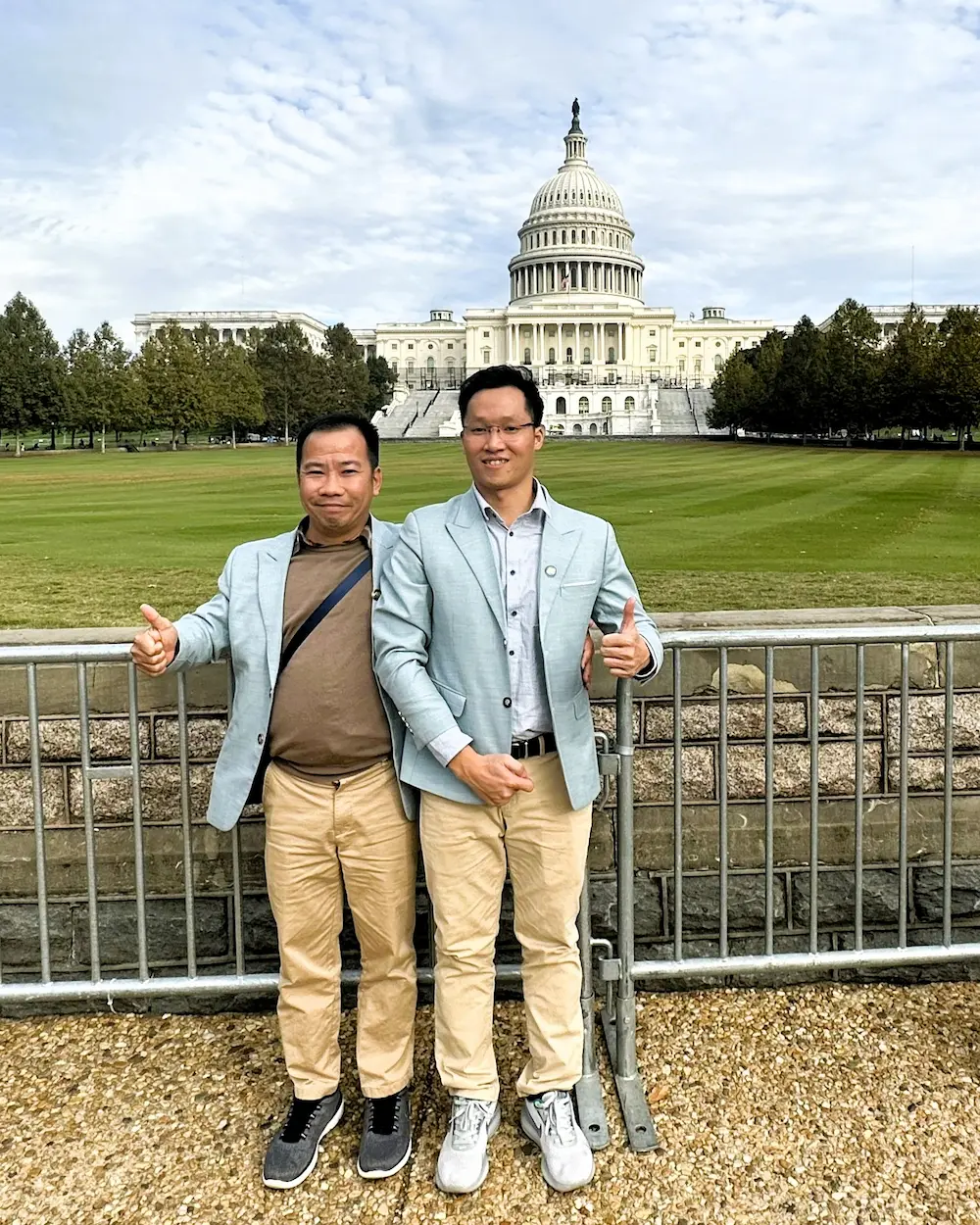
North Carolina and Washington, D.C. · 2023 — scenes from time outside formal working sessions and site visits during the U.S. learning trip.
North Carolina
Seeing the market beyond the project boundary
Seeing neighborhoods, streets, public spaces, landscape and community infrastructure together gave the team a more grounded reference for the environment land-development projects ultimately serve. On screen, the work is often separated into parcels, roadway, grading, drainage and utilities. In daily life, people experience all of those systems as one place.
Washington, D.C.
A historical and civic context
The journey also included time in Washington, D.C., where the team encountered some of the places and civic landmarks that form part of the country’s historical landscape. This was not technical training. Its value was different: a reminder that clients and projects exist within a broader social, historical and community context than any drawing package can show.
Working across borders becomes more meaningful when a team is curious not only about the work, but also about the place, people and context around it.
A Bigger Question
From design support to partnership thinking
Once the conversation moves beyond an individual drawing package, the question changes. A client no longer needs to know only whether an external team can complete the work. The more strategic question is whether that capacity can become a useful, governable part of how the business operates.
An engineering firm may need additional design capacity to respond to workload, protect senior staff time, maintain delivery momentum or create more room for its internal team to focus on responsibilities that need to remain close to the client. In that context, the value of a relationship is not measured by producing more drawings at any cost. It depends on whether both sides can build clarity, quality, accountability and trust over time.
01
Doing the work
Complete the assigned scope to the agreed requirements, standards and timeline.
02
Understanding the project
See where the current task sits in the wider project flow and what it may affect next.
03
Understanding the client
Learn the standards, review expectations, communication rhythm and information the client team needs to keep work moving.
04
Supporting client growth
When workload, trust and governance support it, external capacity can become part of a more structured way to expand design capability.
A deeper relationship is valuable only when the workload, standards, trust, ownership and governance on both sides are strong enough to support it.
What Travels Home
Learning matters more when it travels beyond the people who experienced it
After the team returned to Vietnam, lessons from North Carolina became input for continuing to strengthen design practice, quality review and internal learning. The long-term value was not that three people had gained another experience. It was whether useful context could travel farther than the people who were there.
Every client has its own standards, workflows, review expectations and decision patterns. What can be carried forward is therefore not a fixed formula. It is an approach: understand context before making assumptions, look beyond the drawing currently being handled, consider downstream effects and keep learning how the client actually works.
Today, AXANH continues developing that principle through learning, review and knowledge-sharing within the Engineering Center of Excellence.
Direct U.S. Market Learning
2018 → 2023: One learning direction, two different lenses
Napa 2018
Two engineers spent two months learning directly in a client environment, then organized that learning so it could be shared with the wider team in Vietnam.
North Carolina 2023
Anthony Nguyen and two managers widened the lens to include job-site conditions, client workflow, the environment around the work and longer-term questions about business partnership.
From Context to Capability
A distributed team becomes more useful when it understands the world around the drawing
North Carolina 2023 is one part of how AXANH has invested in direct U.S. market learning. Greater exposure to project process, field conditions, client communication and the environment around the work gives engineers more reference points for asking better questions and coordinating with stronger judgment.
If you are evaluating how an engineering partner could fit into your firm’s working environment, the next useful step is to examine how AXANH organizes delivery and how different partnership models align with different levels of continuity, ownership and readiness.
Current AXANH
Learn the context. Build the capability.
Direct learning creates more value when it shapes how the team understands projects, reviews work and coordinates with clients long after the trip itself has ended.