

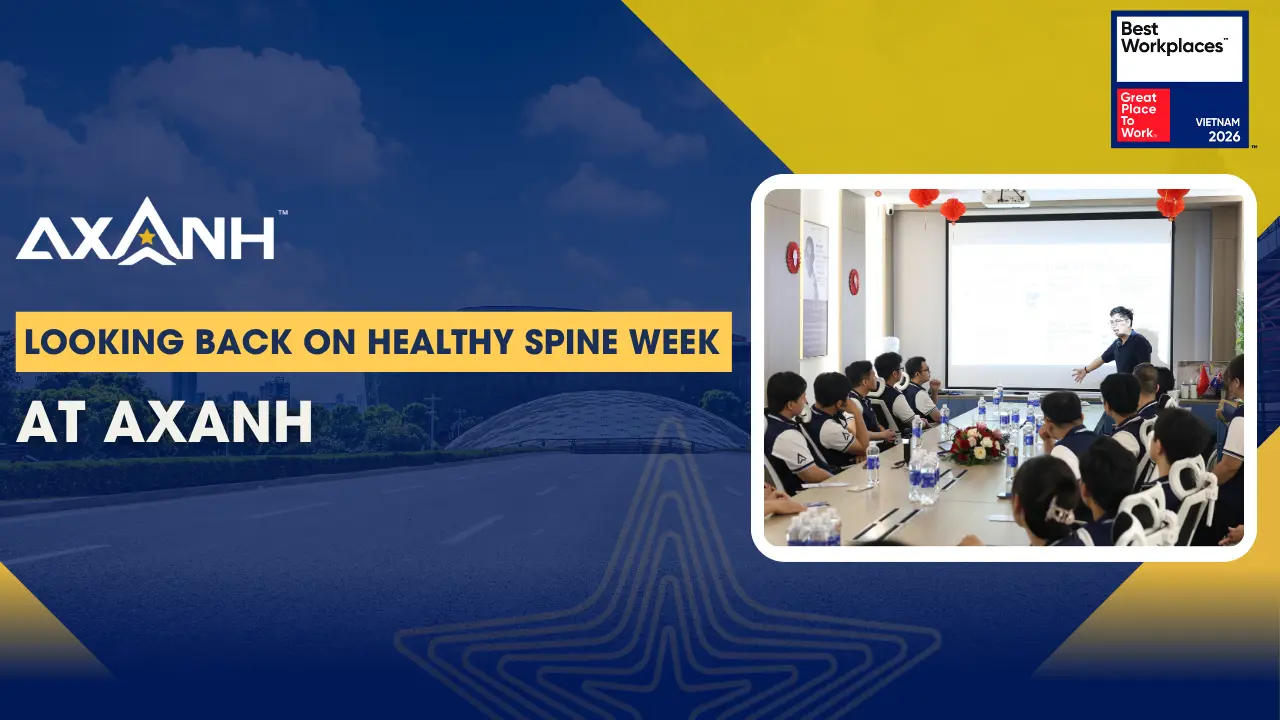
After a week of observing, adjusting and practising together, the most meaningful outcome was not simply the number of activities completed. It was the collection of small habits that team members began bringing back to their own workstations.
Healthy Spine Week at AXANH gave our people an opportunity to reconsider how they work each day: how they sit, where their screens are positioned, how they use their keyboards and mice, and when they choose to step away from the screen after a sustained period of concentration.
Throughout the week, the activities followed a natural journey from awareness to practice. Team members reflected on familiar working habits, joined a session with a doctor and a physiotherapy specialist, reviewed their workstation arrangements and introduced gentle movement into AXANH’s regular five-minute breaks.
The programme was not intended to produce a major transformation within a few days. Instead, it encouraged a more conscious approach to work, beginning with practical actions that each person could adapt to their own needs.
Sit smarter. Take active breaks. Work with greater wellbeing.
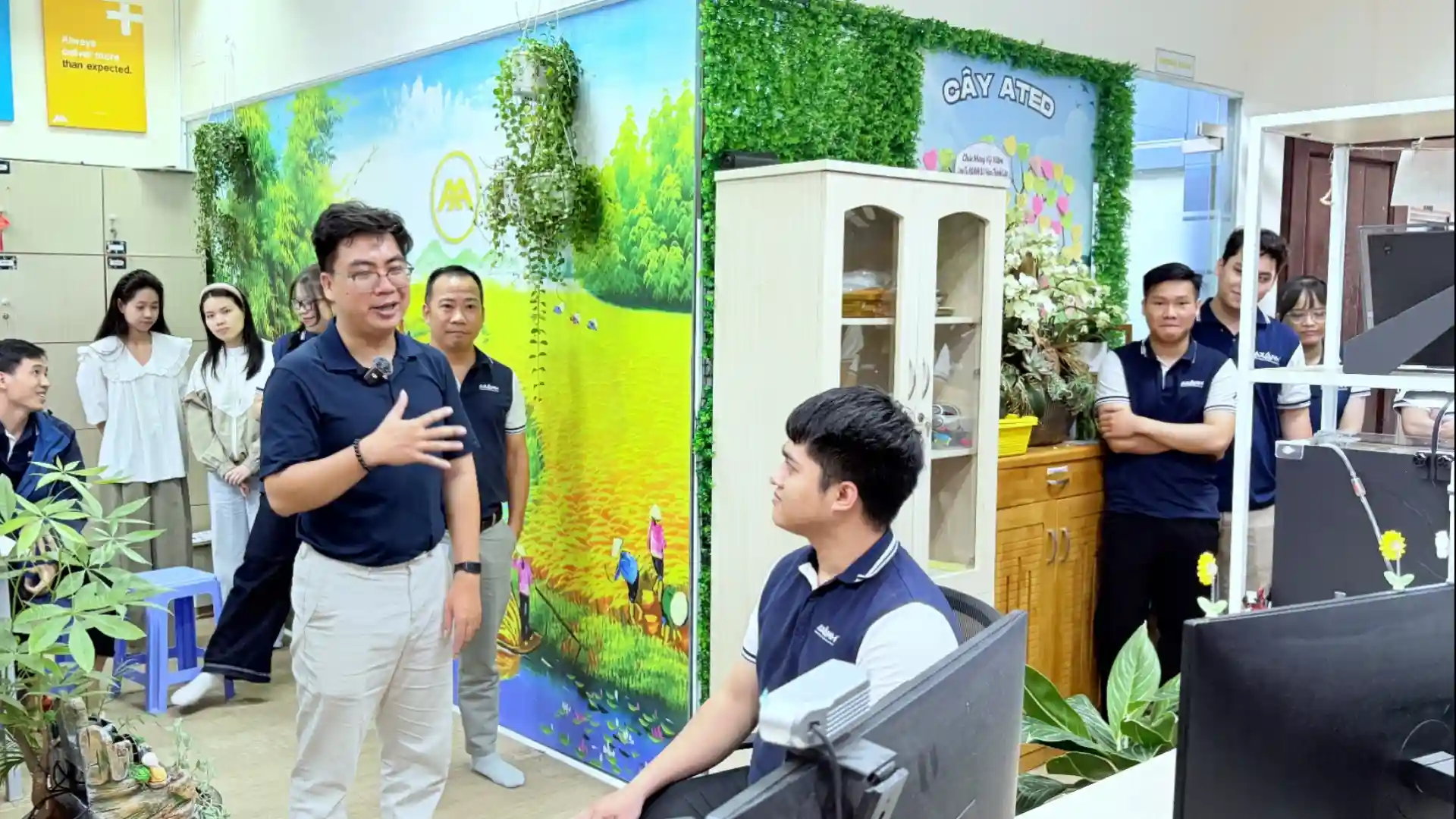
A week to reconsider how we work
In a working environment that requires sustained concentration, attention is naturally directed towards deadlines, meetings, drawings, documentation and the tasks that need to be completed.
As the pace of work increases, it can become easy to overlook how long we have remained in the same position, whether the screen is placed comfortably, whether the shoulders are becoming tense or when we last stood up and moved.
Healthy Spine Week at AXANH created a timely pause for team members to observe habits that had gradually become automatic.
The purpose was not to identify one perfect posture or introduce a single formula for everyone. Each person has a different body, role, workstation and way of working. The more useful objective was to become better at recognising when an adjustment, a change of position or a short break might be needed.
An internal survey at the beginning of the programme also helped the organising team understand the concerns and working habits most relevant to employees. These included feelings of tension or discomfort after prolonged screen work, the frequency of movement during the day and confidence in arranging a workstation.
This helped keep the programme closely connected to everyday experience. Rather than discussing wellbeing only in broad terms, the activities focused on the places and objects people use every day: the chair, the screen, the desk and the rhythm of the working day itself.
From expert guidance to everyday practice
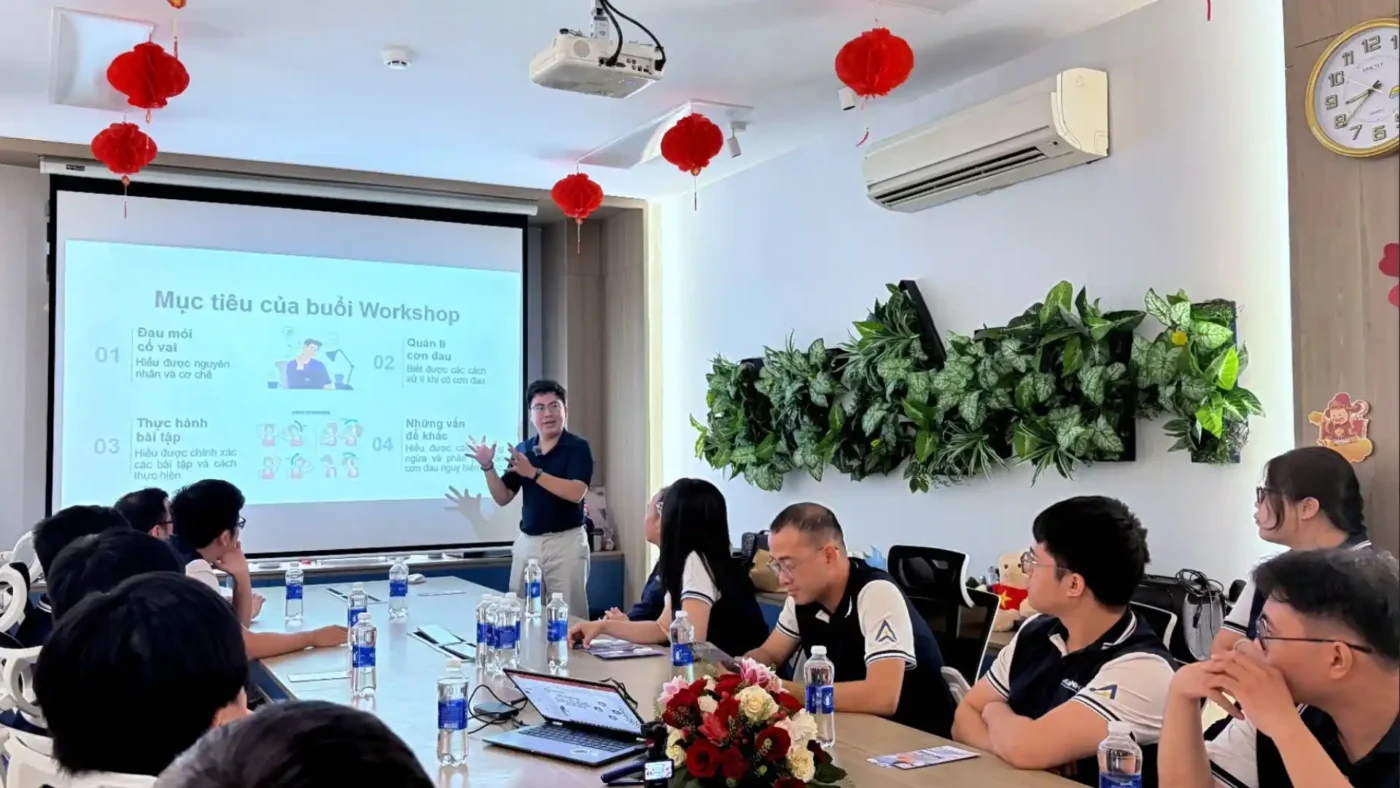
An expert-led workshop was an important part of Healthy Spine Week at AXANH.
During the session, team members explored common habits associated with prolonged computer work, ways to observe their working position, factors to consider when reviewing a workstation and gentle movements that could be incorporated into the office day.
The value of the workshop went beyond the information presented. Participants were able to ask questions, discuss their own working situations and practise with guidance from a doctor and a physiotherapy specialist.
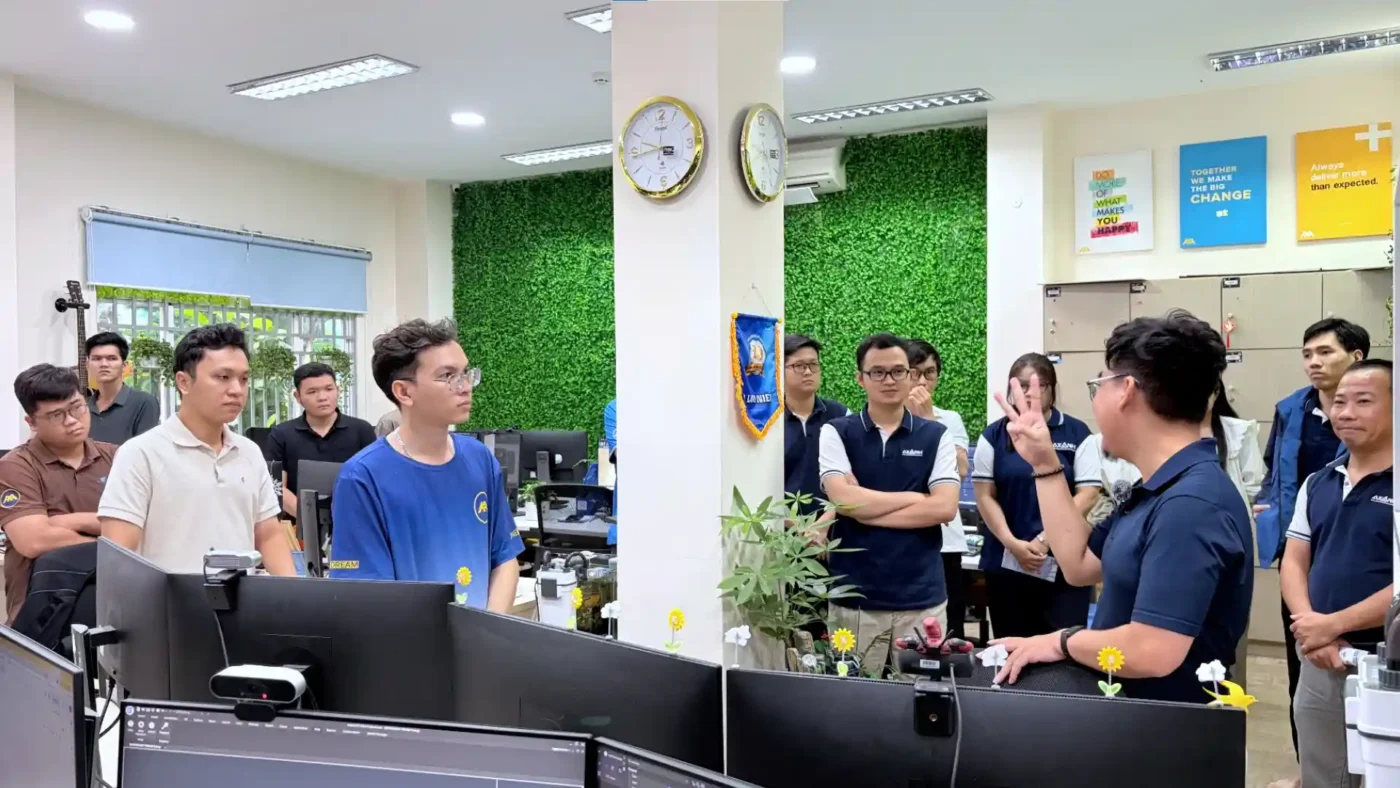
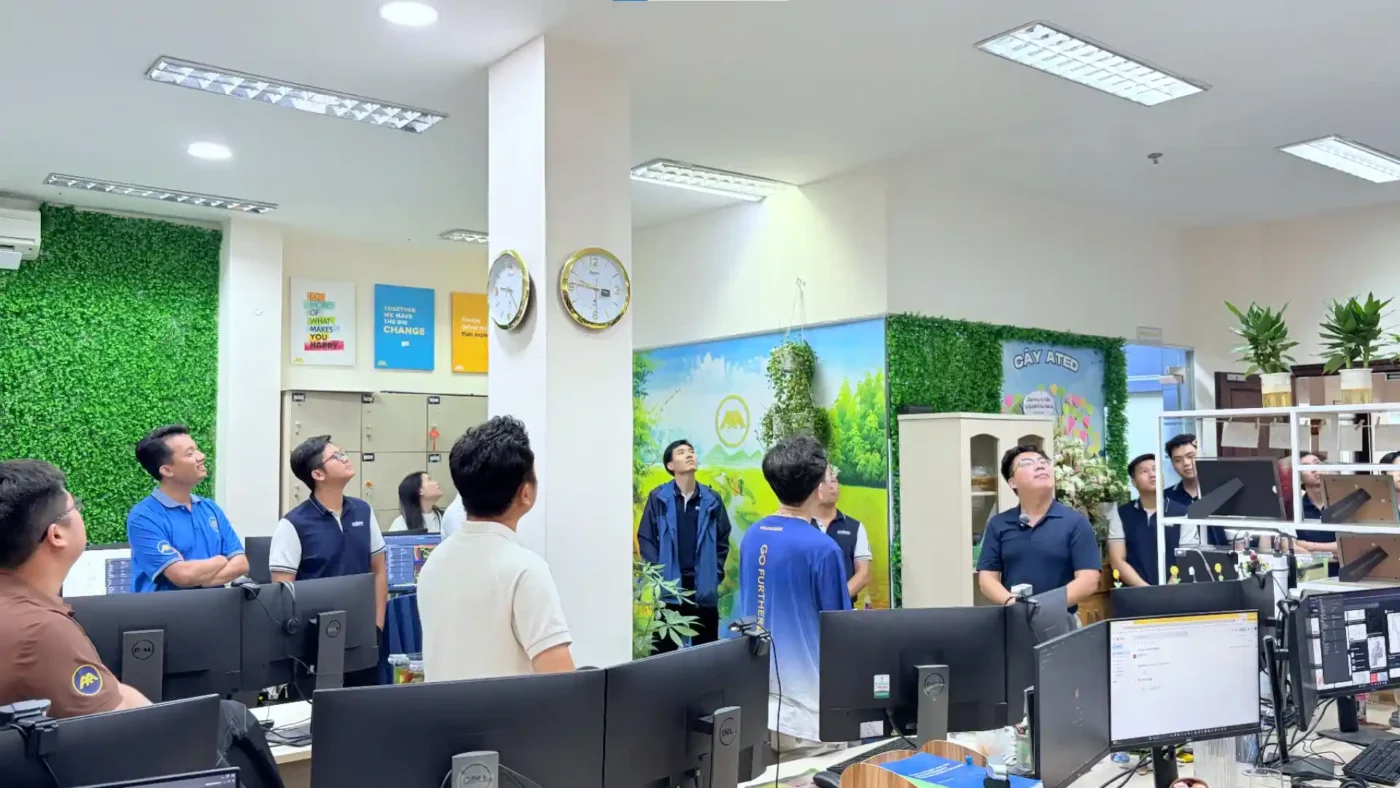
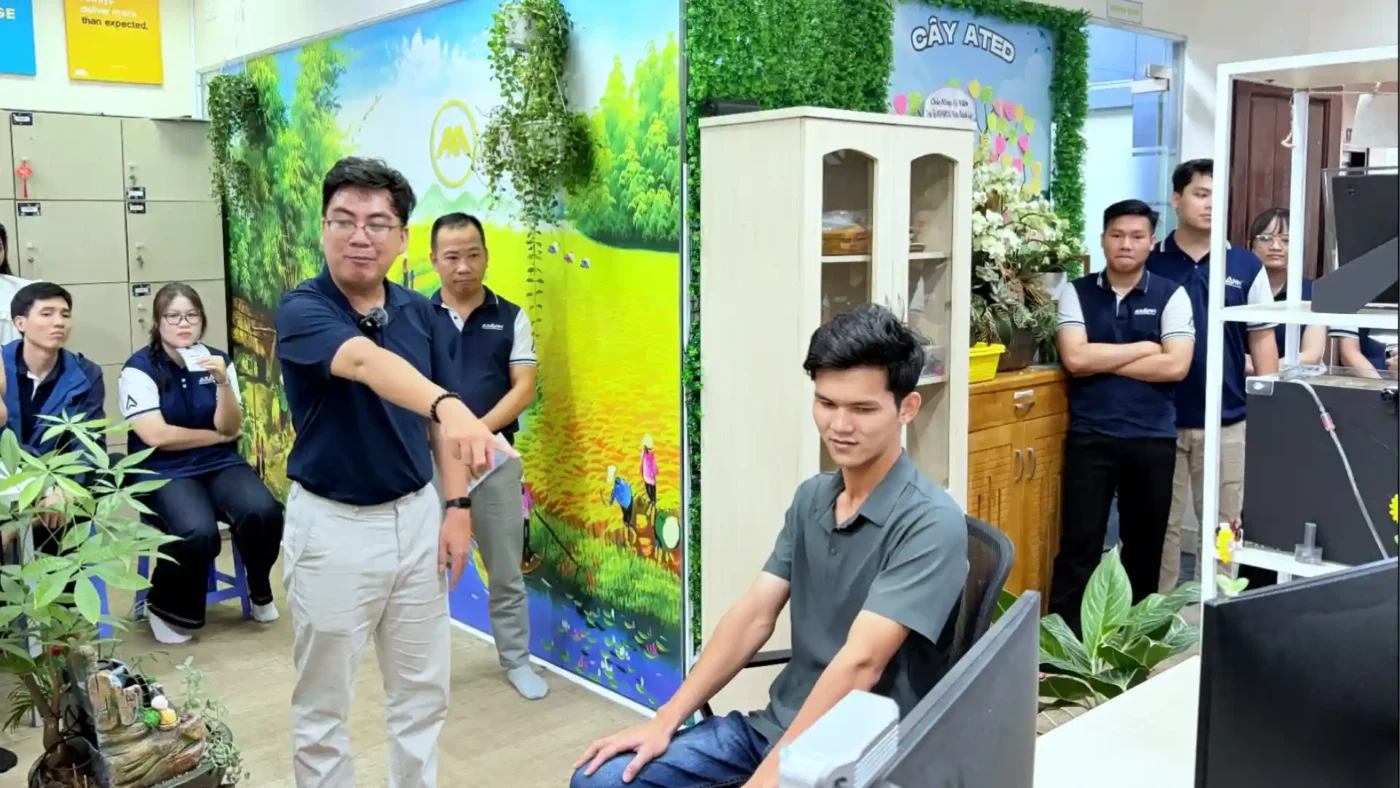
Through familiar examples, the session reinforced that a working position is not something that must remain fixed throughout the day. A position that feels suitable at the beginning of a task may need to change after a longer period of concentration. An arrangement that works well for one person may not be equally appropriate for another.
For that reason, the programme was not simply about learning how to “sit correctly”. It was about developing awareness, changing position when appropriate and avoiding the assumption that the body should remain still for an entire working session.
Bringing the guidance back into the working day
After the workshop, the ideas continued to be explored within each team member’s actual working environment.
This was an important part of the programme. The guidance did not remain within a meeting room. It gradually became visible at individual desks, in the way equipment was arranged and in the decisions people made during breaks between focused tasks.
Some team members noticed that their monitors were positioned lower than expected. Others became more aware of shoulder or wrist position. Some adjusted their chairs or moved frequently used items closer to create a more comfortable and practical working area.
Each person started with a different detail, but the shared intention was the same: to pay greater attention to how the working day feels, not only to what needs to be completed.
Small changes at the workstation
A workstation is used every day. Precisely because it is so familiar, many of its details can become almost invisible.
A monitor may be positioned slightly to one side. A chair may no longer suit the person using it. A keyboard, mouse or frequently used document may require more reaching or turning than necessary. Space for the hands, legs and natural movement may also be more restricted than it first appears.
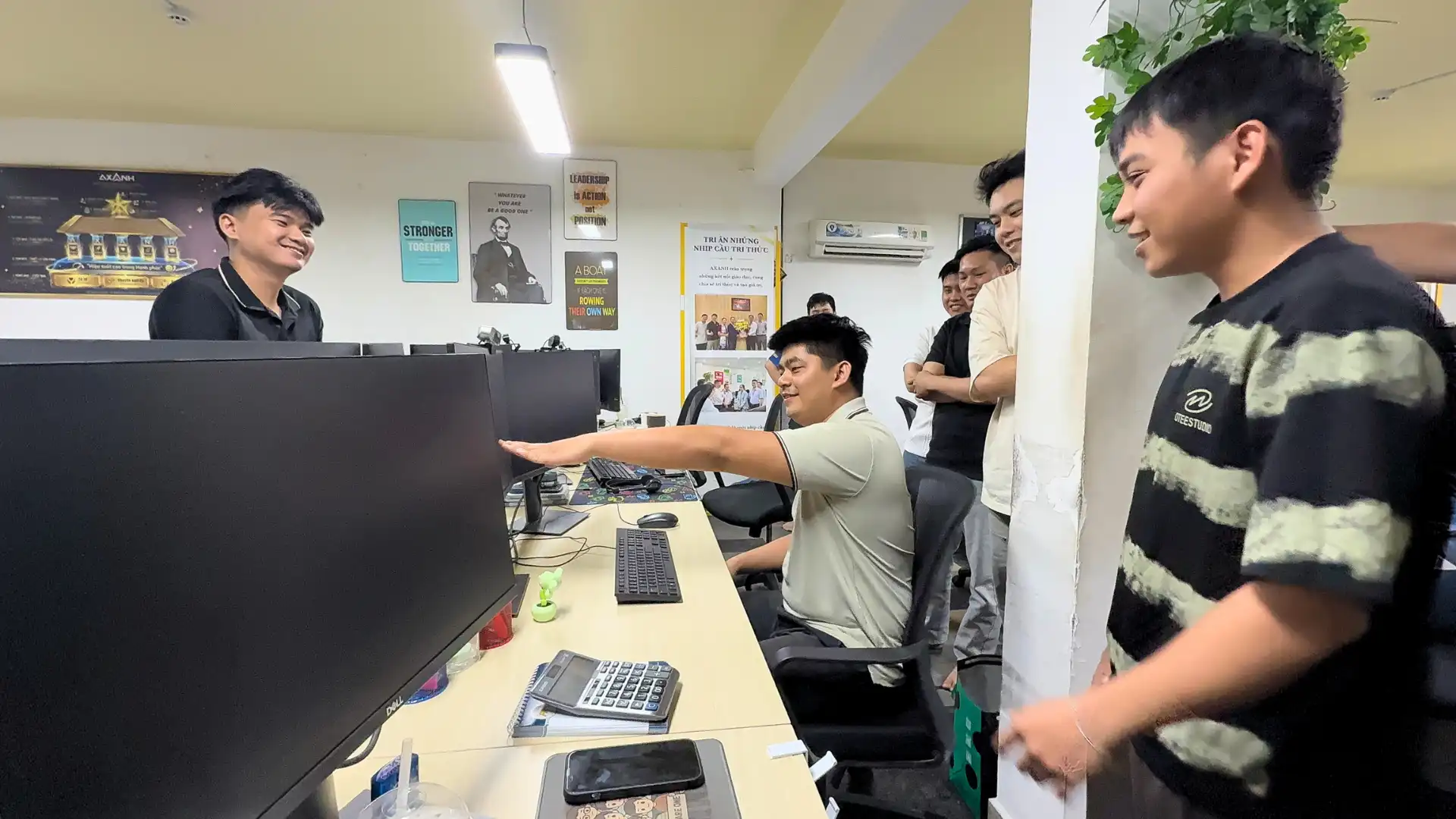
During Healthy Spine Week at AXANH, team members were encouraged to see the workstation as an environment that could be reviewed and adjusted, rather than as a fixed arrangement.
Practical points considered during the week
- Positioning the monitor where it could be viewed more comfortably.
- Keeping the keyboard and mouse within a natural working range.
- Adjusting the chair and back support to suit the person using them.
- Maintaining suitable space for the hands, legs and small movements.
- Keeping frequently used items within convenient reach.
- Changing position naturally rather than remaining still for too long.
Not every improvement required new equipment or a major reorganisation. In many cases, moving a monitor, adjusting a chair or reorganising a few objects was enough to help someone use their space more consciously.
The goal was not to create a perfect workstation for a photograph. The more meaningful outcome was understanding why a change might be useful and recognising how it affected the experience of working.
For additional European guidance, readers may consult the EU-OSHA resource on working with display screen equipment. This link is included as a general reference. Individual workstation decisions should still reflect personal needs, working conditions and appropriate professional advice.
Turning five-minute breaks into active pauses
Alongside workstation adjustments, the programme encouraged team members to reconsider the value of short breaks during the day.
When attention is absorbed by a task, time can pass quickly. It is common to pause only after a piece of work has been completed or once tiredness has become difficult to ignore.
An active break introduces a small transition before that point.
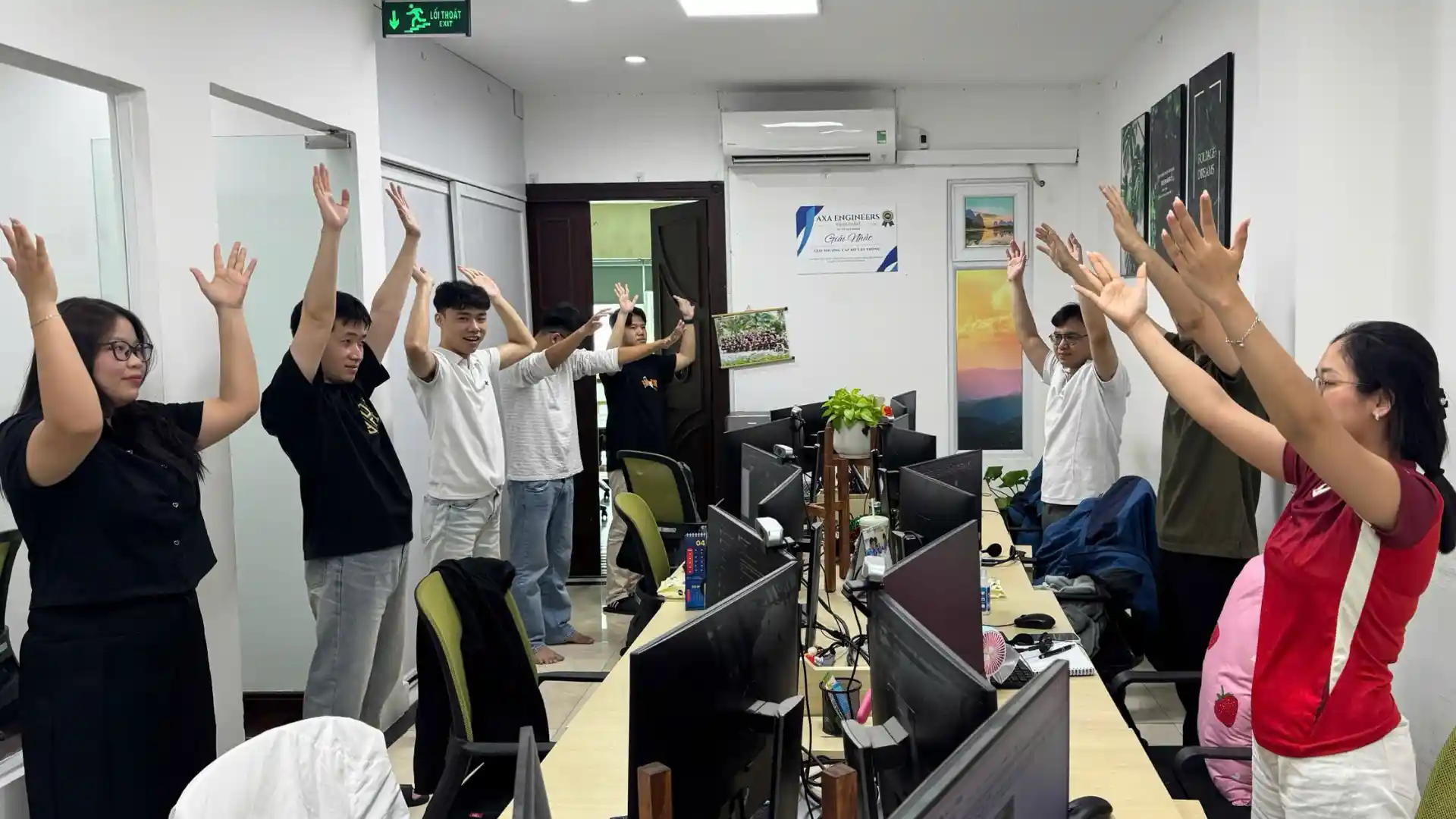
Through the Healthy Spine Reset activity, AXANH’s regular five-minute breaks were combined with gentle movements introduced during the workshop. Team members could step away from the screen, stand up, walk briefly, relax the shoulders or change position before returning to the next task.
An active pause can remain simple
- Looking away from the screen for a short period.
- Standing up and changing position.
- Walking a short distance around the office.
- Relaxing the shoulders and arms.
- Practising gentle movements introduced by the specialist.
- Taking a moment to notice how the body currently feels.
The purpose was not to interrupt productive work. It was to create a deliberate transition that allowed people to return to their tasks in a more comfortable state.
The WHO guidelines on physical activity and sedentary behaviour provide broader guidance on the importance of physical activity and reducing sedentary time. This article does not prescribe a specific duration or intensity of movement and does not replace individual medical advice.
What remains after Healthy Spine Week at AXANH
The value of the programme cannot be measured only by the number of activities completed. Its longer-term meaning can be found in the small decisions that continue afterwards.
It may be a team member adjusting the monitor before beginning work. A colleague standing up during a five-minute break. Someone noticing tension in the shoulders and taking a moment to relax. It may also be a team reminding one another to create a pause between two demanding tasks.
None of these actions produces an immediate or dramatic transformation. Repeated consistently, however, they can become a natural part of how people work together.
Three habits to continue after the programme
Sit with greater awareness
Sitting with awareness does not mean maintaining one position for several hours. It means noticing how the body is positioned and making an adjustment when the current arrangement no longer feels suitable.
Before beginning a focused task, a team member can take a moment to review the chair, monitor, keyboard and space around the workstation.
Changing position naturally during the working day is also part of that awareness.
Take more active breaks
There is no need to wait until a task is complete or tiredness has become overwhelming before standing up.
A short break between focused working periods can provide an opportunity to change position, move away from the screen or practise a few gentle movements.
AXANH’s five-minute breaks create a shared rhythm, while each team member can also choose appropriate moments according to their work and individual needs.
Listen more closely to the body
No two working days are exactly the same. Some require longer periods of concentration. Others contain more meetings, reviews or collaborative discussions. There are also days when the body may need a slower rhythm to regain balance.
Listening to the body means noticing these differences and responding appropriately: changing position, relaxing the shoulders, adjusting the chair, taking a break or seeking professional advice when necessary.
This is not treatment guidance and does not replace medical assessment, diagnosis or individual healthcare advice. The programme was designed to raise awareness and encourage more conscious working habits.
A glimpse of life and culture at AXANH
Healthy Spine Week at AXANH shows how care for people can be expressed through practical experiences within the working day.
The programme reflects a broader view of performance. People can work with high standards and a strong sense of responsibility while also being encouraged to protect the personal wellbeing that supports long-term contribution.
At AXANH, sustainable performance is not built by overlooking human needs. Teams are better able to grow over time when people work within a professional environment that combines clear standards, mutual support and space for continuous development.
This is part of the wider culture and development journey at AXANH: bringing together technical capability, professional responsibility, kindness and long-term human growth.
For international readers, initiatives such as Healthy Spine Week offer a more concrete view of the people behind AXANH’s technical work. Beyond projects, processes and delivery standards, an organisation is also shaped by how colleagues support one another and build healthier everyday working practices.
More stories about our people and culture are available through People at AXANH. Current professional opportunities can be explored on the AXANH Careers page.
Closing the week and carrying the habits forward
Healthy Spine Week at AXANH concluded after a series of practical conversations, observations and shared activities.
What remains is more than a set of workshop photographs or a few moments of movement in the office. It is a stronger sense of individual awareness in the way team members approach their working day.
It may begin with one monitor adjustment, a short active break, a gentle movement or a reminder to change position.
These actions do not need to be performed perfectly from the beginning. When remembered and repeated consistently, they can gradually become a natural part of the working rhythm.
Thank you to every AXANH team member who took part, practised and helped make care for personal wellbeing part of the everyday working experience.
The week has ended, but the positive habits can continue
Explore more stories about the people, workplace experiences and shared culture that shape life at AXANH.
