


Partnership Models
Partnership Fit
Strategic Partnerships
Why AXANH
Discuss Your Needs




Working philosophy
High Performance Through Well-Being at AXANH
At AXANH, well-being is not a benefit added after performance. It is part of how we create the conditions for reliable work: clear expectations, honest communication, responsible planning, useful feedback, accountability and room to grow.
See the Research How It Works
Workplace research
Better working conditions are linked with stronger business outcomes
Gallup, Indeed and Great Place To Work measure different aspects of employee experience. Across different methods, their findings point in a similar direction: stronger people conditions are associated with performance, retention, adaptability and workforce health.
Gallup — engagement & wellbeing
23% higher profitability
Gallup’s Q12 meta-analysis reports a 23% median difference in profitability between top- and bottom-quartile teams on employee engagement, alongside stronger productivity outcomes.
Gallup also reports lower turnover among highly engaged teams. Its 2026 well-being research found that thriving employees miss 53% fewer workdays because of health problems and are 32% less likely to be actively seeking another job.
Read Gallup Research
Read Well-Being Study
Indeed — U.S. 2025 study
81% plan to stay
In an Indeed-commissioned survey of 4,038 U.S. workers, 81% of employees with high well-being planned to stay another year, compared with 50% of employees with lower well-being.
Employees with high well-being reported achieving work goals 1.5× more often. At companies prioritizing well-being, 72% also reported greater adaptability to AI, versus 46% elsewhere.
Great Place To Work — U.S. 2026
81% report psychological health
Among the 2026 Fortune 100 Best Companies to Work For®, 81% of employees reported a psychologically and emotionally healthy workplace, compared with 56% at a typical U.S. workplace.
Over 28 years, companies on the 100 Best list recorded a 13.4% annualized stock return versus 9.2% for the Russell 3000® Index—a long-term association, not a forecast for any individual company.
How to read the research: Engagement, well-being and employee experience are related but distinct measures. The findings show recurring relationships with business outcomes, not guaranteed effects for any individual organization.
From perk to system
Well-being starts with how work is designed
NIOSH’s Total Worker Health® approach places strong emphasis on the conditions of work, including organizational design, leadership, policies, work arrangements and the environment around people. Its tools help organizations establish a baseline, identify interventions and evaluate progress in worker well-being over time.
That principle matters because sustainable performance is not created by adding perks after the work itself has already been designed. It is shaped earlier: in how goals are set, capacity is planned, concerns are heard, feedback is given, knowledge is shared and responsibility is carried.
AXANH interpretation
Well-being belongs upstream
High Performance Through Well-Being treats the human environment as part of the operating system of work. The objective is not to make every day easy; it is to create conditions in which capable people can meet serious standards repeatedly without making avoidable exhaustion the method.
Strong results and healthy methods reinforce one another when clarity, trust, planning, professional discipline and accountability are built into everyday work.
Operating conditions
The conditions behind strong performance are observable
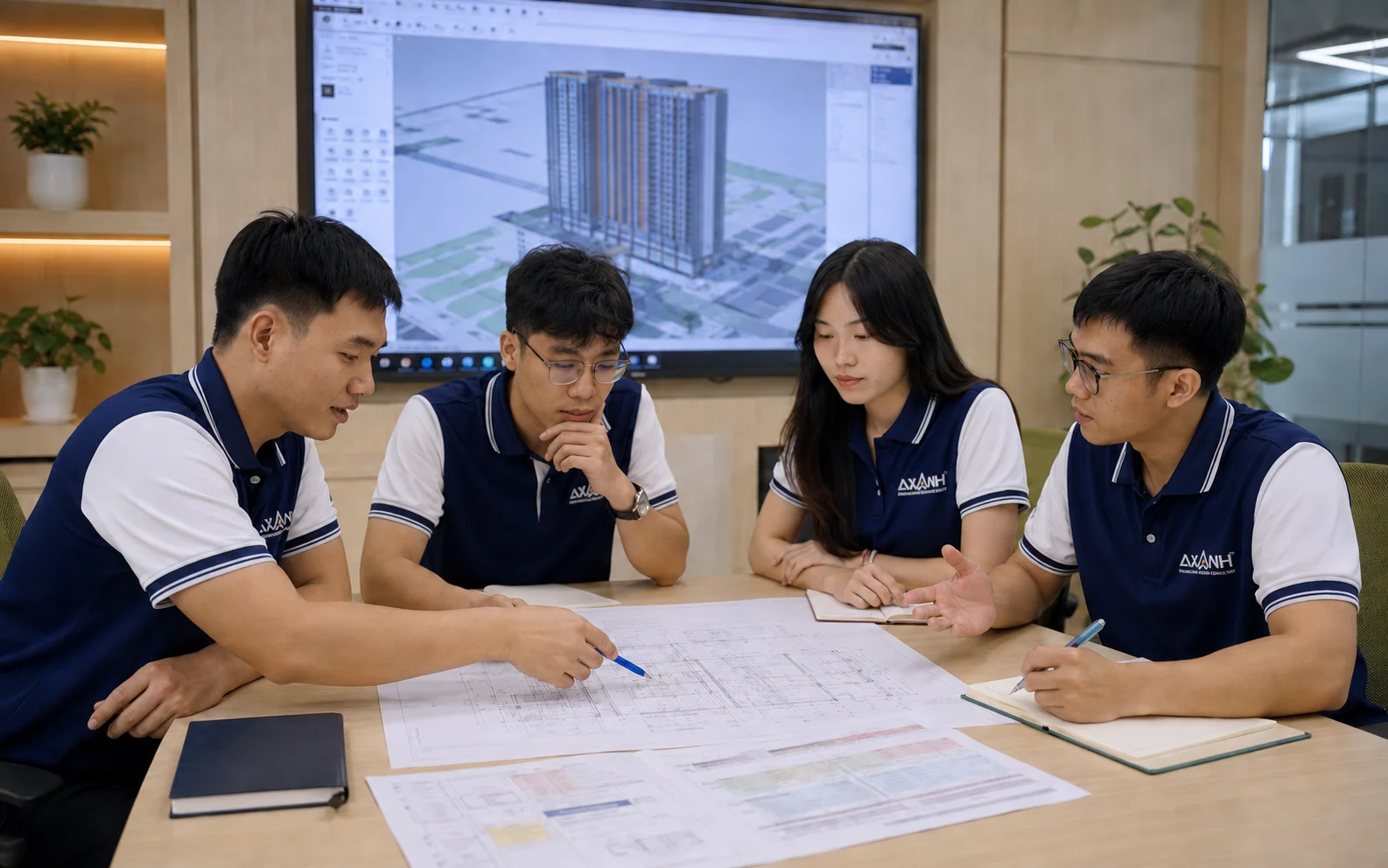
The AXANH Culture House describes performance as something shaped through daily working conditions. These conditions can be seen, discussed and improved; they are not abstract values sitting outside the work.
Clear goals and priorities
People need to understand the expected outcome, current priorities and what good work looks like before effort can become dependable delivery.
Honest communication
Questions, progress and concerns should be raised while there is still time to clarify, decide or change course.
Responsible planning
Capacity, sequencing and commitments should be managed deliberately so that periods of pressure do not turn chronic overextension into the operating model.
Useful feedback and recognition
Feedback should improve the work and strengthen judgment. Recognition should reinforce contributions and behaviors worth repeating.
Shared knowledge and responsible leadership
Useful lessons should move beyond one person. Leaders create clarity, listen, develop people and take responsibility for the working conditions their teams experience.
Shared ownership
Responsibility is shared across the system
A healthy high-performance environment cannot be delegated to an HR program or one leader. The organization shapes the system, leaders shape daily conditions, and individuals shape how responsibility and trust are carried through the work.
01 — Organization
Design the conditions
Create clear expectations, workable processes, appropriate resources and standards that make good work easier to repeat. When a system creates recurring friction, improve the system instead of relying indefinitely on individual heroics to compensate.
02 — Leaders
Shape daily experience
Set priorities, explain why the work matters, listen before important decisions, give timely feedback, manage workloads responsibly and develop people so capability becomes stronger rather than more dependent.
03 — Individuals
Own your contribution
Manage time carefully, communicate early, keep realistic commitments, ask for support when needed, learn from feedback and contribute to a working environment where others can also perform responsibly.
Standards and care
Well-being and accountability are not trade-offs
The philosophy becomes credible when expectations remain clear. High standards, professional discipline, learning, human boundaries and accountability belong in the same operating model.
What does well-being mean at AXANH?
It means creating an environment where people can speak honestly, ask for help, learn from mistakes, grow, build healthy working relationships, be treated fairly and work through pressure without making exhaustion normal. Well-being also carries personal responsibility: each person is expected to communicate early, manage commitments responsibly and contribute to a healthy working environment for others.
What does high performance mean at AXANH?
It means delivering reliable work, meeting agreed standards, keeping commitments, solving problems early, using time and resources responsibly, learning from feedback, improving the way work is done and helping build capability that remains useful beyond the immediate task.
How should pressure be handled?
Pressure is part of serious professional work. The response should be clearer priorities, responsible planning, early communication and timely support so the team can protect the immediate result without undermining its ability to perform again tomorrow.
What happens when mistakes occur?
An honest mistake should lead to disclosure, correction, learning and prevention. Accountability remains clear when repeated carelessness, dishonesty or deliberate concealment affects trust and the shared outcome.

Independent AXANH signal
External recognition adds a people-experience signal
The broader research explains why workplace conditions can matter. Independent evidence relating to AXANH’s own people environment adds a company-specific signal—but it should remain separate from claims about project performance.
2025 workplace ranking
#1 Small Category
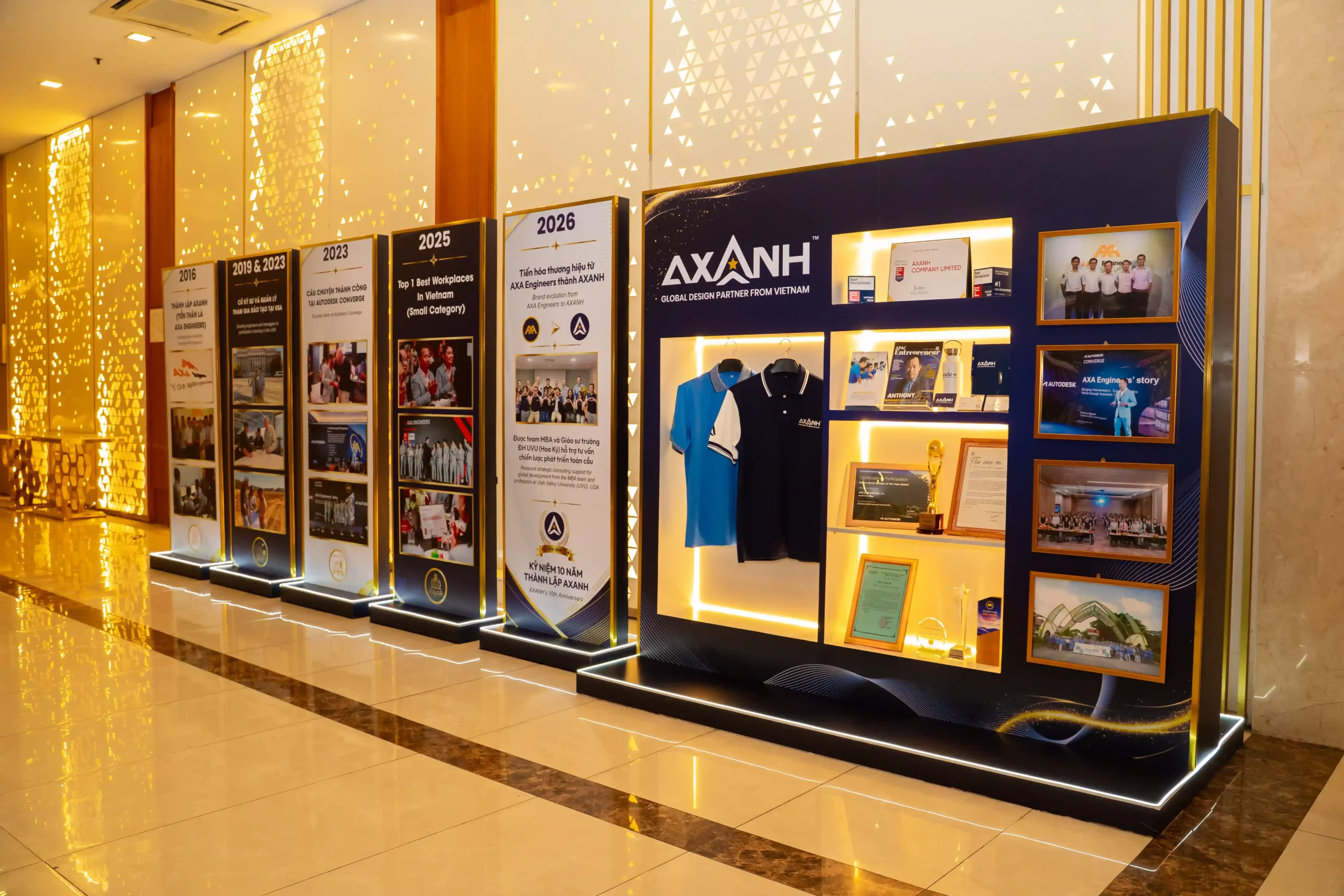
In 2025, AXA Engineers—the engineering business whose decade of development helped form the foundation for AXANH’s next chapter—was ranked #1 in the Small Category on Great Place To Work®’s Best Workplaces in Vietnam™ 2025 list.
Published employee result
93% employee result
Great Place To Work®’s public company profile currently reports that 93% of employees at AXANH Company Limited say it is a great place to work.
Why it matters
A supporting signal
AXANH treats workplace recognition as one input when explaining how its culture operates. Its relevance lies in the operating question behind the recognition: whether the organization is creating conditions that support continuity, knowledge-sharing and sustained capability.
Scope: The ranking and employee result describe workplace experience within their respective measurement scopes. They do not substitute for project-specific evidence. Project performance remains shaped by the specific scope, team, workflow, technical requirements and delivery controls applied to each engagement.
Partner experience
What this philosophy should make visible in the work
Culture becomes relevant to a partner when it can be observed in the working relationship. The practical test is not whether people simply appear happy; it is whether the environment supports clearer communication, responsible commitments, stronger continuity and earlier learning.
01
Earlier risk visibility
People are expected to raise relevant concerns while there is still time to clarify, decide or adjust.
02
Clearer commitments
Goals, roles and standards make handoffs easier to understand and commitments easier to manage.
03
Knowledge continuity
Useful lessons are shared so the wider team can build on them rather than depending unnecessarily on one individual.
04
Improvement compounds
Feedback, mistakes and successful practices can become better guidance, checklists, processes and future decisions.
Management check
Six questions keep the philosophy practical
Leaders can inspect the conditions behind a result instead of looking only at the result itself. These questions turn a culture statement into an operating conversation.
01
Are priorities clear?
Can the team explain the expected outcome, current priorities and the most important trade-offs?
02
Are risks raised early?
Can people surface concerns before they become deadline problems or quality surprises?
03
Is workload planned responsibly?
Are capacity, sequencing and deadlines managed deliberately rather than repeatedly rescued through overextension?
04
Can people ask for help?
Is support available early enough to improve the outcome while responsibility remains clear?
05
Does feedback change the work?
Does feedback lead to a better decision, stronger judgment or clearer standard next time?
06
Does success build capability?
When work goes well, is the useful lesson captured and reinvested so others can perform better?
Frequently asked questions
Read the evidence without oversimplifying it
The research is most useful when its definitions and scope remain visible. These answers clarify how AXANH connects external evidence with its own working philosophy.
Do these studies prove that happiness causes higher performance?
No. The studies on this page do not measure one universal concept called “happiness,” and the figures should not be combined into one causal percentage. Gallup measures engagement and thriving, Indeed measures work well-being, and Great Place To Work measures employee experience and trust. Across different methods, stronger people conditions repeatedly appear alongside outcomes such as productivity, retention, adaptability, absence and business performance.
Does High Performance Through Well-Being lower expectations?
No. AXANH keeps high standards and well-being in the same system. Reliable work, kept commitments, responsible use of time, early problem-solving and accountability remain expected. At the same time, leaders and teams are responsible for improving the conditions through which those results are produced.
How should partners experience this philosophy?
Partners should notice the behaviors behind it: clearer communication, earlier risk awareness, responsible commitments, stronger continuity, shared knowledge and learning that improves future work. The philosophy matters when it becomes visible in how the relationship operates.
What does the 2025 workplace recognition add?
It adds independent evidence about workplace experience and AXA Engineers’ ranking within the specific 2025 Small Category scope. It should not be read as proof of project outcomes. Partner evaluation still depends on project-specific capability, team, workflow, technical requirements and delivery controls.
Next step
Culture earns meaning when it becomes visible in the work
For a long-term partner, culture matters when it helps capable people communicate clearly, carry responsibility and keep learning across projects. Explore the full AXANH Culture House or talk with AXANH about the principles behind long-term collaboration.
Discuss Collaboration Explore Culture House