

Partnership Models
Partnership Fit
Strategic Partnerships
Why AXANH
Discuss Your Needs



U.S. PE training · 2025
A U.S. Professional Engineer Trained Our Team in Vietnam
For a distributed engineering team, distance is manageable. The harder question is whether engineers understand the technical context behind a client’s standards, comments, and design decisions well enough to contribute with judgment—not simply follow instructions.
In 2025, Eric Hasenoehrl, PE, of Keltic Engineering, traveled to Vietnam and trained our engineering team directly. Much of the program focused on practical civil engineering topics, including grading, storm drainage, erosion control, and water and sewer design.
The value was not simply that a U.S. PE visited Vietnam. It was the opportunity to bring professional engineering context closer to the team doing the work.
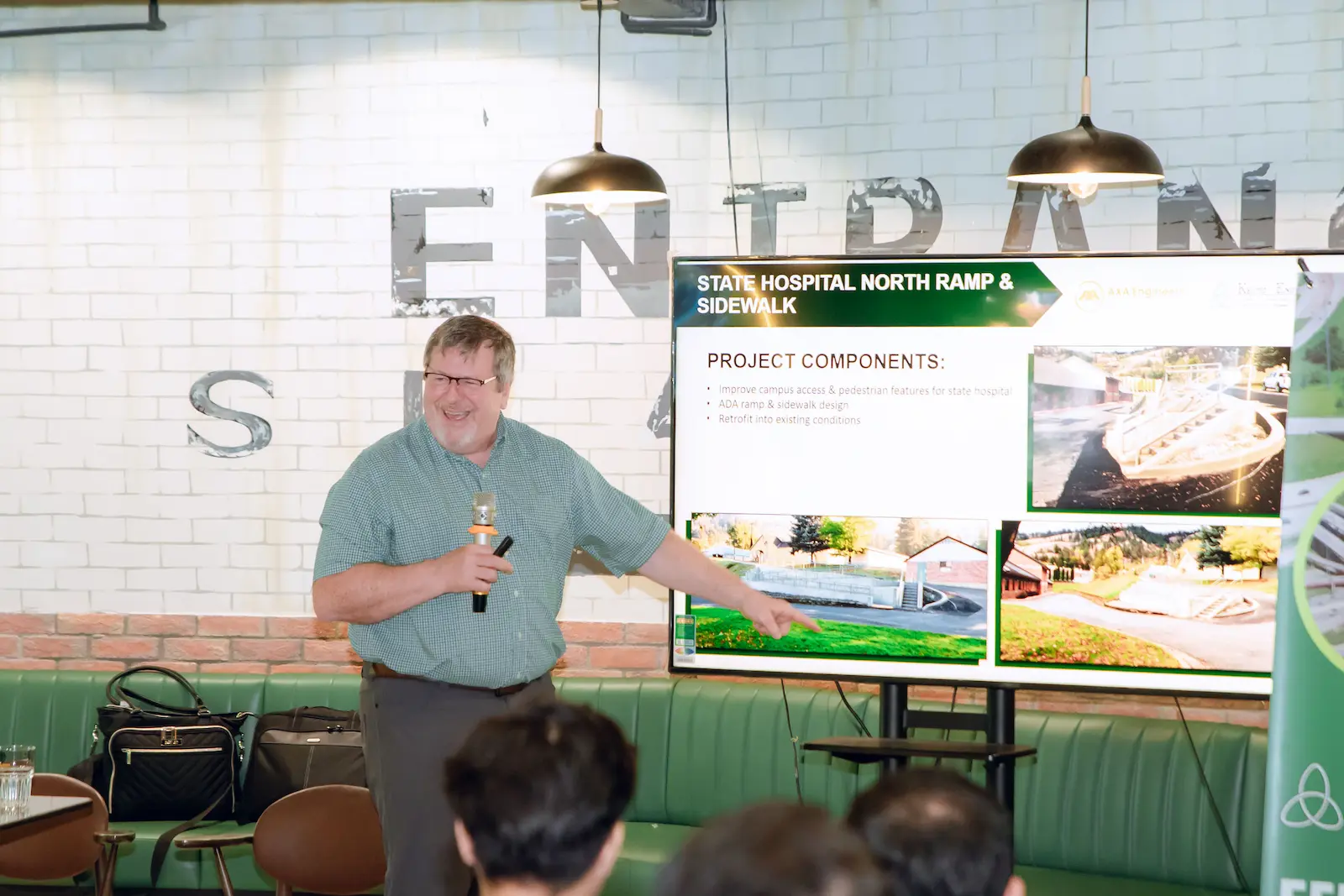
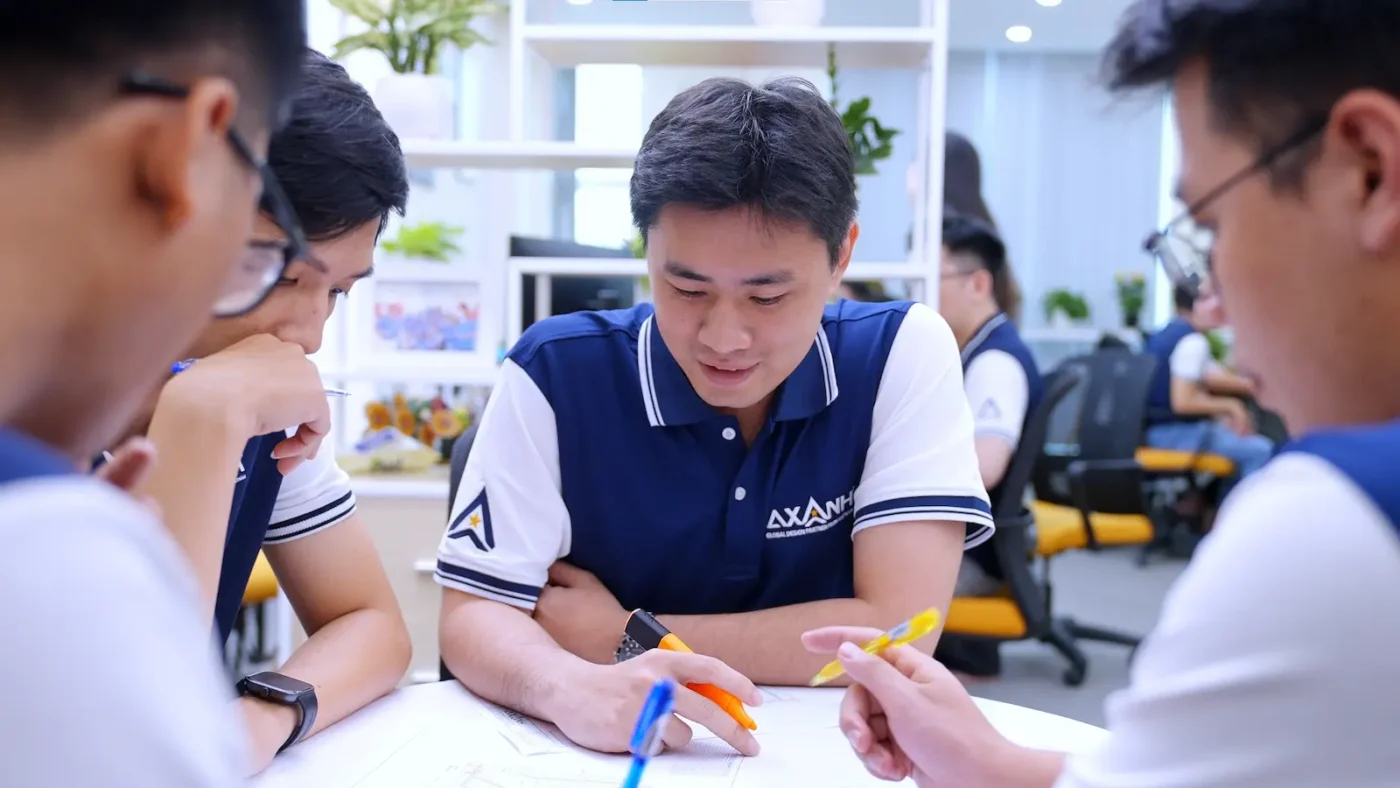
Direct engineering training in Vietnam, 2025.
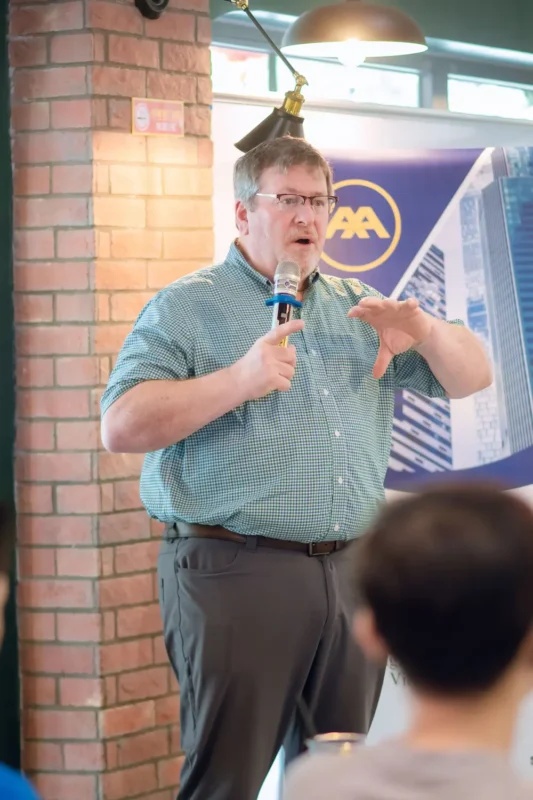
A working session from the 2025 training program.
Why it matters
The hardest distance is not always geographic
An engineering team can work thousands of miles from a client and still communicate quickly through Teams, email, and cloud platforms. Technology, however, does not automatically close a less visible gap: the gap in how requirements are interpreted and how the engineering reasoning behind the work is understood.
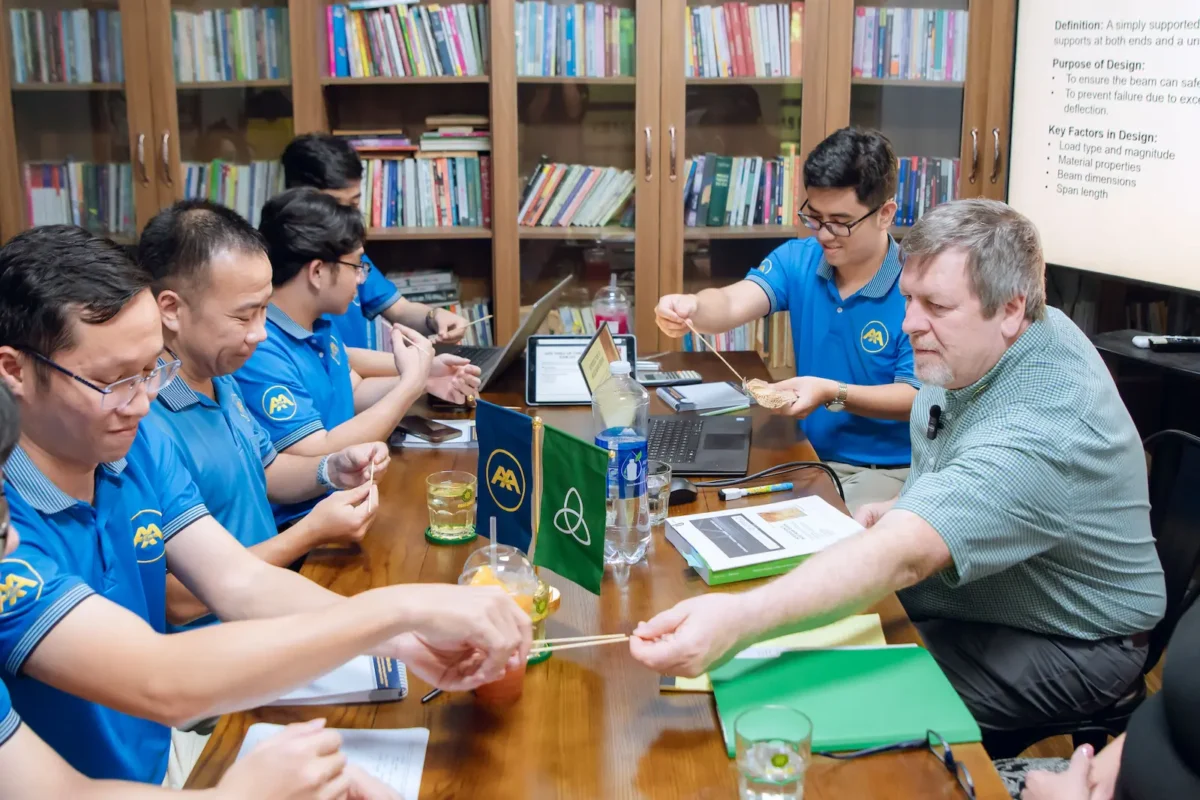
That is where direct technical learning becomes valuable. When Eric sat with the team in Vietnam to discuss grading, drainage, water, and sewer design, engineers could ask questions as issues emerged, follow the reasoning behind a method, and gain closer exposure to how civil engineering problems are discussed in professional practice.
A training program does not replace client-specific standards, project review, or experience built through delivery. It creates another layer of context that can help two teams develop a clearer technical language over time.
A distributed team becomes more useful when geographic distance does not become distance in how the work is understood.
Technical curriculum
Civil engineering was the core of the program
The training agenda went into practical civil engineering topics rather than staying at the level of general professional development. It gives clients a concrete view of the technical areas the team had the opportunity to discuss directly with an experienced U.S. Professional Engineer.
01
Site & roadway
Grading
The program covered general site grading, road grading, and grading with retaining walls.
The discussion treated grading as an integrated site problem involving terrain, roadway geometry, site conditions, and physical constraints.
02
Stormwater
Drainage & erosion control
Topics included TR-55 Analysis, the Rational Formula, and Erosion Control Plans / SWPPP Documents.
The agenda connected stormwater analysis with the documentation and erosion-control considerations surrounding civil design.
03
Utilities
Water & sewer flow
The program covered non-pressurized pipe flow, open-channel flow, and pressurized pipe flow.
These topics created a broader basis for discussing how water, sewer, and drainage systems behave under different flow conditions.
Structural topics
Three additional structural engineering areas
04
Structural
Vertical loads
Part of the structural training focused on vertical loads as a foundational engineering topic.
This added a structural-load perspective to a program otherwise centered primarily on civil engineering practice.
05
Pole building
Beam & column design
The agenda included pole-building discussions with specific attention to beam and column design.
The session moved beyond a general structural overview into two core building elements recorded in the training scope.
06
Lateral system
Lateral loads, diaphragms & chords
The structural agenda also covered lateral loads, diaphragms, and chord analysis.
This broadened the structural discussion from vertical loading to the way lateral forces are considered through the system.
Learning in context
Some engineering context transfers better face to face
Standards, manuals, and markups remain essential. A direct working session adds something different: questions can be raised while the reasoning is still visible, and a method can be discussed rather than received only as an instruction.
That matters in distributed engineering. Technology can solve much of the geographic distance; professional context still develops through explanation, questions, review, and repeated exposure to how experienced engineers think through the work.
What clients gain
What can this mean for a client?
The value of direct training is not the event itself. It is the additional context it can give engineers as they learn to understand requirements more clearly, ask better questions, and contribute more thoughtfully within a client’s working environment.
01
More context behind the task
When engineers understand why a requirement matters, they have a stronger basis for seeing how a grading, drainage, or utility decision may affect the next part of the work.
Context helps a team move beyond treating each instruction as an isolated production task.
02
Better questions earlier
Professional maturity does not mean having every answer. It includes recognizing an unclear assumption, missing information, or a decision that should be clarified before work moves further.
Good engineering collaboration often begins with knowing what needs to be clarified.
03
Closer exposure to practice
Learning directly from a PE working in the U.S. market gives engineers another way to hear how technical issues are framed, explained, and discussed in professional practice.
Direct exposure adds context that software manuals, templates, and markups cannot fully carry on their own.
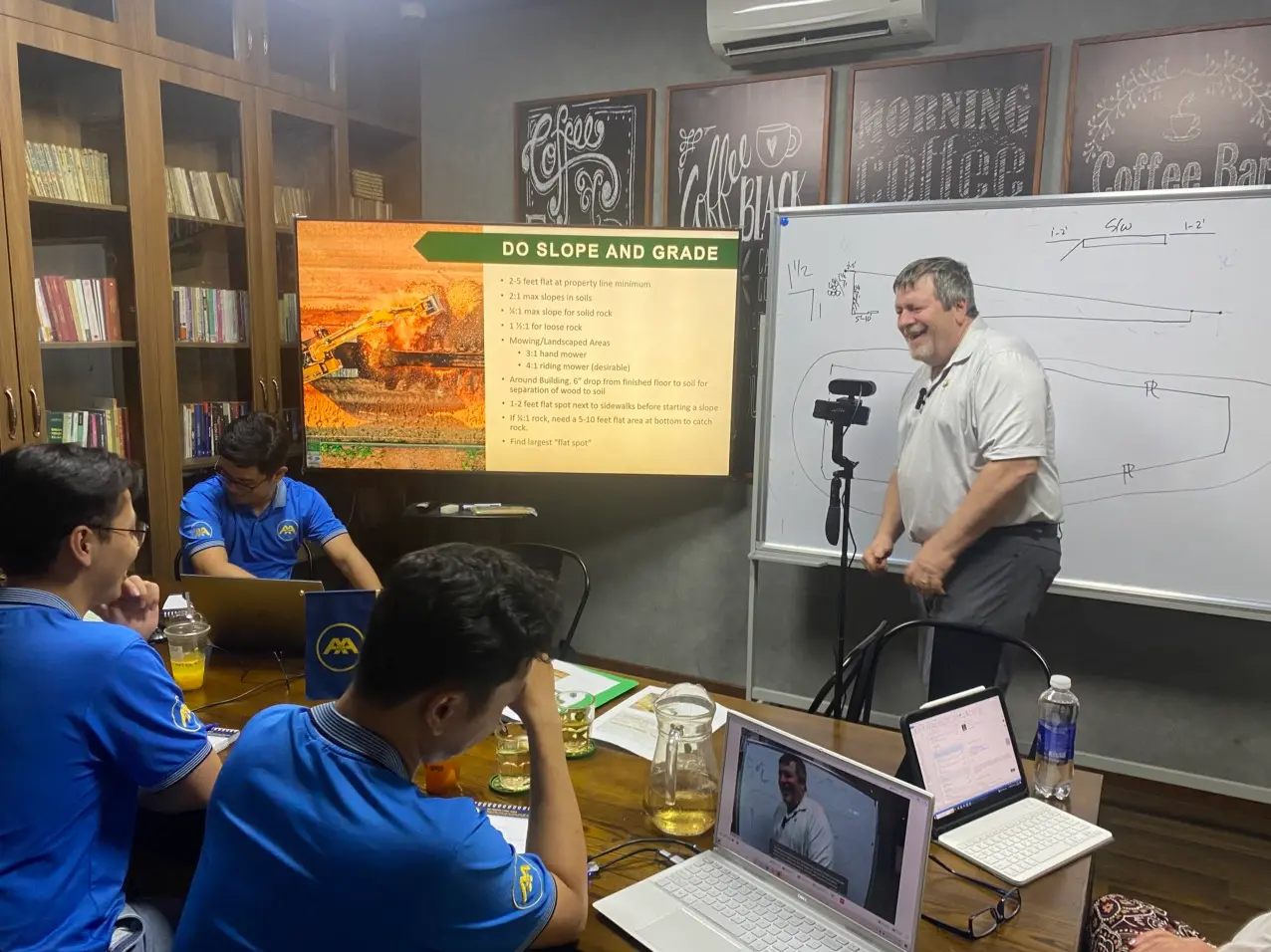
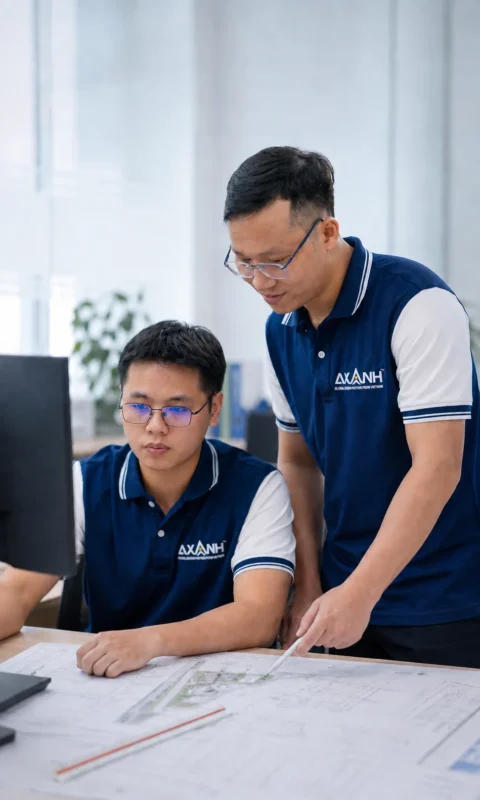
A moment from the 2025 knowledge-sharing program in Vietnam.
With gratitude
With sincere thanks to Eric and Keltic Engineering
A technical relationship becomes more valuable when knowledge can move in both directions. In 2025, Eric Hasenoehrl made the time to come to Vietnam and share his professional experience directly with our engineering team.
We value that deeply. A client can send markups, templates, and standards. Taking the time to explain the thinking behind the work is a different form of investment—one that helps an external team understand not only what to do, but how to think more carefully about the work.
We are sincerely grateful to Eric and Keltic Engineering for their trust, openness, and willingness to share knowledge throughout the relationship.
The 2025 program took place during the AXA Engineers chapter of our history. Today, the engineering experience, relationships, and learning built during that period continue forward under the AXANH brand.
A strong relationship can create more than capacity. It can create opportunities for both teams to learn, improve, and work together with greater context.
A longer horizon
A longer-term aspiration: the U.S. PE pathway
Eric and AXANH share a longer-term aspiration: to help suitable AXANH design engineers build the technical foundation, experience, and professional readiness to pursue U.S. Professional Engineer licensure in the future.
That is a demanding professional path. It requires more than exam preparation. Engineers need sound fundamentals, relevant experience, judgment, accountability, and a growing understanding of professional responsibility. Guidance from experienced PEs such as Eric can help make those expectations more visible much earlier in an engineer’s development.
For AXANH, the ambition is not to turn a credential into a marketing claim. It is to help engineers who are suited to that path prepare seriously for higher levels of professional responsibility—and, when they meet the applicable requirements, be better positioned to pursue the PE examination and licensure process.
The value begins before any exam: stronger technical foundations, better judgment, and a clearer understanding of professional responsibility.
Future development
Prepare before eligibility
AXANH hopes to support suitable engineers as they build toward the U.S. PE pathway, including exam preparation when appropriate, with guidance and experience-sharing from licensed Professional Engineers such as Eric.
Eligibility and licensure requirements vary by U.S. jurisdiction and licensing board. The practical focus today is therefore on developing capability, experience, and professional discipline step by step.
For clients, that ambition reflects a long-term investment in engineering judgment and professional responsibility—not simply production capacity.
Beyond one session
One training program can lay the foundation for a broader learning system
Direct training can create a strong starting point. Organizational capability grows when useful knowledge is retained, discussed, practiced, reviewed, and made available beyond the people who were originally in the room.
That is the role of the broader learning system AXANH is building through the Engineering Center of Excellence: connecting structured development, mentoring, technical knowledge, review, and continuous improvement so individual learning has a better chance of becoming reusable organizational capability.
External experts and client-side learning have a distinct place in that system. They introduce new context and professional perspective. The next responsibility is ours: understand it, test it, practice it, and retain what is useful.
Learning becomes more valuable when it can travel beyond the people who first received it.
Capability system
Engineering Center of Excellence
Explore how AXANH connects structured learning, capability development, engineering knowledge, review, and continuous improvement within a broader system.

A thoughtful next step
Good collaboration begins with shared context
If you are considering distributed engineering support, we would be glad to begin by learning how your team works—your standards, review process, communication rhythm, and the technical context that matters most to your projects.
From there, both sides can assess the right scope, the level of support required, and whether AXANH is a good fit for the way your team wants to work.