








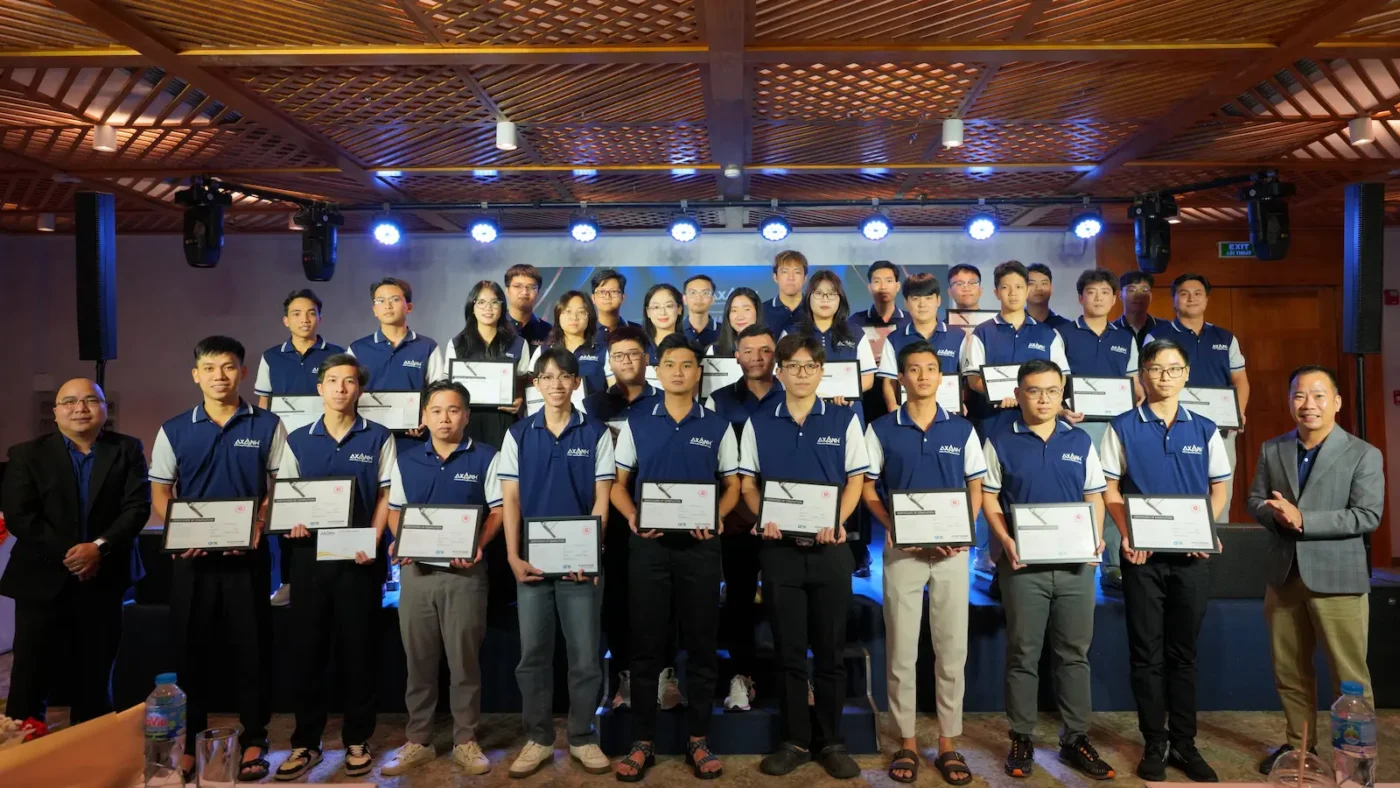
CIVIL 3D COMPLETION CERTIFICATES
On September 28, 2026, Thien Ly of Autodesk presented Civil 3D Completion Certificates to 30 AXANH civil engineers.
The milestone recognizes an important achievement for the engineers who completed the cycle. For AXANH, however, the more useful story is not the certificate count alone. It is the system around it.
At AXANH, Civil 3D capability is not treated as permanent simply because an engineer has used the software for years. Eligible civil engineers return to a recurring cycle of preparation, assessment, additional support where needed, and reassessment.
The purpose is straightforward: create a structured opportunity to revisit an important working capability rather than assume that previous experience will always remain an adequate measure of readiness.
BEYOND EXPERIENCE
Experience matters. Reassessment makes it easier to examine.
Years of experience matter. They provide context, familiarity, and judgment that cannot be replaced by a single assessment.
But experience operates in a changing environment.
Software evolves. Workflows change. Project expectations develop. Engineers encounter new standards, coordination conditions, and different ways of using the same tools.
For that reason, capability development should not end with onboarding or with a course completed several years earlier.
A recurring checkpoint asks a more useful question than simply, “Has this engineer used Civil 3D before?”
It asks where that capability stands now—and what should be strengthened next.
Capability becomes more dependable when an organization is willing to revisit it rather than simply assume it.
HOW THE CYCLE WORKS
A recurring cycle, not a one-time training event
AXANH’s Civil 3D capability-development approach is built around a recurring annual cycle for eligible civil engineers.
The current operating model follows five practical stages.
| Stage | How the cycle works |
|---|---|
| 01 — Eligibility | Civil engineers who meet the annual eligibility requirement enter the cohort. The current standard uses at least 12 months of tenure at the eligibility cut-off. |
| 02 — Preparation | Engineers prepare against the relevant Civil 3D skill scope before assessment. |
| 03 — Assessment | The Civil 3D Completion assessment is conducted on-site as a structured capability checkpoint. |
| 04 — Additional support | Engineers who need further preparation receive additional support rather than being treated as having reached the end of the process. |
| 05 — Reassessment and completion | After identified capability gaps have been addressed, reassessment provides another opportunity to demonstrate completion. |
This distinction matters. The cycle is designed for development across the eligible civil engineering cohort, not as a one-time exercise that permanently separates people into categories of “capable” and “not capable.”
The current AXANH standard is annual completion across the eligible cohort, including additional preparation and reassessment where needed. It should not be interpreted as a claim of a 100% first-attempt pass rate.
WHAT THE CERTIFICATE MEANS
What Civil 3D Completion Certificates do—and do not—show
The Civil 3D Completion Certificates presented to 30 AXANH civil engineers provide a concrete record of this particular capability-development milestone.
These Civil 3D Completion Certificates show completion within the current assessment cycle. They should not be asked to prove more than that.
They do not, by themselves, establish project quality or replace engineering judgment. Most importantly, Civil 3D Completion Certificates should not be confused with Autodesk Professional Certification, which is part of Autodesk’s separate professional certification framework.
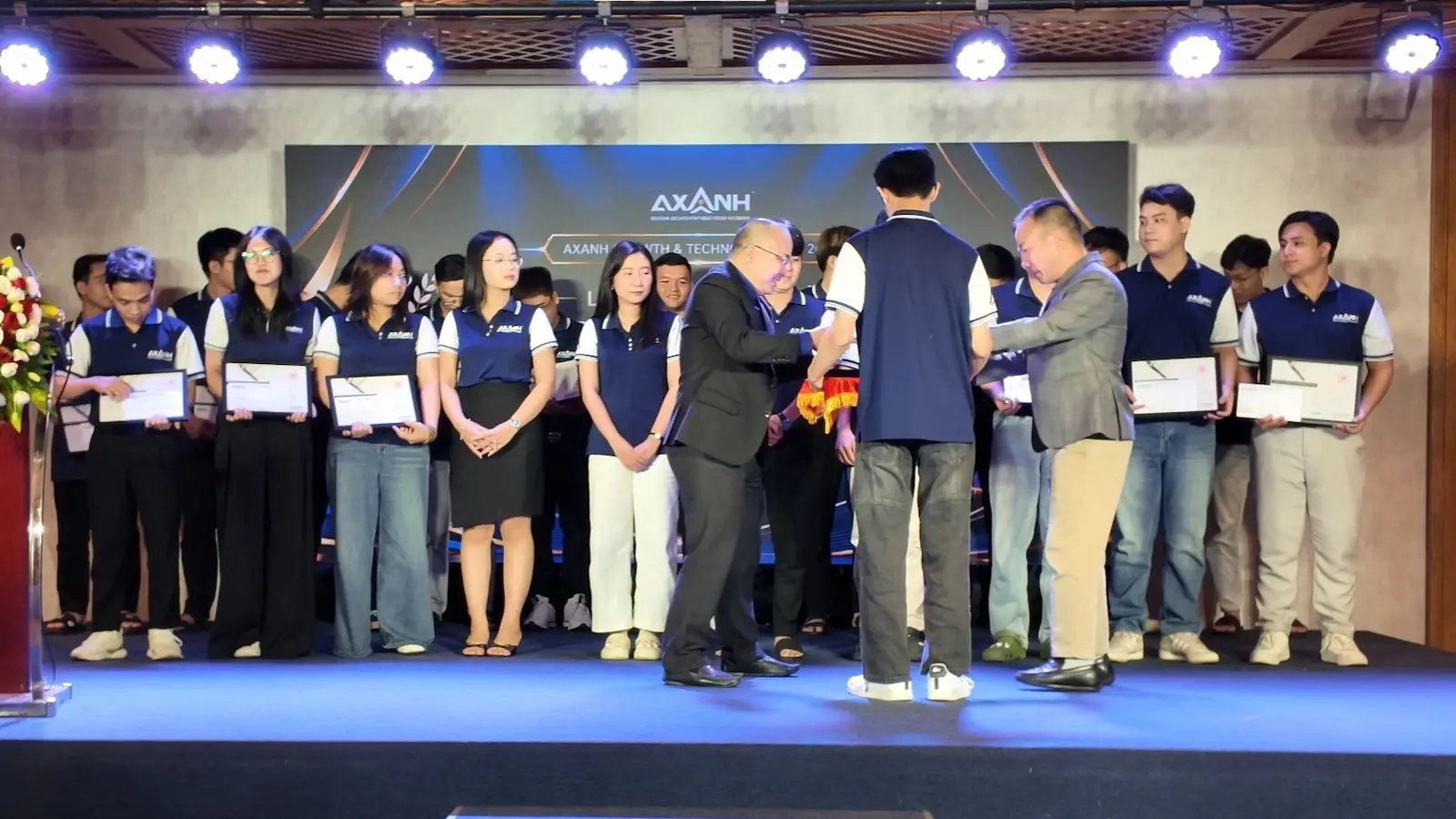
The more useful role of the recurring cycle is organizational: it gives AXANH a clearer basis for understanding where an important software capability stands across the eligible civil engineering cohort.
Instead of relying only on résumés, tenure, or an assumption that past proficiency remains unchanged, the organization has a recurring point at which capability is revisited.
WHY IT MATTERS
What recurring capability development can improve
Greater visibility into capability can help an engineering organization make better development decisions.
- Capability gaps become easier to identify. Development can respond to a specific need rather than rely only on general training.
- Additional preparation can happen earlier. A gap identified during the cycle can be addressed before it is simply carried forward.
- Capability is not judged only by years of experience. Tenure remains useful context, but it is not treated as the only signal of current readiness.
- Learning can feed wider review discipline. Assessment, preparation, and reassessment can contribute to a broader culture of revisiting how work is performed.
There is also an important boundary.
A completion certificate does not replace project-specific review, client standards, applicable codes, engineering judgment, or jurisdiction-specific professional responsibility.
The assessment is one part of a wider capability system. Its value comes from how it connects with continued learning, technical review, and responsible project delivery.
A LONGER AUTODESK JOURNEY
Civil 3D is part of a longer technology journey
Autodesk Civil 3D is software used across civil infrastructure design workflows. For AXANH, Civil 3D has also been part of a longer engineering journey involving technology adoption, industry conversations, knowledge development, and recurring capability-building activities.
That journey began during the AXA Engineers period and has continued as AXANH develops a broader approach to turning individual technical knowledge into organizational capability that can be carried forward.
The participation of Thien Ly of Autodesk in the September 28 certificate milestone adds another current point to that longer technology story.
His participation should not be interpreted as an Autodesk endorsement or guarantee of AXANH’s engineering outcomes. Its relevance is more specific: AXANH’s capability-development journey continues to interact directly with the technology ecosystem in which its civil engineers work.
The question has therefore become broader than whether an engineer can operate a particular software platform.
The more important organizational question is how that capability remains current, how gaps are surfaced, how learning is carried forward, and how technology continues to support responsible engineering delivery.
Explore AXANH’s Autodesk Technology Journey
Follow the broader story of Civil 3D adoption, industry conversations, and recurring capability development across AXANH’s engineering journey.
THE NEXT CHECKPOINT
The certificate is a checkpoint, not the finish line
For the 30 AXANH civil engineers recognized on September 28, receiving Civil 3D Completion Certificates marks a meaningful professional milestone.
For AXANH, the value of the cycle extends beyond that day.
A recurring capability system should not finish by asking only who completed an assessment. The more useful question is what the organization has learned about what to strengthen next.
