







How AXANH engineers build their own Civil 3D automation tools, apply AI across daily work and check every result before it reaches a client drawing.
Partnership Models
Partnership Fit
Strategic Partnerships
Why AXANH
Discuss Your Needs

A category dedicated to professional expertise, operational thinking, and delivery quality in modern technical environments. From documentation and drafting to BIM, quality standards, and workflow optimization, this is where AXANH shares how technical capability is translated into reliable delivery performance.
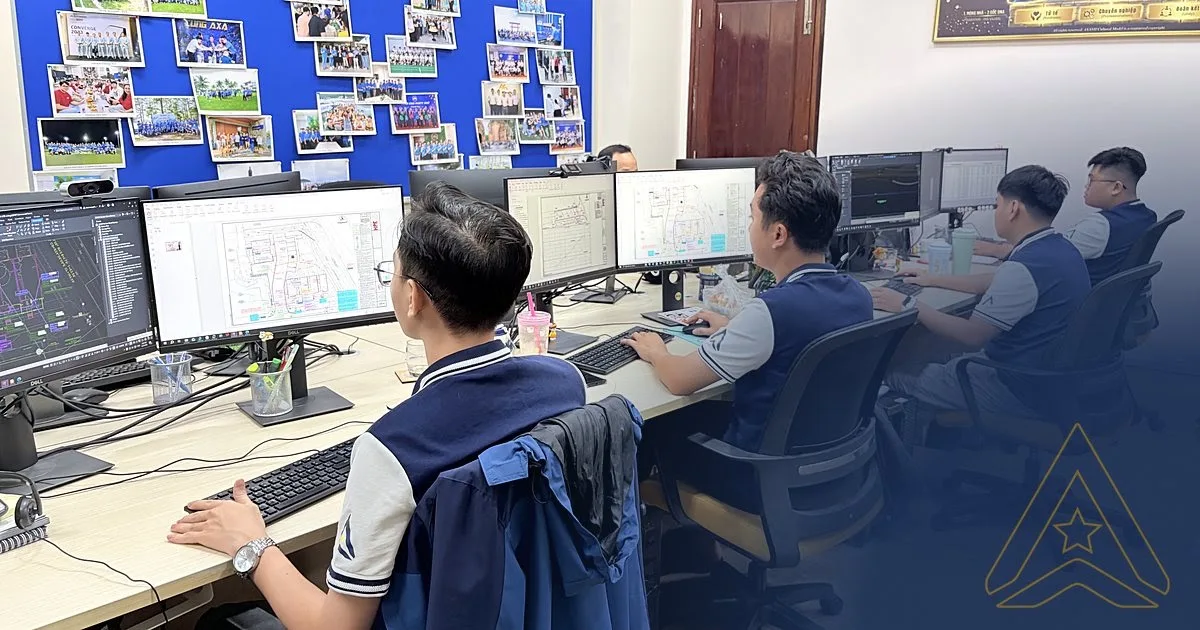
How AXANH engineers build their own Civil 3D automation tools, apply AI across daily work and check every result before it reaches a client drawing.
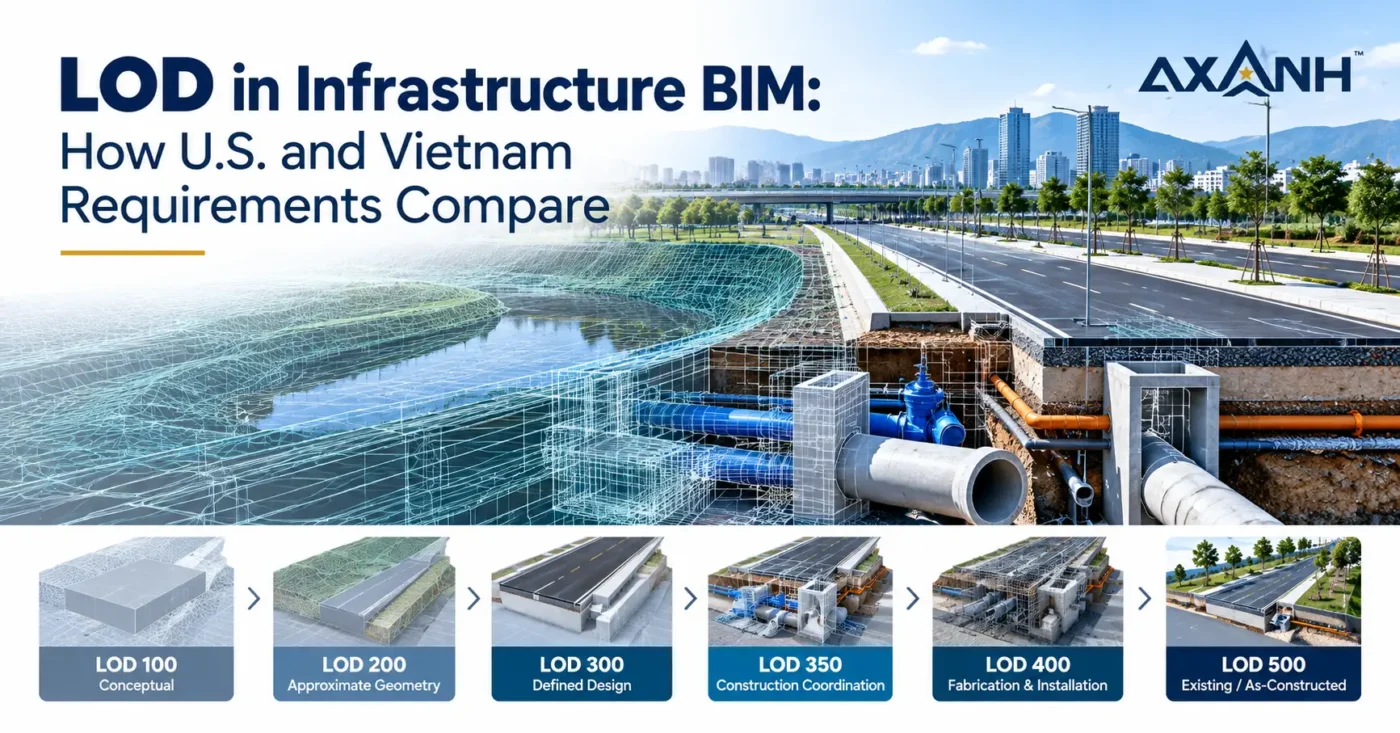
LOD in infrastructure BIM defines how much reliance project teams can place on modeled information. A highly detailed 3D representation of a roadway, grading surface, or underground utility network may look complete, but visual detail alone does not establish whether its geometry is sufficiently defined for design review, coordination, quantity takeoff, or construction planning. For […]

A common data environment for infrastructure projects helps engineering teams control which information is being developed, reviewed, approved, and released for use. Its real value is the confidence that people are making decisions from the right information at the right time. Imagine a construction team working from one drawing revision while the design team has […]
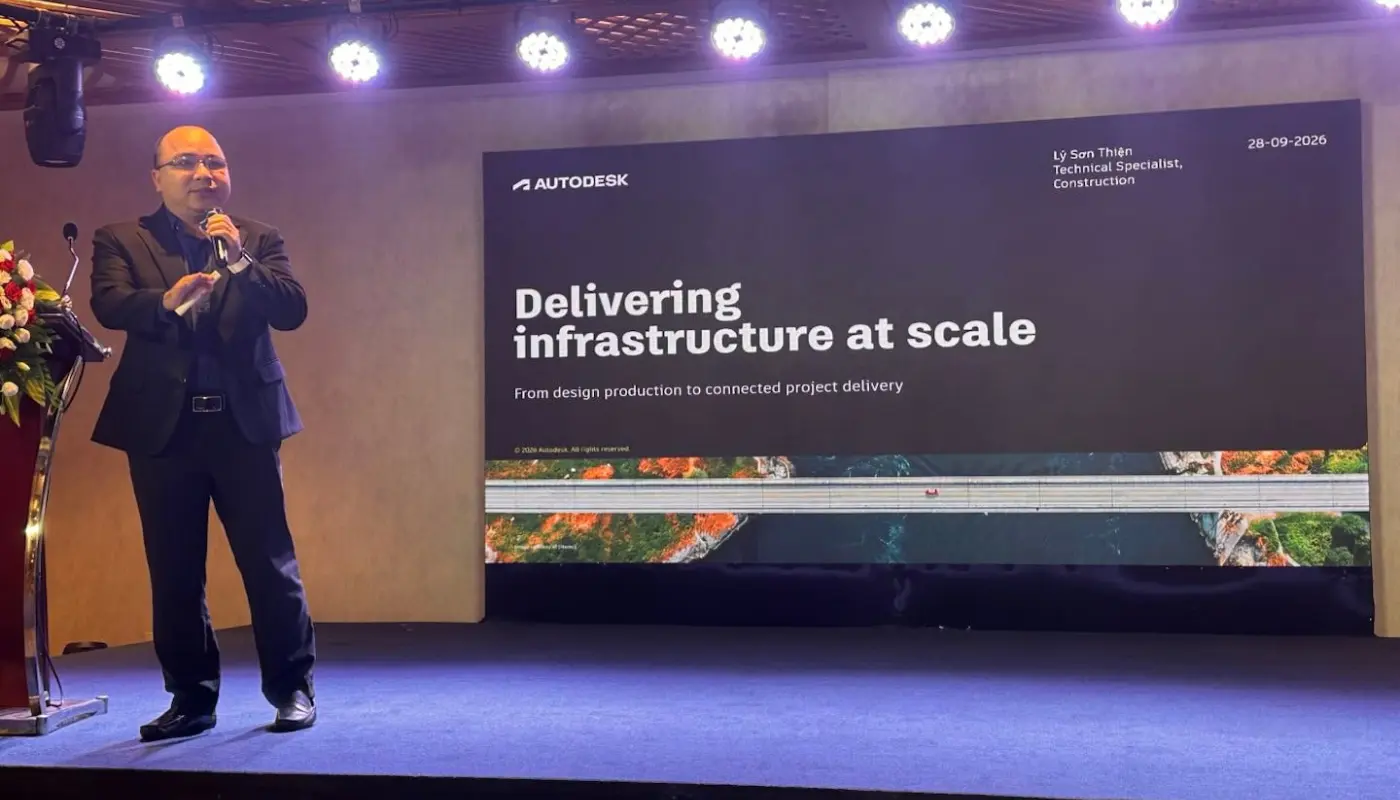
ISO 19650 information management addresses a challenge that becomes more important as BIM delivery scales: how project information is structured, exchanged, controlled, and understood across teams. On September 28, 2026, AXANH participated in a training session on the application of ISO 19650 to BIM and information management with Thien Ly, an Autodesk expert in ISO […]

AI adoption inside an AEC firm rarely waits for a formal strategy. Someone begins summarizing meetings, drafting reports, exploring design alternatives or automating repetitive documentation. Early results can look promising. Then leadership confronts the harder questions. What information entered the system? Which decisions did the output influence? Could another reviewer reconstruct how the answer was […]
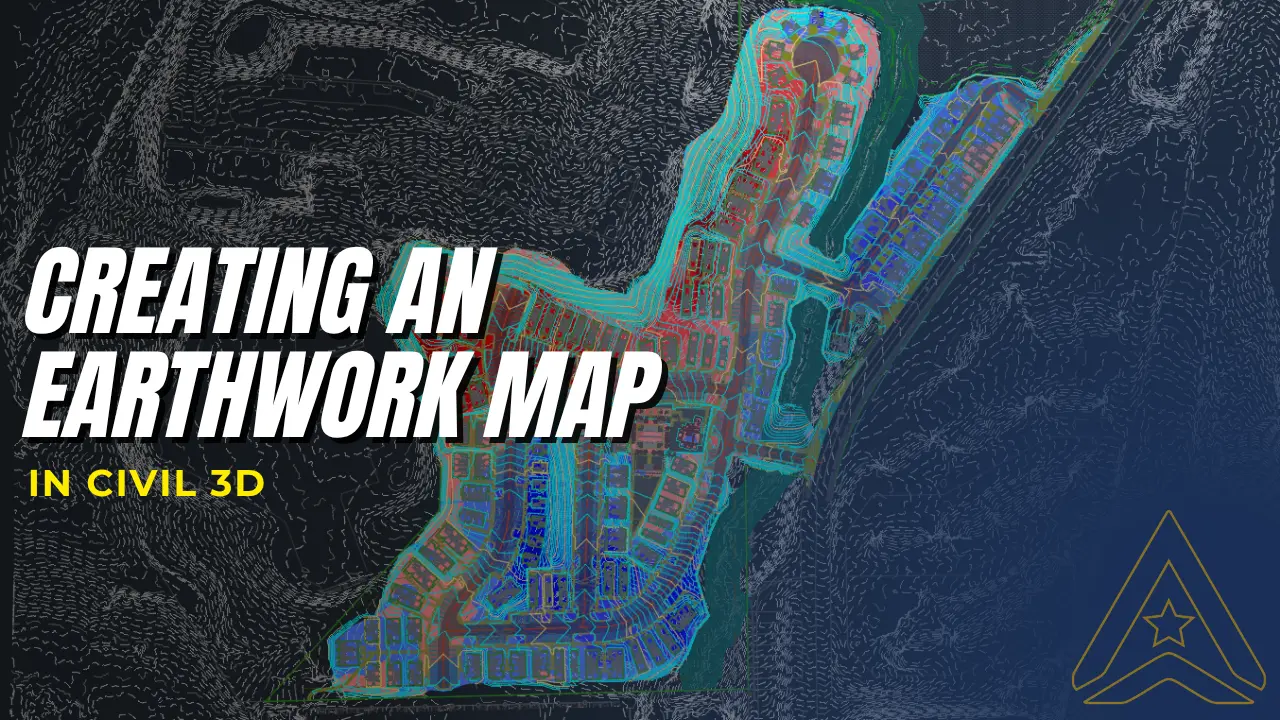
In grading projects, earthwork is rarely just a quantity calculation. It is a design, cost, coordination, and construction planning challenge at the same time. A project team may know the total cut and fill volume, yet still struggle to see where the deepest cut occurs, which areas require significant fill, and how those conditions may […]
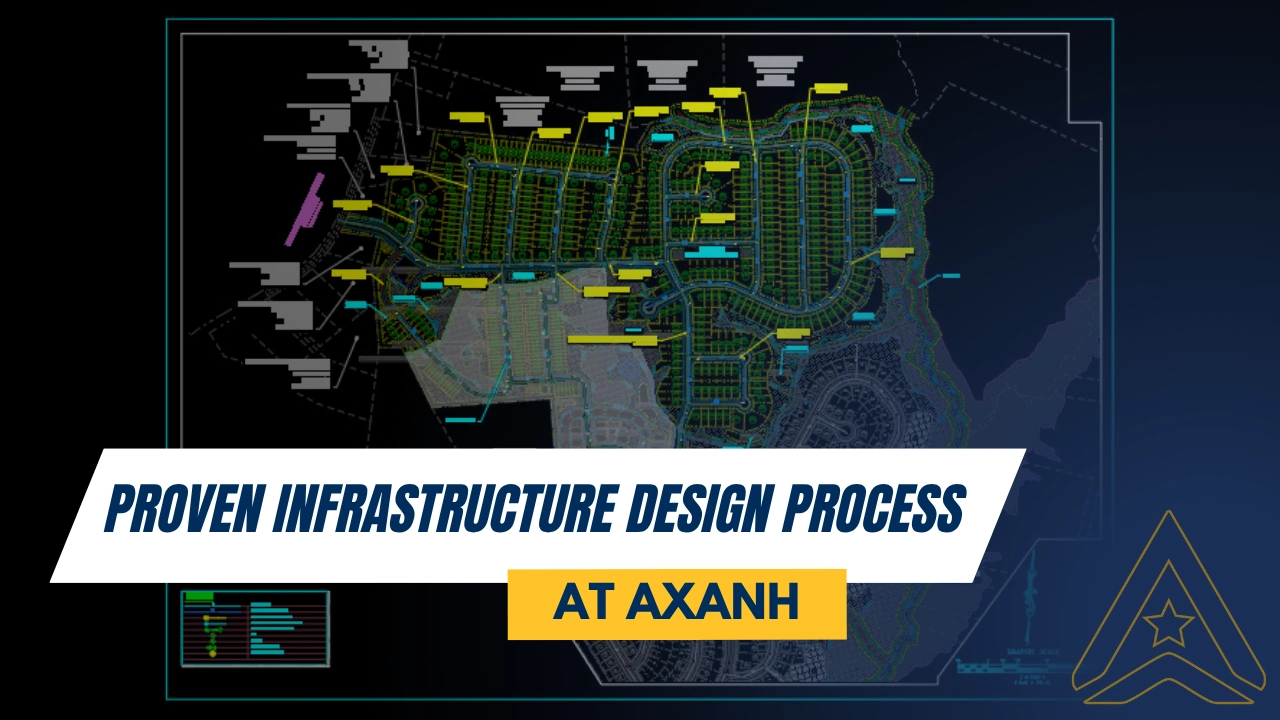
A disciplined Infrastructure Design Process does more than produce drawings. It creates a traceable path from raw site information to coordinated documentation that can support client review, regulatory coordination, pricing, and construction planning. In land development and civil infrastructure work, expensive problems often begin before construction. They can start when survey coverage is incomplete, grading […]
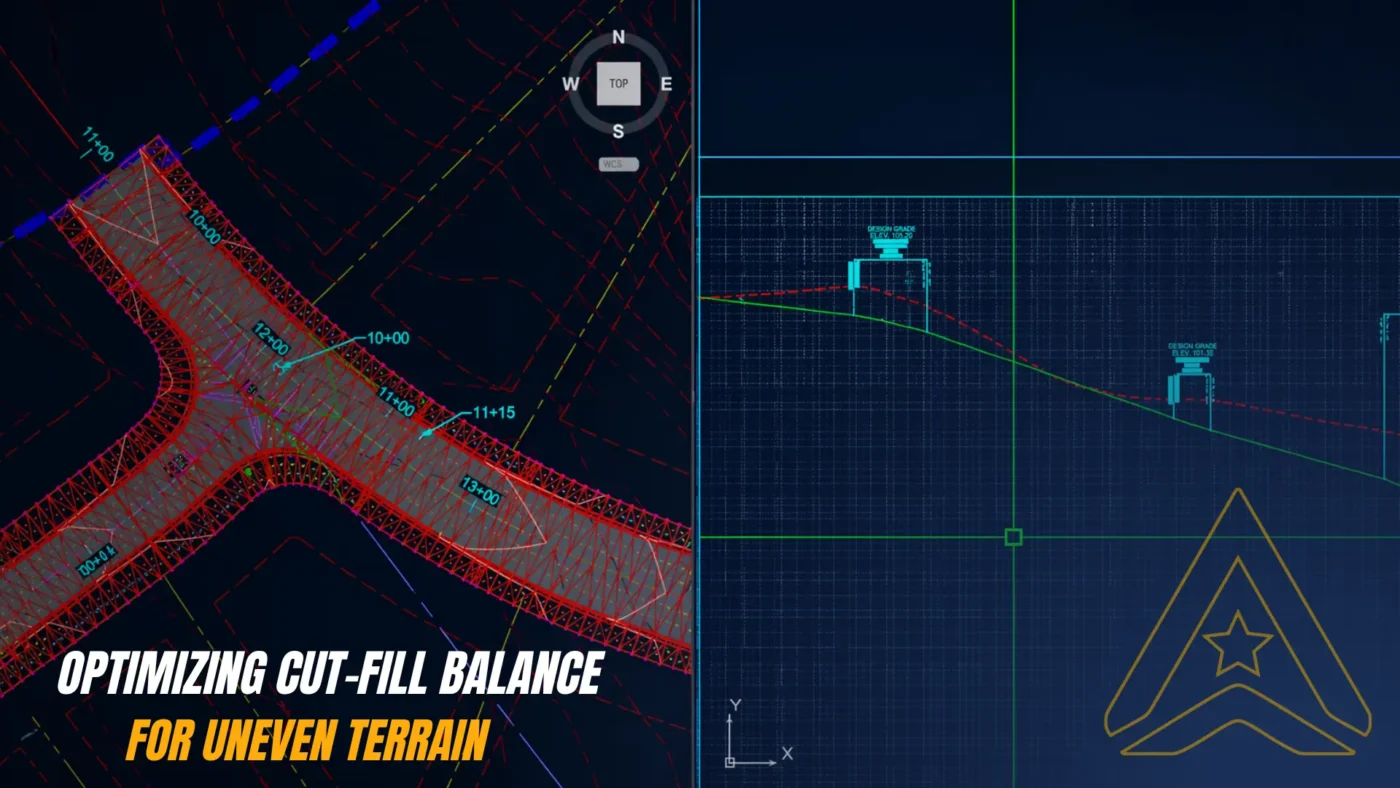
Earthwork optimization for complex sites is one of the most decisive factors in controlling grading cost, reducing design rework, and protecting project feasibility on difficult terrain. In large-scale developments, a grading solution may look technically compliant at first glance, yet still create costly friction later if roadway profile, pad elevations, drainage flow, and grading transitions […]

In adaptive reuse projects, an existing condition model is the foundation for every informed design decision. Before architects and engineers can plan what should change, they first need a reliable digital representation of what already exists. That foundation cannot be built on assumptions. It requires accurate survey data, a clear understanding of spatial conditions, and […]